|
|
 |
|
|
|
Closed like confessionals, they thread Loud noons of cities, giving back None of the glances they .........
........................
........................
read full text >>
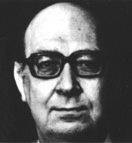
Philip Larkin
|
|
|
|
 |
 |
 |
 |
|
Comments about this poem (Ambulances
by
Philip Larkin
) |
|
Click here to write your
comments about this poem (Ambulances by
Philip Larkin
)
|
Daphne Grant
(12/13/2006 5:26:00 PM) |
A very poignant and wistlful poem, of regret and pending sadness, for the author like everyone else knew that at some-time the ambulance may come for him. The ambulance in this poem represents things coming to an end. In the midst of life' etc. One reference was to the passing of fashion, this person is about to become history, like looking at old newspaper, when the news was urgent headlines but now it's history.
|
|
|
Andrew Felton
(3/13/2005 6:25:00 AM) |
This poem superbly juxtaposes the meaning of death with the pragmatics of life. Life, in all its febrile practicality ('all we are') is blurred into a 'distance' when we are confronted with the ultimate reality of death. For Larkin, death is a 'solving emptiness' that comes to take away and reSOLVE the seemingly endless struggle of existence ('all we do') . Larkin also points to what Vernon Scannell called 'the huge inevitability of death' when he states that 'all streets in time are visited'. There is a sense that we cannot escape death (a major Larkinian theme) but simultaneously it does come as a reSOLUTION, albeit a frightening and mysterious one. For Larkin, life is that 'unique blend of families and fashions' which is suddenly terminated, not just be physical death, but by the realisation of it, as we are 'borne away' in an ambulance. At this point, we realise that (in Shakespeare's parlance) this 'tale told by an idiot...full of sound and fury' is about to end. Perhaps the central message of this poem is to engage in a stoical attitude to life because, in the end, all its convoluted intricacies are going to dissipate ('loosen') and we are left in 'deadened air', distanced from love and the many aspects of life which enabled us to maintain a grip on it.
Andrew Felton BA (Hons) , MA
|
|
|
|
|
 |
 |
 |
|
|
 |
|
People who read
Philip Larkin
|
 |
|
 |
 |
 |
 |
|