The War Of Caros Poem by James Macpherson
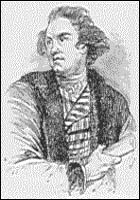

The War Of Caros
Caros is probably the noted usurper Carausius, by birth a Menapran, who assumed the purple in the year 284; and, seizing on Britain, defeated the emperor Maximinian Herculius in several naval engagements, which gives propriety to his being called in this poem "the king of ships." He repaired Agricola's wall, in order to obstruct the incursions of the Caledonians, and when he was employed in that work, it appears he was attacked by a party under the command of Oscar the son of' Ossian. This battle is the foundation of the present poem, which is addressed to Malvina, the daughter of Toscar.
Bring, daughter of Toscar, bring the harp! the light of the song rises in Ossian's soul! It is like the field, when darkness covers the hills around, and the shadow grows slowly on the plain of the sun. I behold my son, O Malvina! near the mossy rock of Crona. But it is the mist of the desert, tinged with the beam of the west! Lovely is the mist that assumes the form of Oscar! turn from it, ye winds, when ye roar on the side of Ardven!
Who comes towards my son, with the murmur of a song? His staff is in his hand, his gray hair loose on the wind. Surly joy lightens his face. He often looks back to Caros. It is Ryno of songs, he that went to view the foe. "What does Caros, king of ships?" said the son of the now mournful Ossian: "spreads he the wings of his pride, bard of the times of old?" "He spreads them, Oscar," replied the bard," but it is behind his gathered heap. He looks over his stones with fear. He beholds thee terrible, as the ghost of night, that rolls the waves to his ships!"
"Go, thou first of my bards!" says Oscar, "take the spear of Fingal. Fix a flame on its point. Shake it to the winds of heaven. Bid him in songs, to advance, and leave the rolling of his wave. Tell to Caros that I long for battle; that my bow is weary of the chase of Cona. Tell him the mighty are not here; and that my arm is young."
He went with the murmur of songs. Oscar reared his voice on high. It reached his heroes on Ardven, like the noise of a cave, when the sea of Togorma rolls before it, and its trees meet the roaring winds. They gather round my son like the streams of the hill; when, after rain, they roll in the pride of their course. Ryno came to the mighty Caros. He struck his flaming spear. Come to the battle of Oscar. O thou that sittest on the rolling waves! Fingal is distant far; he hears the songs of bards in Morven: the wind of his hall is in his hair. His terrible spear is at his side; his shield that is like the darkened moon Come to the battle of Oscar; the hero is alone.
He came not over the streamy Carun. The bard returned with his song. Gray night grows dim on Crona. The feast of shells is spread. A hundred oaks burn to the wind; faint light gleams over the heath. The ghosts of Ardven pass through the beam, and show their dim and distant forms. Comala is half unseen on her meteor; Hidallan is sullen and dim, like the darkened moon behind the mist of night.
" Why art thou sad?" said Ryno; for he alone beheld the chief. "Why art thou sad, Hidallan! hast thou not received thy fame? The songs of Ossian have been heard , thy ghost has brightened in wind, when thou didst bend from thy cloud to hear the song of Morven's bard!"—-" And do thine eyes," said Oscar, " behold the chief, like the dim meteor of night? Say, Ryno, say, how fell Hidallan, the renowned in the days of my fathers! His name remains on the rocks of Cona. I have often seen the streams of his hills!"
Fingal, replied the bard, drove Hidallan from his wars. The king's soul was sad for Comala, and his eyes could not behold the chief. Lonely, sad, along the heath he slowly moved, with silent steps. His arms hung disordered on his side. His hair flies loose from his brow. The tear is in his downcast eyes; a sigh half silent in his breast! Three days he strayed unseen, alone, before he came to Lamor's halls: the mossy halls of his fathers, at the stream of Balva. There Lamor sat alone beneath a tree; for he had sent his people with Hidallan to war. The stream ran at his feet; his gray head rested on his staff. Sightless are his aged eyes. He hums the song of other times. The noise of Hidallan's feet came to his ear: he knew the tread of his son.
"Is the son of Lamor returned; or is it the sound of his ghost? Hast thou fallen on the banks of Carun, son of the aged Lamor? Or, if I hear the sound of Hidallan's feet, where are the mighty in the war? where are my people, Hidallan! that were wont to return with their echoing shields? Have they fallen on the banks of Carun?"
"No," replied the sighing youth, "the people of Lamor live. They are renowned in war, my father! but Hidallan is renowned no more. I must sit alone on the banks of Balva, when the roar of the battle grows."
" But thy fathers never sat alone," replied the rising pride of Lamor. "They never sat alone on the banks of Balva, when the roar of battle rose. Dost thou not behold that tomb? My eyes discern it not; there rests the noble Garmállon, who never fled from war! Come, thou renowned in battle, he says, come to thy father's tomb. How am I renowned, Garmállon? my son has fled from war!"
"King of the streamy Balva!" said Hidallan with a sigh, "why dost thou torment my soul? Lamor, I never fled. Fingal was sad for Comala; he denied his wars to Hidallan. Go to the gray streams of thy land, he said; moulder like a leafless oak, which the winds have bent over Balva, never more to grow."
"And must I hear," Lamor replied, "the lonely tread of Hidallan's feet? When thousands are renowned in battle, shall he bend over my gray streams? Spirit of the noble Garmállon! carry Lamor to his place; his eyes are dark, his soul is sad, his son has lost his fame."
"Where," said the youth, " shall I search for fames to gladden the soul of Lamor? From whence shall return with renown, that the sound of my arms may be pleasant in his ear? If I go to the chase of hinds, my name will not be heard. Lamor will not feel my dogs with his hands, glad at my arrival from the hill. He will not inquire of his mountains, or of the dark-brown deer of his deserts!"
"I must fall," said Lamor, "like a leafless oak: it grew on a rock! it was overturned by the winds! My ghost will be seen on my hills, mournful for my young Hidallan. Will not ye, ye mists, as ye rise, hide him from my sight! My son, go to Lamor's ball: there the arms of our fathers hang. Bring the sword of Garmállon: he took it from a foe!"
He went and brought the sword with all its studded thongs. He gave it to his father. The gray-haired hero felt the point with his hand.
"My son, lead me to Garmállon's tomb: it rises beside that rustling tree. The long grass is withered; I hear the breezes whistling there. A little fountain murmurs near, and sends its waters to Balva. There let me rest; it is noon: the sun is on our fields!"
He led him to Garmállon's tomb. Lamor pierced the side of his son. They sleep together: their ancient halls moulder away. Ghosts are seen there at noon: the valley is silent, and the people shun the place of Lamor.
"Mournful is thy tale," said Oscar, "son of the times of old! My soul sighs for Hidallan; he fell in the days of his youth. He flies on the blast of the desert: his wandering is in a foreign land. Sons of the echoing Morven! draw near to the foes of Fingal. Send the night away in songs; watch the strength of Caros. Oscar goes to the people of other times; to the shades of silent Ardven, where his fathers sit dim in their clouds, and behold the future war. And art thou there, Hidallan, like a half-extinguished meteor? Come to my sight, in thy sorrow, chief of the winding Balva!"
The heroes move with their songs. Oscar slowly ascends the hill. The meteors of night set on the heath before him. A distant torrent faintly roars. Unfrequent blasts rush through aged oaks. The half enlightened moon sinks dim and red behind her hill. Feeble Voices are heard on the heath. Oscar drew his sword! " Come," said the hero, " O ye ghosts of my fathers! ye that fought against the kings of the world! Tell the deeds of future times; and your converse in our caves, when you talk together, and behold your sons in the fields of the brave!"
Trenmo came from his hill at the voice of his mighty son. A cloud, like the steed of the stranger, supported his airy limbs. His robe is of the mist of Lano, that brings death to the people. His sword is a green meteor, half-extinguished. His face is without form, and dark. He sighed thrice over the hero; thrice the winds of night roared around! Many were his words to Oscar; but they only came by halves to our ears; they were dark as the tales of other times, before the light of the song arose. He slowly vanished, like a mist that melts on the sunny hill. it was then, O daughter of Toscar! my son began first to be sad. He foresaw the fall of his race. At times he was thoughtful and dark, like the sun when he carries a cloud on his face, but again he looks forth from his darkness on the green hills of Cona.
Oscar passed the night among his fathers: gray morning met him on Carun's banks. A green vale surrounded a tomb which arose in the times of old. Little hills lift their heads at a distance, and stretch their old trees to the wind. The warriors of Caros sat there, for they had passed the stream by night. They appeared like the trunks of aged pines, to the pale light of the morning. Oscar stood at the tomb, and raised thrice his terrible voice. The rocking hills echoed around; the starting roes bounded away: and the trembling ghosts of the dead fled, shrieking on their clouds. So terrible was the voice of my son, when he called his friends!
A thousand spears arose around; the people of Caros rose. Why, daughter of Toscar, why that tear? My son, though alone, is brave. Oscar is like a beam of the sky; he turns around, and the people fall. his hand is the arm of a ghost, when he stretches it from a cloud; the rest of his thin form is unseen; but the people die in the vale! My son beheld the approach of the foe; he stood in the silent darkness of his strength. " Am I alone," said Oscar, " in the midst of a thousand foes? Many a spear is there! many a darkly-rolling eye. Shall I fly to Ardven? But did my fathers ever fly? The mark of their arm is in a thousand battles. Oscar too shall be renowned. Come, ye dim ghosts of my fathers, and behold my deeds in war! I may fall; but I will be renowned like the race of the echoing Morven." He stood, growing in his place, like a flood in a narrow vale! The battle came, but they fell: bloody was the sword of Oscar!
The noise reached his people at Crona; they came like a hundred streams. The warriors of Caros fled; Oscar remained like a rock left by the ebbing sea. Now dark and deep, with all his steeds, Caros rolled his might along: the little streams are lost in his course: the earth is rocking round. Battle spreads from wing to wing; ten thousand swords gleam at once in the sky. But why should Ossian sing of battles? For never more shall my steel shine in war. I remember the days of my youth with grief, when I feel the weakness of my arm. Happy are they who fell in their youth, in the midst of their renown! They have not beheld the tombs of their friends, or failed to bend the bow of their strength. Happy art thou, O Oscar, in the midst of thy rushing blast! Thou often goest to the fields of thy fame, where Caros fled from thy lifted sword!
Darkness comes on my soul, O fair daughter of Toscar! I behold not the form of my son at Carun, nor the figure of Oscar on Crona. The rustling winds have carried him far away, and the heart of his father is sad. But lead me, O Malvina! to the sound of my woods, to the roar of my mountain streams. Let the chase be heard on Cona: let me think on the days of other years. And bring me the harp, O maid! that I may touch it when the light of my soul shall arise. Be thou near to learn the song; future times shall hear of me! The sons of the feeble hereafter will lift the voice of Cona; and looking up to the rocks, say, "Here Ossian dwelt." They shall admire the chiefs of old, the race that are no more, while we ride on our clouds, Malvina! on the wings of the roaring winds. Our voices shall be heard at times in the desert; we shall sing on the breeze of the rock!
This poem has not been translated into any other language yet.
I would like to translate this poem



Delivering Poems Around The World
Poems are the property of their respective owners. All information has been reproduced here for educational and informational purposes to benefit site visitors, and is provided at no charge...
4/24/2024 5:24:12 PM # 1.0.0.1119