PoemHunter.com

"Unto Me?" I do not know you by Emily Dickinson

7/6/2008 5:38:44 PM
Home Poets Poems Lyrics Quotations Music Forum Search Member Area Poetry E-Books Sites Mini Quiz
 

POEMS

LYRICS

MUSIC

QUOTATIONS

SEARCH

   
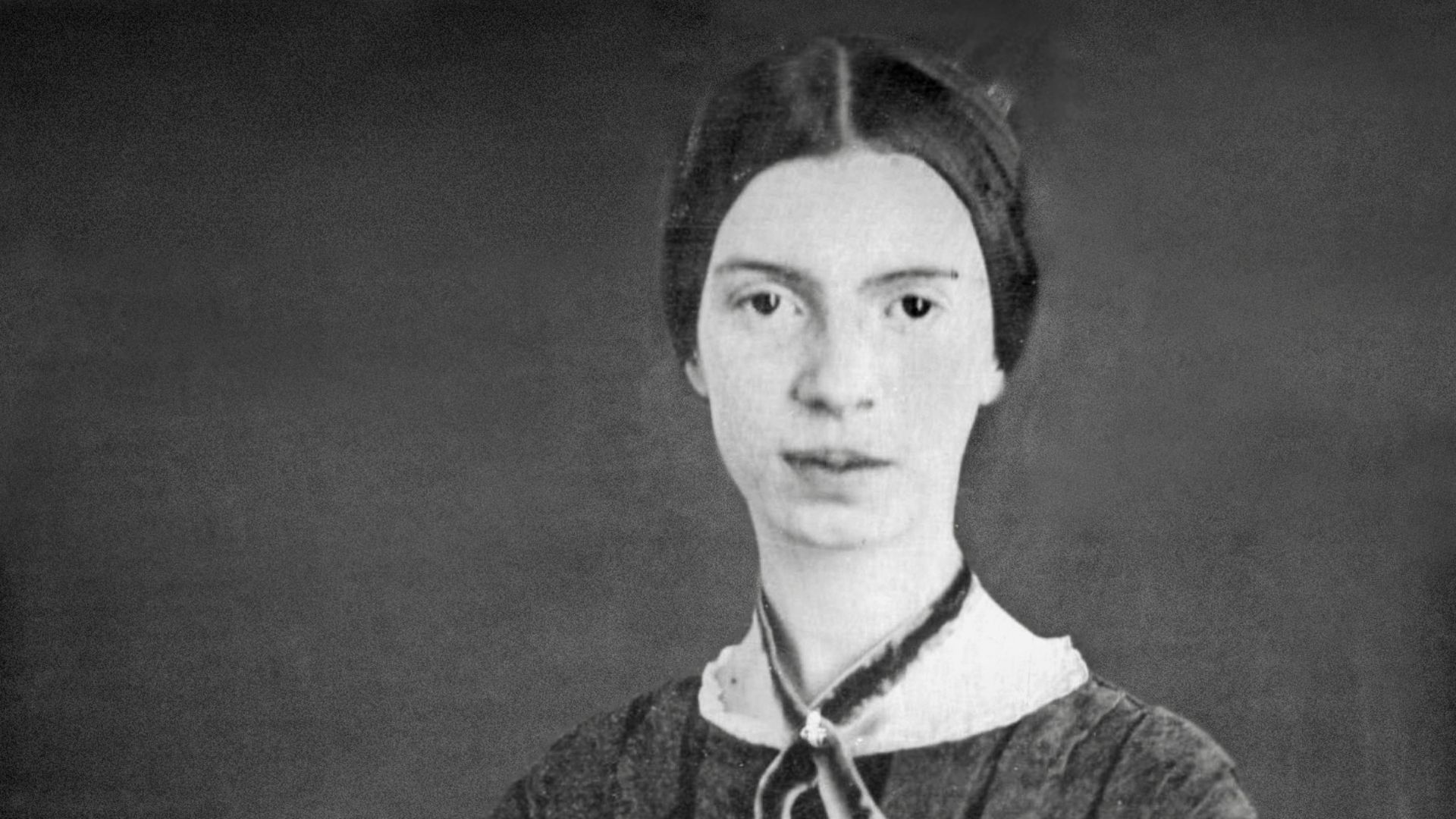
Emily Dickinson Emily Dickinson
(1830-1886)
Free Poetry E-Book:
1472 poems of Emily Dickinson

File Size: 4538k  File Format: Acrobat Reader
To download the eBook right-Click on the title and select "Save Target As". more ebooks >>
   • Biography  Poems  Quotations  Comments  More Info  Stats 


<< prev. poem Poems by Emily Dickinson: 12 / 1123 next poem >>
  
 
"Unto Me?" I do not know you
 
  964

"Unto Me?" I do not know you—
Where may be your House?

"I am Jesus—Late of Judea—
Now—of Paradise"—

Wagons—have you—to convey me?
This is far from Thence—

"Arms of Mine—sufficient Phaeton—
Trust Omnipotence"—

I am spotted—"I am Pardon"—
I am small—"The Least
Is esteemed in Heaven the Chiefest—
Occupy my House"—

Emily Dickinson


Read poems about / on: house, trust, heaven

User Rating:

8.1 /10
(10 votes)


Comments about this poem ("Unto Me?" I do not know you by Emily Dickinson)  more comments >>
Click here to write your comments about this poem ("Unto Me?" I do not know you by Emily Dickinson)
 
Paul Schwiesow (4/13/2008 1:39:00 AM)
Naveed -

I have a different interpretation of the line you quote. I think Dickinson writes the poem as a dialogue between the speaker (herself) and Jesus. I don't think she's telling Jesus to trust to omnipotence—instead, Jesus telling HER (the speaker) to trust to omnipotence, in the imagined dialogue. I say this because, well, that's what Dickinson does, but also because the line:

'Arms of Mine—sufficient Phaeton—
Trust Omnipotence'—

Is enclosed within quotation marks. The poem appears to follow a consistent pattern in that the lines of the speaker are written without quotes, while the lines attributed to Jesus—or imagined as coming from Jesus—appear within quotation marks.

So a literal translation of the poem might read something like this:

(Emily says) :

Jesus, you say things like “Come unto me” (as in, “Suffer the little children to come unto me”) in my translation of the Bible. But I ask myself, “what do you mean, Jesus, by saying ‘come unto me? ’ I don’t know who you are. I mean to say, I don’t know you personally. I haven’t spoken to you directly. I can’t say you’ve ‘spoken’ to me, except through the Bible.

So (says Emily to herself) , OK— I’ll look at the Bible, and see what Jesus seems to be saying. Aha—the Bible tells me that Jesus might say something like this to me: “I am Jesus, who used to live in Judea and now lives in Paradise.”

So (says Emily) : Right, then. I’ll talk to this Jesus guy in the Bible by imagining I’m having a conversation with him. The first thing I’d ask is, “do you have wagons, Jesus, to carry me to where you are? ‘Cause where I am on earth is a long way from paradise.”

So (says Emily) let’s imagine what Jesus would say. I, Emily Dickinson, bet, based on my knowledge of what Jesus is like that I have from my Bible reading, that Jesus would tell me something like “Consider the arms that I have, Emily—that should be a sufficient Phaeton for you (‘phaeton’ being a four-wheeled horse-drawn carriage—i.e., the ‘wagon’ that you, Emily, are looking for) . Trust me—I am, after all, Jesus, so I am God, and am omnipotent. Trust to that. I’ve got you covered.”

To which Emily replies, “Oh, but Jesus, I’m spotted (tainted by original sin) , so I can’t possibly merit a ride to Paradise in your Phaeton.”

To which Jesus responds “No sweat, babe—I pardon your sins.”

To which Emily rejoins “but I’m just a little, insignificant person.”

To which Jesus responds (again, in Dickinson’s imagination, based on her Biblical knowledge, particularly of the Sermon on the Mount and the Beatitudes) : “The last shall be first in my House (i.e., Paradise) , my dear. Read your Bible, honey.”

Something like that.

This whole talking to yourself thing to try to stand in for God (or Jesus, or the Holy Spirit) talking to you, is pretty typical in religious poetry and in the writing of Christians in general (witness our current President) . One does it because one in fact doesn't hear anything from this imagined deity, and so must carry on an internal dialogue to persuade oneself of the valididty of faith. Dickinson, in my opinion, does it rather conventionally; I think Donne and, more importantly, Hopkins, do it better. They're still delusional, but they're at least more artistic about it. If I were hanging something on my wall, I'd go with Hopkins. He's the most genuine, and is also just a flat-out amazing poet. Try 'Spring and Fall.'
Naveed Akram (3/31/2008 7:37:00 PM)
This feels very good about Christianity, and Christians will react to it in very familiar patterns. It is good to see this poem being written for the advancement of Christian science, which is basically that pointed out by this poem. I do not take on every belief, but the passion is shown with a kind of fervour too polite. To tell Jesus that he trusts omnipotence is then brave and totally courageous. The bravery I can extract is vast in such a short amount of poetry. The poem is so small for its amount of information that it occupies my house!

Read all 4 comments >>
People who read Emily Dickinson also read: More classic poets:

The complete list >>

Lyrics

The complete list >>

QuickPoll
How often do you visit our website?
Once a day
Once a week
Once a month
Once a year

 Search in the World Poetry Database => 

 Search:   in:      tips
Hide the search box!

E-MAIL THIS PAGE TO A FRIEND - Found this page interesting? Recommend it to your friend! 
 Your E-mail:  
 Friend's Email:  
   
Your
Message:


(c) Poems are the property of their respective owners. All information has been reproduced here for educational and informational purposes to benefit site visitors, and is provided at no charge..  About Us | Copyright notice | Privacy statement | Help
7/6/2008 5:38:44 PM. You Are Here: "Unto Me?" I do not know you by Emily Dickinson

Home | Poets | Poems | Lyrics | Music | Quotations | Forum | Search | Random Poem | Free Poetry eBooks | Contests | Sites |
Submit a Poem | Manage Your Poems | Contact Us

Christmas Poems | Love Poems | Pablo Neruda | Death Poems | Sad Poems | Birthday Poems | Wedding Poems | Annabel Lee | Sorry Poems | Winter Poems