Carolyn Kizer
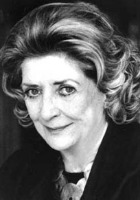

Carolyn Kizer Poems
Arms and the girl I sing - O rare
arms that are braceleted and white and bare
arms that were lovely Helen's, in whose name
...
My mother-- preferring the strange to the tame:
Dove-note, bone marrow, deer dung,
Frog's belly distended with finny young,
Leaf-mould wilderness, hare-bell, toadstool,
...
For more than thirty years we hadn't met.
I remembered the bright query of your face,
That single-minded look,intense and stern,
Yet most important -how could I forget?-
...
The whole green sky is dying.The last tree flares
With a great burst of supernatural rose
Under a canopy of poisonous airs.
...
for Maxine Kumin
Where did these enormous children come from,
More ladylike than we have ever been?
...
Midas watched the golden crust
That formed over his steaming sores,
Hugged his agues, loved his lust,
But damned to hell the out-of-doors
...
For Ann London
As you described your mastectomy in calm detail
and bared your chest so I might see
...
No-one explains me because
There is nothing to explain.
It's all right here
Very clear.
...
When from his cave, young Mao in his youthful mind
A work to renew old China first designed,
Then he alone interpreted the law,
and from tradtional fountains scorned to draw:
...
We who must act as handmaidens
To our own goddess, turn too fast,
Trip on our hems, to glimpse the muse
...
M.A.K. September, 1880-September, 1955
As I wandered on the beach
I saw the heron standing
Sunk in the tattered wings
...
The poets are going home now,
After the years of exile,
After the northern climates
Where they worked, lectured, remembered,
...
I.
Sirs, in our youth you love the sight of us.
Older, you fall in love with what we've seen,
Would lose yourselves by living in our lives.
...
after Po Chü-i,
for Robert Creeley
We don't lack people here on the Northern coast,
But they are people one meets, not people one cares for.
So I bundle my daughters into the car
And with my brother poets, go to visit you, brother.
Here come your guests! A swarm of strangers and children;
But the strangers write verses, the children are daughters like yours.
We bed down on mattresses, cots, roll up on the floor:
Outside, burly old fruit trees in mist and rain;
In every room, bundles asleep like larvae.
We waken and count our daughters. Otherwise, nothing happens.
You feed them sweet rolls and melon, drive them all to the zoo;
Patiently, patiently, ever the father, you answer their questions.
Later, we eat again, drink, listen to poems.
Nothing occurs, though we are aware you have three daughters
Who last year had four. But even death becomes part of our ease:
Poems, parenthood, sorrow, all we have learned
From these of tenderness, holds us together
In the center of life, entertaining daughters
By firelight, with cake and songs.
You, my brother, are a good and violent drinker,
Good at reciting short-line or long-line poems.
In time we will lose all our daughters, you and I,
Be temperate, venerable, content to stay in one place,
Sending our messages over the mountains and waters.
...
Part Four of "Pro Femina"
At Samoa, hardly unpacked, I commenced planting,
When I'd opened the chicken crates, built the Cochins a coop.
The Reverend Mr. Claxton called, found me covered with mud,
My clothes torn, my hair in a wad, my bare feet bleeding.
I had started the buffalo grass in the new-made clearing.
The next day the priest paid a visit. Civil but restless,
I was dying to plant the alfalfa seed—gave him a packet.
That evening I paced up and down, dropping melon seeds,
Tomatoes and bush lima beans here and there
Where I thought they would grow. We were short of food now,
So I cooked up a mess of fat little parrots, disturbed
At the way they suggested cages and swings and stands ...
An excellent meal. I have been told the dodo survived here,
And yearn for a pet on a string. And I built the pig-house.
I had brought sweet coconut seed from Savage Island.
I planted kidney potatoes in small earthen hills.
Sowed seeds of eggplant in numerous boxes of soil,
Tomato and artichoke too; half-a-dozen fine pineapple
Sent over by Mr. Carruthers, the island solicitor.
As fast as we eat them, we plant the tops.
The kitchen a shack near the house. I made bread in the rain.
October, 1890. I have been here nearly a month;
Put in corn, peas, onions, radishes, lettuce. Lima beans
Are already coming up. The ripening cantaloupe were stolen.
Carruthers gave me mint root and grenadilla
Like a bouquet; he delivered a load of trees,
Two mangoes among them. I set them out in a heavy rain,
Then rounded off the afternoon sowing Indian corn.
Louis has called me a peasant. How I brooded!
Confided it to you, diary, then crossed it out.
Peasant because I delve in the earth, the earth I own.
Confiding my seed and root—I too a creator?
My heart melts over a bed of young peas. A blossom
On the rose tree is like a poem by my son.
My hurt healed by its cause, I go on planting.
No one else works much. The natives take it easy;
The colonials keep their shops, and a shortage of customers.
The mail comes four times a month, and the gossip all day.
The bars are crowded with amateur politicians,
Office-seekers I named the earwig consul and king:
Big talkers, with small-time conspirators drinking them in.
Mr. Carruthers and I picked a site for the kitchen garden.
I was planting a new lot of corn and pumpkin
When a young chief arrived, laden with pineapple plants.
I set them out as I talked to him on the way home.
Rats and a wild hen ate the corn. Lettuce got too much sun.
So I dug a new patch up the road; in the fragrant evening
I confided to Louis, a puff of the sweetest scent
Blows back as I cast away a handful of so-called weeds!
It still hurts, his remark that I have the soul of a peasant.
My vanity, like a newly felled tree, lies prone and bleeding.
I clear the weeds near the house for planting maize.
Sweet corn and peas are showing. I send for more seeds.
I clean out the potatoes, which had rotted in their hills.
Of course, RLS is not idle; he is writing A Footnote to History:
How the great powers combine to carve up these islands.
I discovered the ylang-ylang tree: a base for perfume,
Though it suggested to me the odor of boots.
Another tree is scented like pepper and spice,
And one terrible tree, I am forced to say,
Smells like ordure ... It nearly made me ill.
Breadfruit is plentiful. I found a banana grove,
Began clearing it instantly, and worked till I was dizzy.
The garden looks like a graveyard: beds shaped like tombs.
I plant cabbage which I loathe, so the British won't tease me
For not growing it. But behold! in the hedge
Among citron and lime, many lemon trees, in full bearing.
Still, I will fall to brooding before the mirror,
Though Louis says he finds the peasant class "interesting."
He is forty today. I am ten years his senior.
On the cleared land, the green mummy-apple,
Male and female, is springing up everywhere.
I discover wild ginger, turmeric, something like sugar.
Roots of orange, breadfruit and mango, seeds of cacao
Came with a shipment from Sydney; also eleven
Young navel orange trees. The strawberry plants are rotten.
I am given a handful of bees. I plant more pineapple.
All fall I am cursed with asthma, rheumatics, a painful ear.
Christmas. A hurricane. And the New Year begins.
Louis describes it divinely to Henry James.
Mr. Carruthers' gift pineapple starts to fruit.
I set out one precious rhubarb plant, pause to gloat
At the ripe tomatoes, the flourishing long-podded beans.
But the neighbors' horses break in and trample the corn.
Sometimes, when planting, a strange subterranean rumble
—Volcanic?—vexes the earth beneath this peasant haunch.
I rise up from my furrow, knuckle smooth my brow
As I sniff the air, suddenly chemical, a sulphurous fume.
Louis insisted on going to Sydney, fell ill again.
His mother comes back with him, finds me on my knees.
The old lady's heart leaps! Alas, I am planting, not praying.
We both rise at five-thirty, after dreaming of weeds.
Louis describes to me endless vivid deeps:
Dreams of nettle-stings, stabs from the citron's thorns,
The ants' fiery bites, the resistance of mud and slime,
The evasions of wormy roots, the dead weight of heat
In the sudden puffs of air ... Louis writes till nine,
Then if he's well enough, he helps with the weeding.
He writes Colvin, keeper of prints at the British Museum,
"I know pleasure still ... with a thousand faces,
None perfect, a thousand tongues, all broken,
A thousand hands, all with scratching nails ...
High among joys, I place this delight of weeding,
Out here alone by the garrulous water, under the silence
Of the high wind, broken by sounds of birds."
The shock of bird-calls, laughing and whistling!
They mimic his name till it seems, he says,
"The birds re-live the business of my day."
But the rain continues to fall on birds and weeds.
The new servants fooled around with the ice machine
As the house leaked and listed. Mildew spread its failure.
Mrs. S. gave me some nuts, and went back to Australia.
Green peppers, eggplant, tomatoes are flourishing,
Asparagus also. The celery does to season soup.
Avocados grow at a rate that is almost frightening.
Coconuts too. I read about Stanley and Livingstone.
I cured my five ulcers with calomel, wished I could tell
Stanley the remedy. Instead, I made perfume.
The servants feared devils, so I planted the orange grove alone.
For two months I misplaced this diary ...
War is in the air, talk of killing all whites.
I bought coffee trees, rose trees, and Indian beans,
Then went to Fiji to rest, and to get more seeds
From a former Kew gardener. An Indian in a shop
Told me how to raise Persian melon and cauliflower
And a radish that turns into a turnip when it grows up.
I came home to a burgeoning world: cacao, custard squash.
The new house was finished, and painted peacock blue.
The jealous old cat bit off the new cat's toes.
My mother-in-law returned with her Bible and lady's maid;
My daughter, her family, and my son Lloyd came too.
The relatives had a terrible row. Mrs. S. refused
To pray with the servants. I threw up my hands!
My diary entries grow farther and farther apart.
I wrote life was a strain. Later, someone crossed it out.
In pain again, from an aneurysm inside my head ...
I planted more and more cacao, and a form of cherry tree,
Tobacco and rubber, taught how by Mr. Sketchley.
I planted more cacao through an epidemic of 'flu.
Three hundred seeds in baskets broke through the ground.
I get almost no time to write. I have been planting ...
Four kinds of cabbage are doing very well.
Mr. Haggard, the land commissioner, come to dine,
Points out a weed which makes excellent eating
Cooked like asparagus. I shall try it very soon.
Now, when the Reverend Mr. Claxton comes to call,
I refuse to see him. I am tired of the Claxtons.
The political situation grows grim. I rage at Louis
Who toasts, "Her Blessed Majesty the Queen," then aggressively
Throbbing, turns to my American son
To say he may drink to the President afterward
If he likes. I am writing this down
Hoping Louis will see it later, and be ashamed
Of his childishness and bad taste. (This will be erased.)
Because war is near, the Germans stop growing cacao.
Captain Hufnagel offers me all the seeds I can use.
So now we are blazing with cacao fever,
The whole family infected. Six hundred plants set out!
The verandah tracked with mud, and the cacao litter.
Mrs. S. upset by the mess. Twelve hundred cacaos planted.
Joe, my son-in-law, planted his thousandth tree today.
The tree onions make large bulbs but don't want to seed.
Most vigorous: sunflower, watermelon—weeds!
The jelly from berries out of the bush is delicious;
Lovely perfume from massoi, citron, vanilla, and gum.
The peanuts are weeded while Joe plays on his flute.
I plant cabbage by moonlight, set out more cacao.
The heart of a death's-head moth beats a tattoo in my hand.
Planted coffee all day, and breadfruit, five beauties ...
Planted coffee the better part of the day, eight plants.
In the nursery, three times that many. Planted coffee ...
Painted the storm shutters. Planted coffee all morning.
I found a heap of old bones in a bush near the sty;
Two heads and a body: a warrior died with his prize.
Louis gave the bones a funeral and a burial.
A series of hurricanes: Louis writes to The Times
Of "the foul colonial politics." I send to New York for seeds:
Southern Cross cabbage, eggplant, sweet potato
And two thousand custard apples. Louis' own seed,
David Balfour, is growing. I wrote nothing
From June till the end of this year; too busy planting.
The Samoan princes are getting nearer to war.
It pains me to write this: my son-in-law has gone native
In a spectacular way. Belle is divorcing him.
Austin, my grandson, is in school in Monterey.
I have not, I believe, mentioned Mrs. Stevenson recently.
She has gone back to Scotland. The first breadfruit bore.
Belle and I go on sketching expeditions
To the hostile Samoan camps, stop in town for ginger beer.
Mr. Haggard begged us to stay in town
Because he bitterly wanted women to protect.
I suggested to him that I and my daughter
Could hide under his table and hand him cartridges
At the window, to complete the romantic effect.
It is clear that Mr. Haggard is Ryder's brother!
He said, "You'd sell your life for a bunch of banana trees."
I've given permission to most of the "boys"
To go to the races. Lloyd has put up the lawn tennis things.
Mr. Gurr, the neighbor, rushes in to say war has begun.
We all race to the mission. Eleven heads have been taken.
Later: Mr. Dine's cousin received a head smeared with black
(The custom is to return them to the bereaved).
He washed it off and discovered it was his brother.
He sat there, holding his brother's head in his hands,
Kissing it, bathing it with his tears. A scandal arose
Because the heads of three girls have been taken as well
(Unheard of before in Samoa), returned wrapped in silk to their kin.
At Malie, the warriors danced a head-hunter's pantomime;
The men who had taken heads carried great lumps of raw pork
Between their teeth, cut in the semblance of heads.
I stopped writing this. Too hysterical with migraine.
Also, people find where I hide it, and strike things out.
Our favorite chief is exiled for life. The war winds down.
Louis works on his masterpiece, The Weir of Hermiston.
Well, I've kept him alive for eight more years,
While his dear friends would have condemned him to fog and rain
So they might enjoy his glorious talk in London,
Though it be the end of him. Fine friends! except for James.
Later: At six, Louis helped with the mayonnaise,
When he put both hands to his head, said, "Oh, what a pain!
Do I look strange?" I said no, not wanting to frighten him.
He was never conscious again. In two hours he died.
Tonight, the chiefs with their axes are digging a path
To the top of the mountain. They will dig his grave.
I will leave here as soon as I can, and never return,
Except to be buried beside him. I will live like a gipsy
In my wild, ragged clothes, until I am old, old.
I will have pretty gardens wherever I am,
But never breadfruit, custard apples, grenadilla, cacao,
Pineapple, ylang-ylang, citron, mango, cacao,
Never again succumb to the fever of planting.
...
Eating is touch carried to the bitter end.
Samuel Butler II
I'm going to murder you with love;
I'm going to suffocate you with embraces;
I'm going to hug you, bone by bone,
Till you're dead all over.
Then I will dine on your delectable marrow.
You will become my personal Sahara;
I'll sun myself in you, then with one swallow
Drain your remaining brackish well.
With my female blade I'll carve my name
In your most aspiring palm
Before I chop it down.
Then I'll inhale your last oasis whole.
But in the total desert you become
You'll see me stretch, horizon to horizon,
Opulent mirage!
Wisteria balconies dripping cyclamen.
Vistas ablaze with crystal, laced in gold.
So you will summon each dry grain of sand
And move toward me in undulating dunes
Till you arrive at sudden ultramarine:
A Mediterranean to stroke your dusty shores;
Obstinate verdure, creeping inland, fast renudes
Your barrens; succulents spring up everywhere,
Surprising life! And I will be that green.
When you are fed and watered, flourishing
With shoots entwining trellis, dome, and spire,
Till you are resurrected field in bloom,
I will devour you, my natural food,
My host, my final supper on the earth,
And you'll begin to die again.
...
who took heroin, then sleeping pills, and who lies in a New York hospital
The florist was told, cyclamen or azalea;
White in either case, for you are pale
As they are, "blooming early and profusely"
Though the azalea grows in sandier soil,
Needing less care; while cyclamen's fleshy tubers
Are adored, yes, rooted out by some.
One flourishes in aridness, while the other
Feeds the love which devours.
But what has flung you here for salvaging
From a city's dereliction, this New York?
A world against whose finger-and-breath-marked windows
These weak flares may be set.
Our only bulwark is the frailest cover:
Lovers touch from terror of being alone.
The urban surface: tough and granular,
Poor ground for the affections to take root.
Left to our own devices, we devise
Such curious deaths, comas, or mutilations!
You may buy peace, white, in sugary tincture,
No way of knowing its strength, or your own,
Until you lie quite still, your perfect limbs
In meditation: the spirit rouses, flutters
Like a handkerchief at a cell window, signaling,
Self-amazed, its willingness to endure.
The thing to cling to is the sense of expectation.
Who knows what may occur in the next breath?
In the pallor of another morning we neither
Anticipated nor wanted! Eve, waken to flowers
Unforeseen, from someone you don't even know.
Azalea or cyclamen ... we live in wonder,
Blaze in a cycle of passion and apprehension
Though once we lay and waited for a death.
...
Last night I dreamed I ran through the streets of New York
Looking for help for you, Nicanor.
But my few friends who are rich or influential
were temporarily absent from their penthouses or hotel suites.
They had gone to the opera, or flown for the weekend to Bermuda.
At last I found one or two of them at home,
preparing for social engagements,
absently smiling, as they tried on gown after gown
until heaps of rich, beautiful fabric were strewn
over the chairs and sofas. They posed before mirrors,
with their diamonds and trinkets and floor-length furs.
Smiling at me from the mirror, they vaguely promised help.
They became distracted—by constantly ringing phones,
by obsequious secretaries, bustling in with packages,
flowers, messages, all the paraphernalia,
all part of the uninterruptible rounds of the rich,
the nice rich, smiling soothingly, as they touched their hair
or picked up their phone extensions.
Absently patting my arm, they smiled, "It will be all right."
Dusk fell on the city as I ran, naked, weeping, into the streets.
I ran to the home of Barbara, my friend,
Who, as a young girl, rescued four Loyalist soldiers
from a Spanish prison;
in her teenage sweater set and saddle shoes and knee socks,
she drove an old car sagging with Loyalist pamphlets
across the Pyrenees all the way to Paris without being caught.
And not long ago, she helped save a group of men
from Franco's sentence of death.
In my dream, Barbara telephones Barcelona.
I realize this isn't quite right,
but I just stand there paralyzed, as one does in dreams.
Then, dimly, from the other end of the line,
through the chatter of international operators,
we hear artillery fire, the faint tones of lost men,
cracked voices singing, "Los Quartros Generales" through the pulsations
of the great, twisted cable under the ocean.
Agonía, agonía, sueño, fermente & sueño.
Este es el mundo, amigo, agonía, agonía.
"No, Barbara!" I scream. 'We are not back there.
That's the old revolution. Call up the new one."
Though I know that, every day,
your friends, Nicanor, telephone Santiago,
where the number rings and rings and rings
with never an answer. And now the rings
are turning into knells:
The church bells of Santiago
tolling the funeral of Neruda, his poems looted,
his autobiography stolen, his books desecrated
in his house on Isla Negra.
And among the smashed glass, the broken furniture,
his desk overturned, the ruined books strewn over the floor,
lie the great floral wreaths from the Swedish academy,
the wreaths from Paris, South Asia, the whole world over.
And the bells toll on…
Then I tell Barbara to hang up the phone.
She dials the number again, then turns to me, smiling,
smiling like an angel:
"He is there." Trembling, I take the phone from her,
and hear your voice, Nicanor,
sad, humorous, infinitely disillusioned,
infinitely consoling:
"Dear Carolyn…" It is Nicanor!
And the connection is broken, because I wake up,
in this white room, in this white silence,
in this backwater of silence
on this Isla Blanca:
Nicanor, Nicanor,
are you, too, silent under the earth,
Brother, Brother?
...
ONE
From Sappho to myself, consider the fate of women.
How unwomanly to discuss it! Like a noose or an albatross necktie
The clinical sobriquet hangs us: codpiece coveters.
Never mind these epithets; I myself have collected some honeys.
Juvenal set us apart in denouncing our vices
Which had grown, in part, from having been set apart:
Women abused their spouses, cuckolded them, even plotted
To poison them. Sensing, behind the violence of his manner—
"Think I'm crazy or drunk?"—his emotional stake in us,
As we forgive Strindberg and Nietzsche, we forgive all those
Who cannot forget us. We are hyenas. Yes, we admit it.
While men have politely debated free will, we have howled for it,
Howl still, pacing the centuries, tragedy heroines.
Some who sat quietly in the corner with their embroidery
Were Defarges, stabbing the wool with the names of their ancient
Oppressors, who ruled by the divine right of the male—
I'm impatient of interruptions! I'm aware there were millions
Of mutes for every Saint Joan or sainted Jane Austen,
Who, vague-eyed and acquiescent, worshiped God as a man.
I'm not concerned with those cabbageheads, not truly feminine
But neutered by labor. I mean real women, like you and like me.
Freed in fact, not in custom, lifted from furrow and scullery,
Not obliged, now, to be the pot for the annual chicken,
Have we begun to arrive in time? With our well-known
Respect for life because it hurts so much to come out with it;
Disdainful of "sovereignty," "national honor;" and other abstractions;
We can say, like the ancient Chinese to successive waves of invaders,
"Relax, and let us absorb you. You can learn temperance
In a more temperate climate." Give us just a few decades
Of grace, to encourage the fine art of acquiescence
And we might save the race. Meanwhile, observe our creative chaos,
Flux, efflorescence—whatever you care to call it!
TWO
I take as my theme "The Independent Woman,"
Independent but maimed: observe the exigent neckties
Choking violet writers; the sad slacks of stipple-faced matrons;
Indigo intellectuals, crop-haired and callus-toed,
Cute spectacles, chewed cuticles, aced out by full-time beauties
In the race for a male. Retreating to drabness, bad manners,
And sleeping with manuscripts. Forgive our transgressions
Of old gallantries as we hitch in chairs, light our own cigarettes,
Not expecting your care, having forfeited it by trying to get even.
But we need dependency, cosseting, and well-treatment.
So do men sometimes. Why don't they admit it?
We will be cows for a while, because babies howl for us,
Be kittens or bitches, who want to eat grass now and then
For the sake of our health. But the role of pastoral heroine
Is not permanent, Jack. We want to get back to the meeting.
Knitting booties and brows, tartars or termagants, ancient
Fertility symbols, chained to our cycle, released
Only in part by devices of hygiene and personal daintiness,
Strapped into our girdles, held down, yet uplifted by man's
Ingenious constructions, holding coiffures in a breeze,
Hobbled and swathed in whimsy, tripping on feminine
Shoes with fool heels, losing our lipsticks, you, me,
In ephemeral stockings, clutching our handbags and packages.
Our masks, always in peril of smearing or cracking,
In need of continuous check in the mirror or silverware,
Keep us in thrall to ourselves, concerned with our surfaces.
Look at man's uniform drabness, his impersonal envelope!
Over chicken wrists or meek shoulders, a formal, hard-fibered assurance.
The drape of the male is designed to achieve self-forgetfulness.
So, Sister, forget yourself a few times and see where it gets you:
Up the creek, alone with your talent, sans everything else.
You can wait for the menopause, and catch up on your reading.
So primp, preen, prink, pluck, and prize your flesh,
All posturings! All ravishment! All sensibility!
Meanwhile, have you used your mind today?
What pomegranate raised you from the dead,
Springing, full-grown, from your own head, Athena?
THREE
I will speak about women of letters, for I'm in the racket.
Our biggest successes to date? Old maids to a woman.
And our saddest conspicuous failures? The married spinsters
On loan to the husbands they treated like surrogate fathers.
Think of that crew of self-pitiers, not-very-distant,
Who carried the torch for themselves and got first-degree burns.
Or the sad sonneteers, toast-and-teasdales we loved at thirteen;
Middle-aged virgins seducing the puerile anthologists
Through lust-of-the-mind; barbiturate-drenched Camilles
With continuous periods, murmuring softly on sofas
When poetry wasn't a craft but a sickly effluvium,
The air thick with incense, musk, and emotional blackmail.
I suppose they reacted from an earlier womanly modesty
When too many girls were scabs to their stricken sisterhood,
Impugning our sex to stay in good with the men,
Commencing their insecure bluster. How they must have swaggered
When women themselves endorsed their own inferiority!
Vestals, vassals, and vessels, rolled into several,
They took notes in rolling syllabics, in careful journals,
Aiming to please a posterity that despises them.
But we'll always have traitors who swear that a woman surrenders
Her Supreme Function, by equating Art with aggression
And failure with Femininity. Still, it's just as unfair
To equate Art with Femininity, like a prettily packaged commodity
When we are the custodians of the world's best-kept secret:
Merely the private lives of one-half of humanity.
But even with masculine dominance, we mares and mistresses
Produced some sleek saboteuses, making their cracks
Which the porridge-brained males of the day were too thick to perceive,
Mistaking young hornets for perfectly harmless bumblebees.
Being thought innocuous rouses some women to frenzy;
They try to be ugly by aping the ways of men
And succeed. Swearing, sucking cigars and scorching the bedspread,
Slopping straight shots, eyes blotted, vanity-blown
In the expectation of glory: she writes like a man!
This drives other women mad in a mist of chiffon.
(One poetess draped her gauze over red flannels, a practical feminist.)
But we're emerging from all that, more or less,
Except for some ladylike laggards and Quarterly priestesses
Who flog men for fun, and kick women to maim competition.
Now, if we struggle abnormally, we may almost seem normal;
If we submerge our self-pity in disciplined industry;
If we stand up and be hated, and swear not to sleep with editors;
If we regard ourselves formally, respecting our true limitations
Without making an unseemly show of trying to unfreeze our assets;
Keeping our heads and our pride while remaining unmarried;
And if wedded, kill guilt in its tracks when we stack up the dishes
And defect to the typewriter. And if mothers, believe in the luck of our children,
Whom we forbid to devour us, whom we shall not devour,
And the luck of our husbands and lovers, who keep free women.
...
Carolyn Kizer Biography
Carolyn Ashley Kizer is a Pulitzer Prize-winning American poet of the Pacific Northwest whose works reflect her feminism. "Kizer reaches into mythology in poems like “Semele Recycled”; into politics, into feminism, especially in her series of poems called “Pro Femina”; into science, the natural world, music, and translations and commentaries on Japanese and Chinese literatures," according to an article on Kizer at the Center for the Study of the Pacific Northwest Web site. Kizer was born in Spokane, Washington, the daughter of a socially prominent Spokane couple, Her father, Benjamin Hamilton Kizer, was 45 when she was born. Her mother, Mabel Ashley Kizer, was a professor of biology who had received her doctorate from Stanford University. Kizer was once asked if she agreed with a description of her father as someone who "came across as supremely structured, intelligent, polite but always somewhat remote". Her reply: "Add 'authoritarian and severe', and you get a pretty good approximation of how he appeared to that stranger, his child". At times, she related, her father gave her the same "viscera-shriveling" voice she heard him use later on "members of the House Un-American Activities Committee and other villains of the 50’s, to even more devastating effect", and, she added, "I almost forgave him." After graduating from Lewis and Clark High School in Spokane, she went on to get her bachelor's degree from Sarah Lawrence College (where she studied comparative mythologies with Joseph Campbell) in 1945 and study as a graduate at both Columbia University (1945–46) and the University of Washington (1946–47). She then moved back to Washington state, married Stimson Bullitt, from a wealthy and influential Seattle family, had three children and divorced. In 1954 she enrolled in a creative writing workshop run by poet Theodore Roethke. "Kizer had three small kids, a big house on North Capitol Hill, enough money to get by and more than enough talent and determination. And although one of her poems had been published in The New Yorker when she was 17, she remembers that she needed a nudge from Roethke to get serious." In 1959, she helped found Poetry Northwest and served as its editor until 1965. She then became a "Specialist in Literature" for the U.S. State Department in Pakistan from 1965–1966, during which time she taught for several months in that country. In 1966 she became the first director of Literary Programs for the newly created National Endowment for the Arts. She resigned that post in 1970, when the N.E.A. chairman, Roger L. Stevens, was fired by President Richard Nixon. She was a consultant to the N.E.A. for the following year. In the 1970s and 1980s, she held appointments as poet-in-residence or lecturer at universities across the country, including Columbia, Stanford, Princeton, San Jose State University and the University of North Carolina at Chapel Hill, has been a visiting writer at literary conferences and events across the country, as well as in Dublin, Ireland, and Paris. Kizer was also a member of the faculty of the Iowa Writer's Workshop. She was appointed to the post of Chancellor of the Academy of American Poets in 1995, but resigned three years later to protest the absence of women and minorities on the governing board. Kizer is married to the architect-historian, John Marshall Woodbridge. When she is not teaching and lecturing, she divides her time between their home in Sonoma, California and their apartment in Paris.)
The Best Poem Of Carolyn Kizer
Fearful Women
Arms and the girl I sing - O rare
arms that are braceleted and white and bare
arms that were lovely Helen's, in whose name
Greek slaughtered Trojan. Helen was to blame.
Scape-nanny call her; wars for turf
and profit don't sound glamorous enough.
Mythologize your women! None escape.
Europe was named from an act of bestial rape:
Eponymous girl on bull-back, he intent
on scattering sperm across a continent.
Old Zeus refused to take the rap.
It's not his name in big print on the map.
But let's go back to the beginning
when sinners didn't know that they were sinning.
He, one rib short: she lived to rue it
when Adam said to God, "She made me do it."
Eve learned that learning was a dangerous thing
for her: no end of trouble would it bring.
An educated woman is a danger.
Lock up your mate! Keep a submissive stranger
like Darby's Joan, content with church and Kinder,
not like that sainted Joan, burnt to a cinder.
Whether we wield a scepter or a mop
It's clear you fear that we may get on top.
And if we do -I say it without animus-
It's not from you we learned to be magnaminous.
Carolyn Kizer Comments




Delivering Poems Around The World
Poems are the property of their respective owners. All information has been reproduced here for educational and informational purposes to benefit site visitors, and is provided at no charge...
3/14/2026 7:44:00 PM # 1.0.0