
Fernando Pessoa
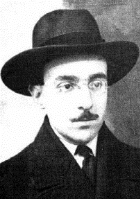

Fernando Pessoa Poems
I am tired, that is clear,
Because, at certain stage, people have to be tired.
Of what I am tired, I don't know:
...
Symbols? I'm sick of symbols...
Some people tell me that everything is symbols.
They're telling me nothing.
What symbols? Dreams...
Let the sun be a symbol, fine...
Let the moon be a symbol, fine...
Let the earth be a symbol, fine...
But who notices the sun except when the rain stops
And it breaks through the clouds and points behind its back
To the blue of the sky?
And who notices the moon except to admire
Not it but the beautiful light it radiates?
And who notices the very earth we tread?
We say earth and think of fields, trees and hills,
Unwittingly diminishing it,
For the sea is also earth.
Okay, let all of this be symbols.
But what's the symbol - not the sun, not the moon, not the earth -
In this premature sunset amidst the fading blue
With the sun caught in expiring tatters of clouds
And the moon already mystically present at the other end of the sky
As the last remnant of daylight
Gilds the head of the seamstress who hesitates at the corner
Where she used to linger (she lives nearby) with the boyfriend who left her?
Symbols? I don't want symbols.
All I want - poor frail and forlorn creature! -
Is for the boyfriend to go back to the seamstress.
...
I know, I alone
How much it hurts, this heart
With no faith nor law
...
Since we do nothing in this confused world
That lasts or that, lasting, is of any worth,
And even what's useful for us we lose
So soon, with our own lives,
Let us prefer the pleasure of the moment
To an absurd concern with the future,
Whose only certainty is the harm we suffer now
To pay for its prosperity.
Tomorrow doesn't exist. This moment
Alone is mine, and I am only who
Exists in this instant, which might be the last
Of the self I pretend to be.
...
Não queiras, Lídia, edificar no ‘spaço
Que figuras futuro, ou prometer-te
Amanhã. Cumpre-te hoje, não ‘sperando.
Tu mesma és tua vida.
Não te destines, que não és futura.
Quem sabe se, entre a taça que esvazias,
E ela de novo enchida, não te a sorte
Interpõe o abismo?
...
Don't try to build in the space you suppose
Is future, Lydia, and don't promise yourself
Tomorrow. Quit hoping and be who you are
Today. You alone are your life.
Don't plot your destiny, for you are not future.
Between the cup you empty and the same cup
Refilled, who knows whether your fortune
Won't interpose the abyss?
...
Não consentem os deuses mais que a vida.
Tudo pois refusemos, que nos alce
A irrespiráveis píncaros,
Perenes sem ter flores.
Só de aceitar tenhamos a ciência,
E, enquanto bate o sangue em nossas fontes,
Nem se engelha connosco
O mesmo amor, duremos,
Como vidros, às luzes transparentes
E deixando escorrer a chuva triste,
Só mornos ao sol quente,
E reflectindo um pouco.
...
The gods grant nothing more than life,
So let us reject whatever lifts us
To unbreathable heights,
Eternal but flowerless.
All that we need to accept is science,
And as long as the blood in our veins still pulses
And love does not shrivel,
Let us go on
Like panes of glass: transparent to light,
Pattered by the sad rain trickling down,
Warmed by the sun,
And reflecting a little.
...
Vivem em nós inúmeros;
Se penso ou sinto, ignoro
Quem é que pensa ou sente.
Sou somente o lugar
Onde se sente ou pensa.
Tenho mais almas que uma.
Há mais eus do que eu mesmo.
Existo todavia
Indiferente a todos.
Faço-os calar: eu falo.
Os impulsos cruzados
Do que sinto ou não sinto
Disputam em quem sou.
Ignoro-os. Nada ditam
A quem me sei: eu escrevo.
...
Countless lives inhabit us.
I don't know, when I think or feel,
Who it is that thinks or feels.
I am merely the place
Where things are thought or felt.
I have more than just one soul.
There are more I's than I myself.
I exist, nevertheless,
Indifferent to them all.
I silence them: I speak.
The crossing urges of what
I feel or do not feel
Struggle in who I am, but I
Ignore them. They dictate nothing
To the I I know: I write.
...
Não sei quantas almas tenho.
Cada momento mudei.
Continuamente me estranho.
Nunca me vi nem achei.
De tanto ser, só tenho alma.
Quem tem alma não tem calma.
Quem vê é só o que vê.
Quem sente não é quem é.
Atento ao que sou e vejo,
Torno-me eles e não eu.
Cada meu sonho ou desejo,
É do que nasce, e não meu.
Sou minha própria paisagem,
Assisto à minha passagem,
Diverso, móbil e só.
Não sei sentir-me onde estou.
Por isso, alheio, vou lendo
Como páginas, meu ser.
O que segue não prevendo,
O que passou a esquecer.
Noto à margem do que li
O que julguei que senti.
Releio e digo, «Fui eu?»
Deus sabe, porque o escreveu.
...
I don't know how many souls I have.
I've changed at every moment.
I always feel like a stranger.
I've never seen or found myself.
From being so much, I have only soul.
A man who has soul has no calm.
A man who sees is just what he sees.
A man who feels is not who he is.
Attentive to what I am and see,
I become them and stop being I.
Each of my dreams and each desire
Belongs to whoever had it, not me.
I am my own landscape,
I watch myself journey -
Various, mobile, and alone.
Here where I am I can't feel myself.
That's why I read, as a stranger,
My being as if it were pages.
Not knowing what will come
And forgetting what has passed,
I note in the margin of my reading
What I thought I felt.
Rereading, I wonder: "Was that me?"
God knows, because he wrote it.
...
Toma-me, ó noite eterna, nos teus braços
E chama-me teu filho. Eu sou um Rei
Que voluntariamente abandonei
O meu trono de sonhos e cansaços.
Minha espada, pesada a braços lassos,
Em mãos viris e calmas entreguei,
E meu ceptro e coroa — eu os deixei
Na antecâmara, feitos em pedaços.
Minha cota de malha, tão inútil,
Minhas esporas, de um tinir tão fútil,
Deixei-as pela fria escadaria.
Despi a realeza, corpo e alma,
E regressei à Noite antiga e calma
Como a paisagem ao morrer do dia.
...
O night eternal, call me your son
And take me into your arms. I'm a king
Who relinquished, willingly,
My throne of dreams and tedium.
My sword, which dragged my weak arms down,
I surrendered to strong and steady hands,
And in the anteroom I abandoned
My shattered scepter and crown.
My spurs that jingled to no avail
And my useless coat of mail
I left on the cold stone steps.
I took off royalty, body and soul,
And returned to the night so calm, so old,
Like the landscape when the sun sets.
...
O poeta é um fingidor.
Finge tão completamente
Que chega a fingir que é dor
A dor que deveras sente.
E os que lêem o que escreve,
Na dor lida sentem bem,
Não as duas que ele teve,
Mas só a que eles não têm.
E assim nas calhas da roda
Gira, a entreter a razão,
Esse comboio de corda
Que se chama o coração.
...
The poet is a faker
Who's so good at his act
He even fakes the pain
Of pain he feels in fact.
And those who read his words
Will feel in his writing
Neither of the pains he has
But just the one they're missing.
And so around its track
This thing called the heart winds,
A little clockwork train
To entertain our minds.
...
Não tenho ninguém que me ame.
'Spera lá, tenho; mas é
Difícil ter-se a certeza
Daquilo em que não se crê.
Não é não crer por descrença,
Porque sei: gostam de mim.
É um não crer por feitio
E teimar em ser assim.
Não tenho ninguém que me ame.
Para este poema existir
Tenho por força que ter
Esta mágoa que sentir.
Que pena não ser amado!
Meu perdido coração!
Etcetera, e está acabado
O meu poema pensado.
Sentir é outra questão…
...
There's no one who loves me.
Hold on, yes there is;
But it's hard to feel certain
About what you don't believe in.
It isn't out of disbelief
That I don't believe, for I know
I'm well liked. It's my nature
Not to believe, and not to change.
There's no one who loves me.
For this poem to exist
I have no choice
But to suffer this grief.
How sad not to be loved!
My poor, forlorn heart!
Et cetera, and that's the end
Of this poem I thought up.
What I feel is another matter...
...
A lavadeira no tanque
Bate roupa em pedra bem.
Canta porque canta, e é triste
Porque canta porque existe;
Por isso é alegre também.
Ora se eu alguma vez
Pudesse fazer nos versos
O que a essa roupa ela fez,
Eu perderia talvez
Os meus destinos diversos.
Há uma grande unidade
Em, sem pensar nem razão,
E até cantando a metade,
Bater roupa em realidade...
Quem me lava o coração?
...
The washwoman beats the laundry
Against the stone in the tank.
She sings because she sings and is sad
For she sings because she exists:
Thus she is also happy.
If I could do in verses
What she does with laundry,
Perhaps I would lose
My surfeit of fates.
Ah, the tremendous unity
Of beating laundry in reality,
Singing songs in whole or in part
Without any thought or reason!
But who will wash my heart?
...
Fernando Pessoa Biography
Fernando Pessoa, born Fernando António Nogueira Pessôa (/pɛˈsoʊə/; Portuguese: [fɨɾˈnɐ̃dw ɐ̃ˈtɔɲju nuˈɣejɾɐ pɨˈsow.wɐ]; June 13, 1888 – November 30, 1935), was a Portuguese poet, writer, literary critic, translator, publisher and philosopher, described as one of the most significant literary figures of the 20th century and one of the greatest poets in the Portuguese language. He also wrote in and translated from English and French. Pessoa was a prolific writer, and not only under his own name, for he dreamed up approximately seventy-five others. He did not call them pseudonyms because he felt that did not capture their true independent intellectual life and instead called them heteronyms. These imaginary figures sometimes held unpopular or extreme views.)
The Best Poem Of Fernando Pessoa
I Am Tired
I am tired, that is clear,
Because, at certain stage, people have to be tired.
Of what I am tired, I don't know:
It would not serve me at all to know
Since the tiredness stays just the same.
The wound hurts as it hurts
And not in function of the cause that produced it.
Yes, I am tired,
And ever so slightly smiling
At the tiredness being only this -
In the body a wish for sleep,
In the soul a desire for not thinking
And, to crown all, a luminous transparency
Of the retrospective understanding…
And the one luxury of not now having hopes?
I am intelligent: that's all.
I have seen much and understood much of what I
have seen.
And there is a certain pleasure even in tiredness
this brings us,
That in the end the head does still serve for
something.
Fernando Pessoa Comments
By 1914 Pessoa had started publishing criticism in prose and poetry. This year is also marked as the birth year of Pessoa’s three main literary personas which he preferred to call heteronyms rather than pseudonyms. These were Alberto Caeiro, Ricardo Reis and Alvaro de Campos. Although throughout his career Pessoa used at least Seventy Eight of his literary figures yet these were the three main heteronyms he returned to from time to time. They all were unique in every manner; they had their own writing style, history, exclusive personality and distinctive physiology. In 1935 Pessoa wrote a letter Adolfo Casais Monteiro explaining how he writes through the names of his three favorite heteronyms.
“How do I write in the name of these three? Caeiro, through sheer and unexpected inspiration, without knowing or even suspecting that I’m going to write in his name. Ricardo Reis, after an abstract meditation, which suddenly takes concrete shape in an ode. Campos, when I feel a sudden impulse to write and don’t know what.” Pessoa is known and praised to have given his heteronyms a full life, entirely different and separate from his own, compared to many other literary personas adopted by noble writers of his era.




Delivering Poems Around The World
Poems are the property of their respective owners. All information has been reproduced here for educational and informational purposes to benefit site visitors, and is provided at no charge...
10/16/2026 4:37:53 AM # rel_20260925T122446Z_7d6ee41



Today I began reading Pessoa's The Book of Disquiet. Any comments appreciated. Pessoa's poetry resonates feelings.