
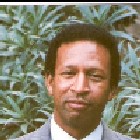
(www.lonniehicks.com / Chicago Ill)

What do you think this poem is about?

Reincarnation: Chapter Six

Now before we go on to examine the life of the young medieval girl who ended up in a nunnery, I want to amplify a last point.

I did not mean to imply that every writing is channeling one of these past live experiences. By no means. So here I will just briefly look at the various perspectives I tend to write from and I suspect other authors do as well.

The first is that of description, which often just involves writing about some past experience (in this life, of course) and trying to communicate to the reader what that experience was like for me.

But what I noticed in this 'experiential' writing stance is how I as a writer parse my experiences. By that I mean some writers give you physical descriptions of the physical surroundings in a given experience. Others give you the emotional landscape at play in a recounting an experience. Some give visual clues, how the characters looks or physical quirks they might have, other might emphasize the sounds of a given experience, of the tactile (romance and erotica) etc.

But note these are the five or six senses being portrayed on paper. The major differences between authors who write 'descriptively' is what mix of senses the author tends to weave into the written word. That is a major demarcater of authors and in my view, in writing styles in this genre as well. A good story is an autobiographical stroll through the author’s sense of the environment.

If we find a major sensory aspect totally absent from an authors writing, we may find that missing aspect pleasing (i.e. no emotion what so ever) or find that style dis-pleasing.

These differences, an author makes.

A second style- sensory matrix is that of the omniscient narrator.

(Hold on, be back in a second. Have to go and save the world one more time.) Sit tight.

Ok back.

Well some authors take the perspective of writing from this god-like perspective. It has its advantages if used sparingly. The pros are the reader is kept in formed even if the characters are hiding crucial truths from themselves and each other.

The down-side is that this is a literary technique which does not exist in reality. Who in real human interactions is God? No one that's who.

So I tend to use this technique sparingly because it is not playing fair.

Besides to be God in a story tends to make one appear distant from the characters and readers and that stance may to the detriment of the story if readers adopt a similar attitude and that may not be good.

There is the dialogue and action mode of telling a story in which words and actions of the characters are allowed to speak for themselves. The author does not intrude here and the reader is left to make up his or her own mind as to what is going on.

A long way for short point here is that sometimes, I write from the inside out and let the characters speak for them selves and I literally don't know what the story will be about when I begin. I admit a little wine often loosens things up but most of the ideas for this kind of writing come to me often when day-dreaming or being occupied with something else. It literally pops into my head, usually at about 3am at night. I go 'humm' write the idea down and the next morning sit to write and let that idea run amok.

I'll often have only a single opening line to work from but my mind says to me 'don't worry here I know what I am doing, keep that pen on the paper and push it along, I will tell you what to do.'

Going with the flow is what best describes it. Sometimes I flow female and sometimes I flow male, happy sad, funny, etc.

So the 'flow' way of writing is what I think of as perhaps, maybe, possibly linked to past lives.

Or maybe I am out of my mind, and too modest. (Smile)

Next time the girl, promise.

Submitted: Friday, July 15, 2011
Edited: Saturday, July 16, 2011


Comments about this poem (Reincarnation: Chapter Six by Lonnie Hicks )

Enter the verification code :

There is no comment submitted by members..
[Hata Bildir]




