George Crabbe
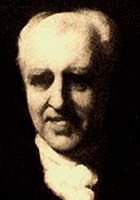

George Crabbe Poems
The Village Life, and every care that reigns
O'er youthful peasants and declining swains;
What labour yields, and what, that labour past,
Age, in its hour of languor, finds at last;
...
Old Peter Grimes made fishing his employ,
His wife he cabin'd with him and his boy,
And seem'd that life laborious to enjoy:
To town came quiet Peter with his fish,
...
Argument
There are found amid the Evils of a Laborious Life, some Views of Tranquillity and Happiness. - The Repose and Pleasure of a Summer Sabbath: interrupted by Intoxication and Dispute. - Village Detraction. - Complaints of the Squire. - The Evening Riots. - Justice. - Reasons for this unpleasant View of Rustic Life: the Effect it should have upon the Lower Classes; and the Higher. - These last have their peculiar Distresses: Exemplified in the Life and heroic Death of Lord Robert Manners. - Concluding Address to his Grace the Duke of Rutland.
...
MY Damon was the first to wake
The gentle flame that cannot die;
My Damon is the last to take
The faithful bosom's softest sigh:
...
'DESCRIBE the Borough'--though our idle tribe
May love description, can we so describe,
That you shall fairly streets and buildings trace,
...
Take, take away thy barbarous hand,
And let me to thy Master speak;
...
Muse of my Spenser, who so well could sing
The passions all, their bearings and their ties;
Who could in view those shadowy beings bring,
...
Yes! there are real mourners - I have seen
A fair, sad girl, mild, suffering, and serene;
Attention (through the day) her duties claim'd,
...
The year revolves, and I again explore
The simple Annals of my Parish poor;
What Infant-members in my flock appear,
...
A QUIET, simple man was Abel Keene,
He meant no harm, nor did he often mean;
He kept a school of loud rebellious boys,
...
DISPOSED to wed, e'en while you hasten, stay;
There's great advantage in a small delay:
Thus Ovid sang, and much the wise approve
...
I'll know no more;--the heart is torn
By views of woe we cannot heal;
Long shall I see these things forlorn,
...
WE'VE trod the maze of error round,
Long wandering in the winding glade;
And now the torch of truth is found,
It only shows us where we strayed:
...
Ye idler things, that soothed my hours of care,
Where would ye wander, triflers, tell me where?
...
WE had a sprightly nymph--in every town
Are some such sprights, who wander up and down;
She had her useful arts, and could contrive,
...
A serious Toyman in the city dwelt,
Who much concern for his religion felt;
...
A Vicar died and left his Daughter poor -
It hurt her not, she was not rich before:
...
Govenors
AN ardent spirit dwells with Christian love,
The eagle's vigour in the pitying dove;
'Tis not enough that we with sorrow sigh,
...
'WHAT is a Church?'--Let Truth and Reason speak,
They would reply, 'The faithful, pure, and meek;
From Christian folds, the one selected race,
...
George Crabbe Biography
George Crabbe was an English poet and clergyman. In his early years he worked as a surgeon. As a young man, his close friend Edmund Burke helped him greatly in advancing his literary career and guiding his career in the church. Burke introduced him to the literary and artistic society of London, including Sir Joshua Reynolds and Samuel Johnson. Burke also secured Crabbe the important position of Chaplain to the Duke of Rutland. Crabbe served as a clergyman in various capacities for the rest of his life. Later, he developed friendships with many of the great literary men of his day, such as Sir Walter Scott and William Wordsworth. Crabbe also had a lifelong interest in naturalism, entomology and botany, and was particularly known for his study of beetles. The poems that he is best known for are The Village (1783) and The Borough (1810). Biography Early Life Crabbe was born in Aldeburgh, Suffolk. His father had been a teacher at a village school in Orford, Suffolk, and later Norton, near Loddon, Norfolk, before settling down as a taxcollector for salt duties, a position his own father had previously held.As a young man he married an older widow named Craddock, fathering six children with her. George was his eldest son. George spent his first 25 years close to his birthplace. He showed an aptitude for books and learning at an early age. He was sent to school while still very young, and developed an interest for the stories and ballads that were popular among his neighbors. His father owned a few books, and used to read passages from John Milton and other 18th century poets to George and the family. He also subscribed to a country magazine called Martin's Philosophical Magazine, giving the "poet's corner" section to George. George's father also had interests in the local fishing industry, and owned a fishing boat. He had first thought of raising George to be a seaman, but soon found that the boy had little proclivity for such a career. George's father respected his son's interest in literature, and George was sent first to a boarding-school at Bungay near his home, and a few years later to a more important school at Stowmarket, where he gained an understanding of Mathematics and Latin and familiarity with the Latin classics. His early reading included the works of William Shakespeare, Alexander Pope, who had a great influence on George's future works, Abraham Cowley, Sir Walter Raleigh and Edmund Spenser. He spent 3 years at Stowmarket before leaving school to find a physician to be apprenticed to, as medicine had been settled on as his future career. In 1768 he was apprenticed to a local doctor at Wickhambrook, near Bury St Edmunds. This doctor practiced medicine while also keeping a small farm, and George ended up doing more farm labour and errands than medical work. In 1771 he changed masters and moved to Woodbridge. He remained here until 1775. While at Woodbridge he joined a small club of young men who met on certain evenings at an inn for discussions. Through his contacts at Woodbridge he met his future wife, Sarah Elmy. Crabbe called her "Mira", later referring to her by this name in some of his poems. During this time he had begun practicing writing poetry. In 1772 A lady's magazine offered a prize for the best poem on the subject of hope, which Crabbe won. The same magazine printed other short pieces of Crabbe's throughout 1772. They were signed "G. C., Woodbridge," and included some of his lyrics addressed to Mira. Other known verses written while he was at Woodbridge show that he made experiments in stanza form modeled on the works of earlier English poets, but only showing some slight imitative skill. 1775 to 1785 His first major work, a satirical poem of nearly 400 lines in Pope's couplet form entitled Inebriety, was self-published in 1775. Crabbe later said of the poem, which garnered little or no attention at the time, "Pray let not this be seen... there is very little of it that I'm not heartily ashamed of." By this time he had completed his medical training and had returned home to Aldeburgh. He had intended to go on to London to study at a hospital, but he was forced through low finances to work for some time as a local warehouseman. He eventually travelled to London in 1777 to practice medicine, returning home in financial difficulty after a year. Crabbe continued to practice as a surgeon after returning to Aldeburgh, but his surgical skills remained deficient, he attracted only the poorest patients, and his fees were small and undependable. This hurt his chances of an early marriage, but Sarah stayed devoted to him. In late 1779 he formed the resolution to go to London and see if he could make it as a poet, or, if that failed, as a doctor. In April 1780, he went to London, where he had little success, and by the end of May he had been forced to pawn some of his possessions, including his surgical instruments. He composed a number of works but was refused publication. He also wrote several letters seeking patronage, but his requests for assistance were also refused. In June Crabbe witnessed some of the mob violence that occured during the Gordon Riots, recording them in a journal he kept. He was able to publish a poem at this time entitled The Candidate, but it was badly received by critics. He continued to rack up debts that he had no way of paying, and his creditors pressed him. He later told Walter Scott and John Gibson Lockhart that "during many months when he was toiling in early life in London he hardly ever tasted butchermeat except on a Sunday, when he dined usually with a tradesman's family, and thought their leg of mutton, baked in the pan, the perfection of luxury." In early 1781 he wrote a letter to Edmund Burke asking for help, in which he included samples of his poetry. Burke was swayed by Crabbe's letter and a subsequent meeting with him, giving him a gift of money to relieve his immediate wants, and assuring him that he would do all in his power to further Crabbe's literary career. Among the samples that Crabbe had sent to Burke were pieces of his poems The Library and The Village. A short time after their first meeting Burke told his friend Sir Joshua Reynolds that he had "the mind and feelings of a gentleman." Burke gave Crabbe the footing of a friend, admitting him to his family circle at Beaconsfield. There he was given an apartment, supplied with books, and made a member of the family. The time he spent with Burke and his family helped in enlarging his knowledge and ideas, and introducing him to many new and valuable friends including Charles James Fox and Samuel Johnson. He completed his unfinished poems and revised others with the help Burke's criticism. Burke helped him have his poem, The Library, published anonymously in June 1781, by a publisher that had previously refused some of his work. The Library was greeted with a small amount of praise from critics, and only slight public appreciation. Through their friendship, Burke discovered that Crabbe was much more fit to be a clergyman than a surgeon. Crabbe had a good knowledge of Latin, a natural piety that was evident to all of his acquaintances, and was well read in the scriptures. He was ordained to the curacy of his native town on 21 December 1781 through Burke's recommendation. He returned to live in Aldeburgh with his sister and father, his mother having died in his absence. Crabbe was surprised to find that he was poorly treated by his fellow townsmen, who were jealous and resentful of his rise in social class. With Burke's help, Crabbe was able to leave his position in Aldeburgh and become chaplain to the Duke of Rutland at Belvoir Castle in Leicestershire. This was an unusual move on Burke's part, as this kind of preferment would usually have been given to a family member or personal friend of the Duke or through political interest, and shows Burke's confidence in Crabbe. Crabbe's experience as Chaplain at Belvoir wasn't altogether a happy one. He was treated with kindness by the Duke and Duchess, but his slightly unpolished manners and his position as a literary dependent made his relations with others in the Duke's house difficult, especially the servants. His experience here wasn't all negative though. The Duke and Duchess and many of their noble guests shared an interest in Crabbe's literary talent and work. During his time here, in May of 1782 his poem The Village was published, achieving popularity with the public and critics. Samuel Johnson said of the poem in a letter to Reynolds "I have sent you back Mr. Crabbe's poem, which I read with great delight. It is original, vigorous, and elegant." Johnson's friend and biographer James Boswell also praised The Village. It was said at the time of publication that Johnson had made extensive changes to the poem, but Boswell responded by saying that "the aid given by Johnson to the poem, as to The Traveller and Deserted Village of Goldsmith, were so small as by no means to impair the distinguished merit of the author." Crabbe was able to keep up his friendships with Burke, Reynolds, and others during the Duke's occasional visits to London. He visited the theatre, and was greatly impressed with the actresses Sarah Siddons and Dorothea Jordan. Around this time it was decided that, as Chaplain to a noble family, Crabbe was in need of a college degree, and his name was entered on the boards of Trinity College, Cambridge, through the influence of Bishop Watson of Llandaff, so that Crabbe could obtain a degree without residence. This was in 1783, but almost immediately afterwards he received an LL.B. degree from the Archbishop of Canterbury. This degree allowed Crabbe to be given two small livings in Dorsetshire, Frome St Quintin and Evershot. This promotion doesn't seem to have interfered with Crabbe's residence at Belvoir or in London as curates were most likely placed in these situations. On the strength of these preferments and a promise of future assistance from the Duke, Crabbe and Sarah Elmy were married in December 1783, in the parish church of Beccles, where Miss Elmy's mother lived, and a few weeks later went to live together at Belvoir Castle. In 1784 the Duke of Rutland became Lord Lieutenant of Ireland. It was decided that Crabbe was not to be on the Duke's staff in Ireland, though the two men parted as close friends. The young couple stayed on at Belvoir for nearly another eighteen months before Crabbe accepted a vacant curacy in the neighbourhood, that of Stathern in Leicestershire, where Crabbe and his wife moved in 1785. A child had been born to them at Belvoir, dying only hours after birth. During the following four years at Stathern they had three other children; two sons, George and John, in 1785 and 1787, and a daughter in 1789, who died in infancy. Crabbe later told his children that his four years at Stathern were the happiest of his life. 1785 to 1810 In October 1787 the Duke of Rutland died at the Vice-Regal Lodge in Dublin, after a short illness, at the early age of 35. Crabbe assisted at the funeral at Belvoir. The Duchess, anxious to have their former chaplain close by, was able to get Crabbe the two livings of Muston, Leicestershire, and Allington, Lincolnshire, in exchange for his old livings. Crabbe brought his family to Muston in February 1789. His connection with the two livings lasted for over 25 years, but during 13 of these years he was a non-resident. He stayed three years at Muston. Another son, Edmund, was born in 1790. In 1792, through the death of one of Sarah's relations and soon after of her older sister, the Crabbe family came into possession of an estate that removed all of their financial worries. Crabbe soon moved his family to this estate which was in Parnham. Their son William was born the same year. Crabbe's life at Parnham wasn't happy. The former owner of the estate had been very popular for his hospitality, while Crabbe's lifestyle was much more quiet and private. His solace here was the company of his friend Dudley Long North and his fellow Whigs who lived nearby. Crabbe soon sent his two sons George and John to school in Aldeburgh. After four years at Parnham, the Crabbes moved to a home in Great Glemham, Suffolk, placed at his disposal by Dudley North. The family remained here for four or five years. In 1796 their third son, Edmund died at the age of six. This was a heavy blow to Sarah who began suffering from a nervous disorder from which she never recovered. Crabbe, a devoted husband, tended her with exemplary care until her death in 1813. Robert Southey, writing about Crabbe to his friend, Neville White, in 1808, said "It was not long before his wife became deranged, and when all this was told me by one who knew him well, five years ago, he was still almost confined in his own house, anxiously waiting upon this wife in her long and hopeless malady. A sad history! It is no wonder that he gives so melancholy a picture of human life." During his time at Glemham, Crabbe composed several novels, none of which were published, being of much lower quality than his poetry. After Glemham, Crabbe moved to the village of Rendham in Suffolk, where he stayed until 1805. His poem The Parish Register was all but completed while at Rendham, and The Borough was also begun. 1805 was the last year of Crabbe's stay in Suffolk, and it was made memorable in literature by the appearance of the Lay of the Last Minstrel by Walter Scott. Crabbe first saw it in a bookseller's shop in Ipswich, read it nearly through while standing at the counter, and pronounced that a new and great poet had appeared. In October 1805, Crabbe returned with his wife and two sons to the parsonage at Muston. He had been absent for nearly 13 years, of which four had been spent at Parham, five at Great Glemham, and four at Rendham, In September 1807, Crabbe published a new volume of poems. Included in this volume were The Library, The Newspaper, and The Village. The principal new poem was The Parish Register, to which were added Sir Eustace Grey and The Hall of Justice. The volume was dedicated to Henry Vassall-Fox, 3rd Baron Holland, nephew and sometime ward of Charles James Fox. 22 years had passed since Crabbe's last appearance as an author, and he explained in the preface to this volume the reasons for this lapse as being his higher calling as a clergyman and his slow progress in poetical ability. This volume led to Crabbe's general acceptance as an important poet. Four editions were issued during the following year and a half, the fourth appearing in March 1809. The reviews were unanimous in approval, headed by Francis Jeffrey in the Edinburgh Review. In 1809 Crabbe sent a copy of his poems in their fourth edition to Walter Scott, who acknowledged them and Crabbe's accompanying letter in a friendly reply. Scott told Crabbe "how for more than twenty years he had desired the pleasure of a personal introduction to him, and how, as a lad of eighteen, he had met with selections from The Village and The Library in The Annual Register." This exchange of letters led to a friendship that lasted for the rest of their lives, both authors dying in 1832. The success of The Parish Register in 1807 encouraged Crabbe to proceed with a far longer poem, which he had been working on for several years. The Borough was begun at Rendham in Suffolk in 1801, continued at Muston after his return in 1805, and finally completed during a long visit to Aldeburgh in the autumn of 1809. It was published in 1810. In spite of defects, and inequalities of workmanship, The Borough was an outright success. The poem appeared in February 1810, and went through six editions in the next six years. When he visited London a few years later and was received with general welcome in the literary world, he was very surprised. "In my own village," he told James Smith, "they think nothing of me." The three years following the publication of The Borough were especially lonely for him. He did have his two sons, George and John, with him; they had both passed through Cambridge, one at Trinity and the other at Caius, and were now clergymen themselves, each holding a curacy in the neighbourhood, enabling them to live under the parental roof, but Mrs. Crabbe's condition was now very bad, and Crabbe had no daughter or female relative at home to help him with her care. Later Life Crabbe's next volume of poetry, Tales was published in the summer of 1812. It received a warm welcome from the poet's admirers, and was favorably reviewed by Jeffrey in the Edinburgh Review. In the summer of 1813 Mrs. Crabbe felt well enough to want to see London again, and the father and mother and two sons spent nearly three months in rooms in a hotel. Crabbe was able to visit Dudley North, and some of his other old friends, and to visit and help the poor and distressed, remembering his own want and misery in the great city thirty years earlier. The family returned to Muston in September, and Mrs. Crabbe died at the end of October at the age of 63. Within days of his wife's death Crabbe fell seriously ill, and was in danger of dying. He rallied, however, and returned to the duties of his parish. In 1814, he became Rector of Trowbridge in Wiltshire, a position given to him by the new Duke of Rutland. He remained at Trowbridge for the rest of his life. His two sons followed him, as soon as their existing engagements allowed them to leave Leicestershire. The younger, John, who married in 1816, became his father's curate, and the elder, who married a year later, became curate at Pucklechurch, also nearby. Crabbe's reputation as a poet continued to grow in these years. His growing reputation soon made him a welcome guest in many houses to which his position as vicar of Trowbridge might not have admitted him. Nearby was the poet William Lisle Bowles, who introduced Crabbe to the noble family at Bowood House, home of the Marquess of Lansdowne who was always ready to welcome those distinguished in literature and the arts. It was at Bowood House that Crabbe first met the poet Samuel Rogers who became a close friend and had an influence on Crabbe's poetry. In 1817, on the recommendation of Rogers, Crabbe stayed in London from the middle of June to the end of July in order to enjoy the literary society of the capital. While there he met Thomas Campbell, and through him and Rogers was introduced to his future publisher John Murray. In June 1819 Crabbe published his collection Tales from the Hills. The last 13 years of Crabbe's life were spent at Trowbridge, varied by occasional visits among his friends at Bath and the surrounding neighbourhood, and by yearly visits to his friend Samuel Hoare Jr in Hampstead. From here it was easy to visit his literary friends in London, while William Wordsworth, Southey, and others occasionally stayed with the family. Around 1820 Crabbe began suffering from frequent severe attacks of neuralgia, and this illness, together with his age, made him less and less able to travel to London. Crabbe visited Walter Scott in Edinburgh in 1822. In the spring of that year, Crabbe had met Scott for the first time in London, promising to visit him in Scotland in the autumn. This was during the time of King George IV's visit to Edinburgh where he met with Scott. After returning from his meeting with the King, where he had been given a wine glass that the King had drank from, Scott was met at his home by Crabbe. "Scott entered the room that had been set aside for Crabbe, wet and hurried, and embraced Crabbe with brotherly affection. The royal gift was forgotten— the ample skirt of the coat within which it had been packed, and which he had hitherto held cautiously in front of his person, slipped back to its more usual position— he sat down beside Crabbe, and the glass was crushed to atoms. His scream and gesture made his wife conclude that he had sat down on a pair of scissors, or the like: but very little harm had been done except the breaking of the glass" John Gibson Lockhart later related in his Life of Sir Walter Scott. Crabbe's favorite among Scott's "Waverley" novels was The Heart of Midlothian. That same year he was invited to spend Christmas at Belvoir Castle, but was unable to make the trip because of the winter weather. While at home, Crabbe continued to write a large amount of poetry, leaving 21 manuscript volumes at his death. A selection from these formed the Posthumous Poems, published in 1834. Crabbe continued to visit at Hampstead throughout the 1820s, often meeting the writer Joanna Baillie and her sister Agnes. In the autumn of 1831 Crabbe visited the Hoares. He left them in November, expressing his pain and sadness at leaving in a letter, feeling that it might be the last time he saw them. He left Clifton in November, and went direct to his son George, at Pucklechurch. He was able to preach twice for his son, who congratulated him on the power of his voice, and other encouraging signs of strength. "I will venture a good sum, sir," he said, "that you will be assisting me ten years hence." "Ten weeks" was Crabbe's answer, and the prediction was right almost to the day. After a short time at Pucklechurch, Crabbe returned to his home at Trowbridge. Early in January he reported continued drowsiness, which he felt was a sign of increasing weakness. Later in the month he was prostrated by a severe cold. Other complications arose, and it soon became apparent that he wouldn't live much longer. He passed away on the 3 February 1832, with his two sons and his faithful nurse by his side. Criticism The two works for which Crabbe became best known were The Village (1783) and The Borough (1810), both lengthy poems dealing with the way of life he had experienced. Lord Byron, an avowed admirer of Crabbe's poetry, called him "Nature's sternest painter, yet the best". Crabbe's poetry was predominantly in the form of heroic couplets. His poetry has also been described as unsentimental in its depiction of provincial life and society. John Wilson stated that "Crabbe is confessedly the most original and vivid painter of the vast varieties of common life that England has ever produced;" and that "In all the poetry of this extraordinary man, we see a constant display of the passions as they are excited and exacerbated by the customs, laws, and institutions of society." Wordsworth once said that Crabbe's poetry would last "from its combined merits as truth and poetry fully as long as anything that has been expressed in verse since it first made its appearance", though on another occasion, according to Henry Crabb Robinson, he "blamed Crabbe for his unpoetical mode of considering human nature and society." This last opinion was also held by William Hazlitt, who complained that Crabbe's characters "remind one of anatomical preservations; or may be said to bear the same relation to actual life that a stuffed cat in a glass-case does to the real one purring on the hearth." Byron, besides what he said in English Bards and Scotch Reviewers, declared, in 1816, that he considered Crabbe and Coleridge "the first of these times in point of power and genius." Byron had felt that English poetry had been steadily on the decline since the depreciation of Pope, and pointed to Crabbe as the last remaining hope of a degenerate age. Alfred Lord Tennyson was also an admirer of of Crabbe's poetry. Other admirers of Crabbe's work included Jane Austen and Walter Scott, who used numerous quotes from Crabbe's poems in his novels. Naturalism and Entomology He was also known as a coleopterist and recorder of beetles, and is credited for discovering the first specimen of Calosoma sycophanta L. to be recorded from Suffolk. He published an essay on the Natural History of the Vale of Belvoir in John Nichols's, Bibliotheca Topographia Britannica, VIII, Antiquities in Leicestershire, 1790. It includes a very extensive list of local coleopterans, and references more than 70 species. This text was later reviewed by the renowned entomologist Horace Donisthorpe, who concluded that George Crabbe had both a broad knowledge of national species and was well acquainted with contemporary scientific literature, including works by Linnaeus and Fabricius. Adaptions Benjamin Britten's opera Peter Grimes is based on The Borough. Britten also set an extract from The Borough as the third of his Five Flower Songs, op. 47. Charles Lamb's verse play The Wife's Trial; or, The Intruding Widow, written in 1827 and published the following year in Blackwood's Magazine, was based on Crabbe's tale "The Confidant".)
The Best Poem Of George Crabbe
The Village: Book I
The Village Life, and every care that reigns
O'er youthful peasants and declining swains;
What labour yields, and what, that labour past,
Age, in its hour of languor, finds at last;
What form the real picture of the poor,
Demand a song--the Muse can give no more.
Fled are those times, when, in harmonious strains,
The rustic poet praised his native plains:
No shepherds now, in smooth alternate verse,
Their country's beauty or their nymphs' rehearse;
Yet still for these we frame the tender strain,
Still in our lays fond Corydons complain,
And shepherds' boys their amorous pains reveal,
The only pains, alas! they never feel.
On Mincio's banks, in Caesar's bounteous reign,
If Tityrus found the Golden Age again,
Must sleepy bards the flattering dream prolong,
Mechanic echoes of the Mantuan song?
From Truth and Nature shall we widely stray,
Where Virgil, not where Fancy, leads the way?
Yes, thus the Muses sing of happy swains,
Because the Muses never knew their pains:
They boast their peasants' pipes; but peasants now
Resign their pipes and plod behind the plough;
And few, amid the rural-tribe, have time
To number syllables, and play with rhyme;
Save honest Duck, what son of verse could share
The poet's rapture, and the peasant's care?
Or the great labours of the field degrade,
With the new peril of a poorer trade?
From this chief cause these idle praises spring,
That themes so easy few forbear to sing;
For no deep thought the trifling subjects ask;
To sing of shepherds is an easy task:
The happy youth assumes the common strain,
A nymph his mistress, and himself a swain;
With no sad scenes he clouds his tuneful prayer
But all, to look like her, is painted fair.
I grant indeed that fields and flocks have charms
For him that grazes or for him that farms;
But when amid such pleasing scenes I trace
The poor laborious natives of the place,
And see the mid-day sun, with fervid ray,
On their bare heads and dewy temples play;
While some with feebler heads and fainter hearts,
Deplore their fortune, yet sustain their parts:
Then shall I dare these real ills to hide
In tinsel trappings of poetic pride?
No; cast by Fortune on a frowning coast,
Which neither groves nor happy valleys boast;
Where other cares than those the Muse relates,
And other shepherds dwell with other mates;
By such examples taught, I paint the Cot,
As Truth will paint it, and as Bards will not:
Nor you, ye poor, of letter'd scorn complain,
To you the smoothest song is smooth in vain;
O'ercome by labour, and bow'd down by time,
Feel you the barren flattery of a rhyme?
Can poets soothe you, when you pine for bread,
By winding myrtles round your ruin'd shed?
Can their light tales your weighty griefs o'erpower
Or glad with airy mirth the toilsome hour?
Lo! where the heath, with withering brake grown o'er,
Lends the light turf that warms the neighbouring poor;
From thence a length of burning sand appears,
Where the thin harvest waves its wither'd ears;
Rank weeds, that every art and care defy,
Reign o'er the land, and rob the blighted rye:
There thistles stretch their prickly arms afar,
And to the ragged infant threaten war;
There poppies nodding, mock the hope of toil;
There the blue bugloss paints the sterile soil;
Hardy and high, above the slender sheaf,
The slimy mallow waves her silky leaf;
O'er the young shoot the charlock throws a shade,
And clasping tares cling round the sickly blade;
With mingled tints the rocky coasts abound,
And a sad splendour vainly shines around.
So looks the nymph whom wretched arts adorn,
Betray'd by man, then left for man to scorn;
Whose cheek in vain assumes the mimic rose,
While her sad eyes the troubled breast disclose;
Whose outward splendour is but folly's dress,
Exposing most, when most it gilds distress.
Here joyous roam a wild amphibious race,
With sullen woe display'd in every face;
Who, far from civil arts and social fly,
And scowl at strangers with suspicious eye.
Here too the lawless merchant of the main
Draws from his plough th' intoxicated swain;
Want only claim'd the labour of the day,
But vice now steals his nightly rest away.
Where are the swains, who, daily labour done,
With rural games play'd down the setting sun;
Who struck with matchless force the bounding ball,
Or made the pond'rous quoit obliquely fall;
While some huge Ajax, terrible and strong,
Engaged some artful stripling of the throng,
And fell beneath him, foil'd, while far around
Hoarse triumph rose, and rocks return'd the sound?
Where now are these?--Beneath yon cliff they stand,
To show the freighted pinnace where to land;
To load the ready steed with guilty haste,
To fly in terror o'er the pathless waste,
Or, when detected, in their straggling course,
To foil their foes by cunning or by force;
Or, yielding part (which equal knaves demand),
To gain a lawless passport through the land.
Here, wand'ring long amid these frowning fields,
I sought the simple life that Nature yields;
Rapine and Wrong and Fear usurp'd her place,
And a bold, artful, surly, savage race;
Who, only skill'd to take the finny tribe,
The yearly dinner, or septennial bribe,
Wait on the shore, and, as the waves run high,
On the tost vessel bend their eager eye,
Which to their coast directs its vent'rous way;
Theirs, or the ocean's, miserable prey.
As on their neighbouring beach yon swallows stand,
And wait for favouring winds to leave the land;
While still for flight the ready wing is spread:
So waited I the favouring hour, and fled;
Fled from those shores where guilt and famine reign,
And cried, Ah! hapless they who still remain;
Who still remain to hear the ocean roar,
Whose greedy waves devour the lessening shore;
Till some fierce tide, with more imperious sway,
Sweeps the low hut and all it holds away;
When the sad tenant weeps from door to door,
And begs a poor protection from the poor!
But these are scenes where Nature's niggard hand
Gave a spare portion to the famish'd land;
Hers is the fault, if here mankind complain
Of fruitless toil and labour spent in vain;
But yet in other scenes more fair in view,
Where Plenty smiles--alas! she smiles for few
And those who taste not, yet behold her store,
Are as the slaves that dig the golden ore,
The wealth around them makes them doubly poor.
Or will you deem them amply paid in health,
Labour's fair child, that languishes with wealth?
Go then! and see them rising with the sun,
Through a long course of daily toil to run;
See them beneath the dog-star's raging heat,
When the knees tremble and the temples beat;
Behold them, leaning on their scythes, look o'er
The labour past, and toils to come explore;
See them alternate suns and showers engage,
And hoard up aches and anguish for their age;
Through fens and marshy moors their steps pursue,
When their warm pores imbibe the evening dew;
Then own that labour may as fatal be
To these thy slaves, as thine excess to thee.
Amid this tribe too oft a manly pride
Strives in strong toil the fainting heart to hide;
There may you see the youth of slender frame
Contend with weakness, weariness, and shame:
Yet, urged along, and proudly loth to yield,
He strives to join his fellows of the field.
Till long-contending nature droops at last,
Declining health rejects his poor repast,
His cheerless spouse the coming danger sees,
And mutual murmurs urge the slow disease.
Yet grant them health, 'tis not for us to tell,
Though the head droops not, that the heart is well;
Or will you praise that homely, healthy fare,
Plenteous and plain, that happy peasants share!
Oh! trifle not with wants you cannot feel,
Nor mock the misery of a stinted meal;
Homely, not wholesome, plain, not plenteous, such
As you who praise would never deign to touch.
Ye gentle souls, who dream of rural ease,
Whom the smooth stream and smoother sonnet please;
Go! if the peaceful cot your praises share,
Go look within, and ask if peace be there;
If peace be his--that drooping weary sire,
Or theirs, that offspring round their feeble fire;
Or hers, that matron pale, whose trembling hand
Turns on the wretched hearth th' expiring brand!
Nor yet can Time itself obtain for these
Life's latest comforts, due respect and ease;
For yonder see that hoary swain, whose age
Can with no cares except his own engage;
Who, propp'd on that rude staff, looks up to see
The bare arms broken from the withering tree,
On which, a boy, he climb'd the loftiest bough,
Then his first joy, but his sad emblem now.
He once was chief in all the rustic trade;
His steady hand the straightest furrow made;
Full many a prize he won, and still is proud
To find the triumphs of his youth allow'd;
A transient pleasure sparkles in his eyes,
He hears and smiles, then thinks again and sighs:
For now he journeys to his grave in pain;
The rich disdain him; nay, the poor disdain;
Alternate masters now their slave command,
Urge the weak efforts of his feeble hand,
And, when his age attempts its task in vain,
With ruthless taunts, of lazy poor complain.
Oft may you see him, when he tends the sheep,
His winter-charge, beneath the hillock weep;
Oft hear him murmur to the winds that blow
O'er his white locks and bury them in snow,
When, roused by rage and muttering in the morn,
He mends the broken hedge with icy thorn:--
"Why do I live, when I desire to be
At once from life and life's long labour free?
Like leaves in spring, the young are blown away,
Without the sorrows of a slow decay;
I, like yon wither'd leaf, remain behind,
Nipp'd by the frost, and shivering in the wind;
There it abides till younger buds come on,
As I, now all my fellow-swains are gone;
Then, from the rising generation thrust,
It falls, like me, unnoticed to the dust.
"These fruitful fields, these numerous flocks I see,
Are others' gain, but killing cares to me;
To me the children of my youth are lords,
Cool in their looks, but hasty in their words:
Wants of their own demand their care; and who
Feels his own want and succours others too?
A lonely, wretched man, in pain I go,
None need my help, and none relieve my woe;
Then let my bones beneath the turf be laid,
And men forget the wretch they would not aid."
Thus groan the old, till, by disease oppress'd,
They taste a final woe, and then they rest.
Theirs is yon house that holds the parish-poor,
Whose walls of mud scarce bear the broken door;
There, where the putrid vapours, flagging, play,
And the dull wheel hums doleful through the day;--
There children dwell who know no parents' care;
Parents, who know no children's love, dwell there!
Heart-broken matrons on their joyless bed,
Forsaken wives, and mothers never wed;
Dejected widows with unheeded tears,
And crippled age with more than childhood fears;
The lame, the blind, and, far the happiest they!
The moping idiot and the madman gay.
Here too the sick their final doom receive,
Here brought, amid the scenes of grief, to grieve,
Where the loud groans from some sad chamber flow,
Mix'd with the clamours of the crowd below;
Here, sorrowing, they each kindred sorrow scan,
And the cold charities of man to man:
Whose laws indeed for ruin'd age provide,
And strong compulsion plucks the scrap from pride;
But still that scrap is bought with many a sigh,
And pride embitters what it can't deny.
Say ye, oppress'd by some fantastic woes,
Some jarring nerve that baffles your repose;
Who press the downy couch, while slaves advance
With timid eye, to read the distant glance;
Who with sad prayers the weary doctor tease,
To name the nameless ever-new disease;
Who with mock patience dire complaints endure,
Which real pain and that alone can cure;
How would ye bear in real pain to lie,
Despised, neglected, left alone to die?
How would ye bear to draw your latest breath,
Where all that's wretched paves the way for death?
Such is that room which one rude beam divides,
And naked rafters form the sloping sides;
Where the vile bands that bind the thatch are seen,
And lath and mud are all that lie between;
Save one dull pane, that, coarsely patch'd, gives way
To the rude tempest, yet excludes the day:
Here, on a matted flock, with dust o'erspread,
The drooping wretch reclines his languid head;
For him no hand the cordial cup applies,
Or wipes the tear that stagnates in his eyes;
No friends with soft discourse his pain beguile,
Or promise hope till sickness wears a smile.
But soon a loud and hasty summons calls,
Shakes the thin roof, and echoes round the walls;
Anon, a figure enters, quaintly neat,
All pride and business, bustle and conceit;
With looks unalter'd by these scenes of woe,
With speed that, entering, speaks his haste to go,
He bids the gazing throng around him fly,
And carries fate and physic in his eye:
A potent quack, long versed in human ills,
Who first insults the victim whom he kills;
Whose murd'rous hand a drowsy Bench protect,
And whose most tender mercy is neglect.
Paid by the parish for attendance here,
He wears contempt upon his sapient sneer;
In haste he seeks the bed where Misery lies,
Impatience mark'd in his averted eyes;
And, some habitual queries hurried o'er,
Without reply, he rushes on the door:
His drooping patient, long inured to pain,
And long unheeded, knows remonstrance vain;
He ceases now the feeble help to crave
Of man; and silent sinks into the grave.
But ere his death some pious doubts arise,
Some simple fears, which "bold bad" men despise;
Fain would he ask the parish-priest to prove
His title certain to the joys above:
For this he sends the murmuring nurse, who calls
The holy stranger to these dismal walls:
And doth not he, the pious man, appear,
He, "passing rich with forty pounds a year"?
Ah! no; a shepherd of a different stock,
And far unlike him, feeds this little flock:
A jovial youth, who thinks his Sunday's task
As much as God or man can fairly ask;
The rest he gives to loves and labours light,
To fields the morning, and to feasts the night;
None better skill'd the noisy pack to guide,
To urge their chase, to cheer them or to chide;
A sportsman keen, he shoots through half the day,
And, skill'd at whist, devotes the night to play:
Then, while such honours bloom around his head,
Shall he sit sadly by the sick man's bed,
To raise the hope he feels not, or with zeal
To combat fears that e'en the pious feel?
Now once again the gloomy scene explore,
Less gloomy now; the bitter hour is o'er,
The man of many sorrows sighs no more.--
Up yonder hill, behold how sadly slow
The bier moves winding from the vale below;
There lie the happy dead, from trouble free,
And the glad parish pays the frugal fee:
No more, O Death! thy victim starts to hear
Churchwarden stern, or kingly overseer;
No more the farmer claims his humble bow,
Thou art his lord, the best of tyrants thou!
Now to the church behold the mourners come,
Sedately torpid and devoutly dumb;
The village children now their games suspend,
To see the bier that bears their ancient friend;
For he was one in all their idle sport,
And like a monarch ruled their little court.
The pliant bow he form'd, the flying ball,
The bat, the wicket, were his labours all;
Him now they follow to his grave, and stand
Silent and sad, and gazing, hand in hand;
While bending low, their eager eyes explore
The mingled relics of the parish poor;
The bell tolls late, the moping owl flies round,
Fear marks the flight and magnifies the sound;
The busy priest, detain'd by weightier care,
Defers his duty till the day of prayer;
And, waiting long, the crowd retire distress'd,
To think a poor man's bones should lie unbless'd.
George Crabbe Comments
George Crabbe Popularity
George Crabbe Popularity




Delivering Poems Around The World
Poems are the property of their respective owners. All information has been reproduced here for educational and informational purposes to benefit site visitors, and is provided at no charge...
4/28/2024 11:33:20 AM # 1.0.0.1119