
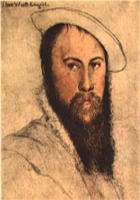

Sir Thomas Wyatt Poems
Is it possible
That so high debate,
So sharp, so sore, and of such rate,
Should end so soon and was begun so late?
Is it possible?
...
Farewell love and all thy laws forever;
Thy baited hooks shall tangle me no more.
Senec and Plato call me from thy lore
To perfect wealth, my wit for to endeavour.
...
My lute awake! perform the last
Labour that thou and I shall waste,
And end that I have now begun;
For when this song is sung and past,
My lute be still, for I have done.
...
I find no peace, and all my war is done.
I fear and hope. I burn and freeze like ice.
I fly above the wind, yet can I not arise;
And nought I have, and all the world I season.
...
And wilt thou leave me thus?
Say nay, say nay, for shame,
To save thee from the blame
Of all my grief and grame;
...
Farewell, Love, and all thy laws for ever:
Thy baited hooks shall tangle me no more.
Senec and Plato call me from thy lore,
To perfect wealth my wit for to endeavour.
...
They flee from me that sometime did me seek
With naked foot, stalking in my chamber.
I have seen them gentle, tame, and meek,
...
Lux, my fair falcon, and your fellows all,
How well pleasant it were your liberty.
Ye not forsake me that fair might ye befall,
But they that sometime liked my company,
...
WHAT should I say?
--Since Faith is dead,
And Truth away
From you is fled?
...
My galley, chargèd with forgetfulness,
Thorough sharp seas in winter nights doth pass
'Tween rock and rock; and eke mine en'my, alas,
That is my lord, steereth with cruelness;
...




Delivering Poems Around The World
Poems are the property of their respective owners. All information has been reproduced here for educational and informational purposes to benefit site visitors, and is provided at no charge...
6/11/2026 3:16:54 AM # 1.0.0


