
Rupert Brooke
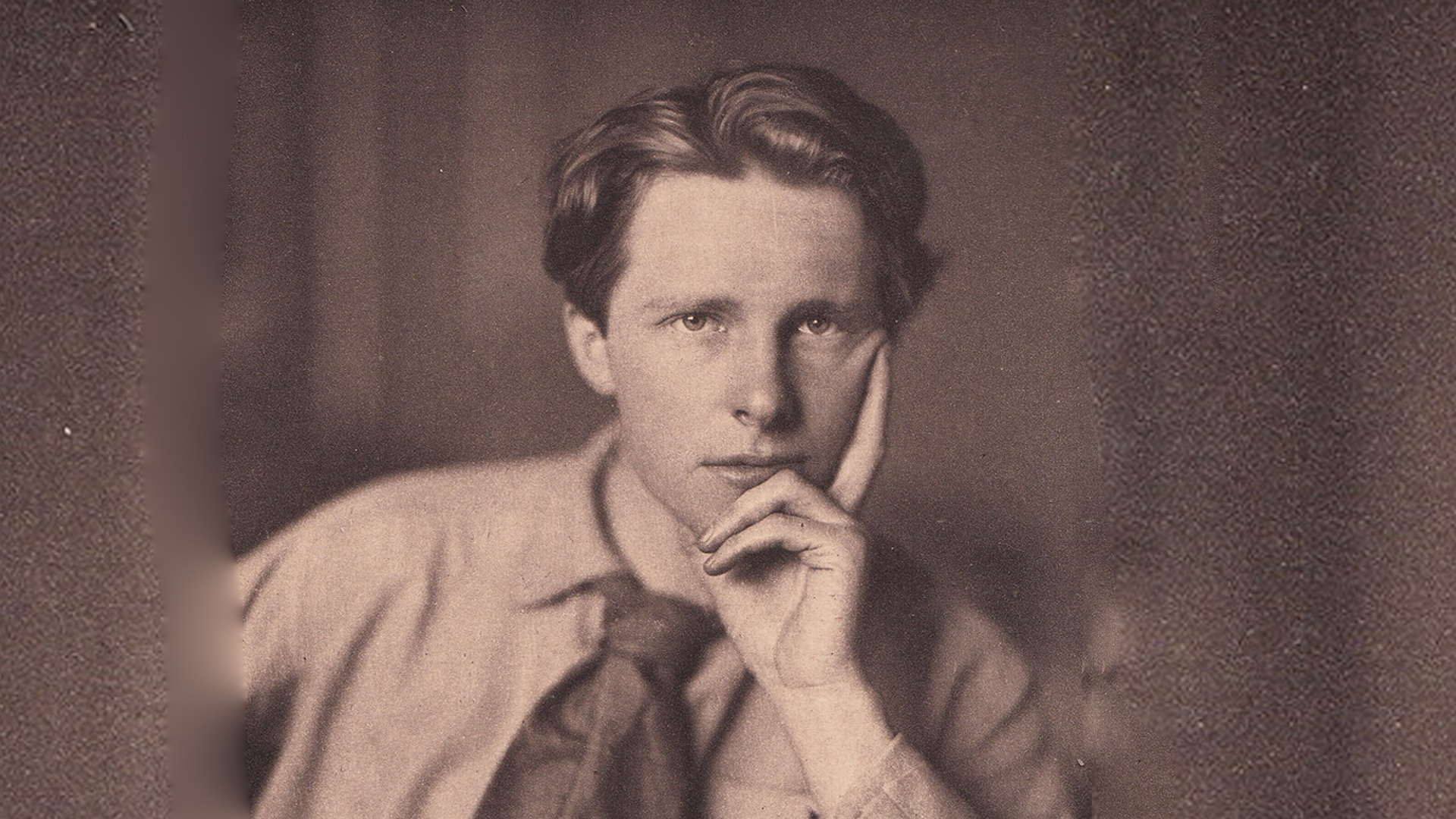

Rupert Brooke Poems
If I should die, think only this of me:
That there's some corner of a foreign field
That is for ever England. There shall be
In that rich earth a richer dust concealed;
...
Now, God be thanked Who has watched us with His hour,
And caught our youth, and wakened us from sleeping,
With hand made sure, clear eye, and sharpened power,
To turn, as swimmers into cleanness leaping,
...
These hearts were woven of human joys and cares,
Washed marvellously with sorrow, swift to mirth.
The years had given them kindness. Dawn was theirs,
And sunset, and the colours of the earth.
...
When Beauty and Beauty meet
All naked, fair to fair,
The earth is crying-sweet,
And scattering-bright the air,
...
Somewhile before the dawn I rose, and stept
Softly along the dim way to your room,
And found you sleeping in the quiet gloom,
And holiness about you as you slept.
...
The damned ship lurched and slithered. Quiet and quick
My cold gorge rose; the long sea rolled; I knew
I must think hard of something, or be sick;
And could think hard of only one thing -- YOU!
...
Sir, since the last Elizabethan died,
Or, rather, that more Paradisal muse,
Blind with much light, passed to the light more glorious
Or deeper blindness, no man's hand, as thine,
...
Blow out, you bugles, over the rich Dead!
There's none of these so lonely and poor of old,
But, dying, has made us rarer gifts than gold.
These laid the world away; poured out the red
...
When love has changed to kindliness --
Oh, love, our hungry lips, that press
So tight that Time's an old god's dream
Nodding in heaven, and whisper stuff
...
Out of the nothingness of sleep,
The slow dreams of Eternity,
There was a thunder on the deep:
I came, because you called to me.
...
Dear! of all happy in the hour, most blest
He who has found our hid security,
Assured in the dark tides of the world that rest,
And heard our word, 'Who is so safe as we?'
...
There was a damned successful Poet;
There was a Woman like the Sun.
And they were dead. They did not know it.
...
Some day I shall rise and leave my friends
And seek you again through the world's far ends,
You whom I found so fair
(Touch of your hands and smell of your hair!),
...
Before thy shrine I kneel, an unknown worshipper,
Chanting strange hymns to thee and sorrowful litanies,
Incense of dirges, prayers that are as holy myrrh
...
Now that we've done our best and worst, and parted,
I would fill my mind with thoughts that will not rend.
(O heart, I do not dare go empty-hearted)
I'll think of Love in books, Love without end;
...
My restless blood now lies a-quiver,
Knowing that always, exquisitely,
This April twilight on the river
Stirs anguish in the heart of me.
...
Because God put His adamantine fate
Between my sullen heart and its desire,
I swore that I would burst the Iron Gate,
...
Down the blue night the unending columns press
In noiseless tumult, break and wave and flow,
Now tread the far South, or lift rounds of snow
...
I have been so great a lover: filled my days
So proudly with the splendour of Love's praise,
The pain, the calm, and the astonishment,
Desire illimitable, and still content,
...
Tenderly, day that I have loved, I close your eyes,
And smooth your quiet brow, and fold your thin dead hands.
The grey veils of the half-light deepen; colour dies.
...
Rupert Brooke Biography
A man of great physical beauty by reputation, Rupert Brooke was born in Rugby, Warwickshire where he attended the local school. He then gained entry into King's College, Cambridge (1905-11) where he became a Fellow in 1912. He travelled extensively and wrote many travel letters for the 'Westminster Gazette', London (1912-13). At the start of the First World War in 1914, he was assigned to the Royal Naval Volunteer Reserve. He saw action at Antwerp which inspired the writing of five passionately patriotic sonnets, the last of them being The Soldier. He was at the height of his fame when he died during the war aged twenty-seven. He had been on his way to serve in the Dardanelles when he died of blood poisoning at Scyros and was buried there.)
The Best Poem Of Rupert Brooke
1914 V: The Soldier
If I should die, think only this of me:
That there's some corner of a foreign field
That is for ever England. There shall be
In that rich earth a richer dust concealed;
A dust whom England bore, shaped, made aware,
Gave, once, her flowers to love, her ways to roam,
A body of England's, breathing English air,
Washed by the rivers, blest by suns of home.
And think, this heart, all evil shed away,
A pulse in the eternal mind, no less
Gives somewhere back the thoughts by England given;
Her sights and sounds; dreams happy as her day;
And laughter, learnt of friends; and gentleness,
In hearts at peace, under an English heaven.
Rupert Brooke Comments
Read Ante Aram, it is so beautiful, a blood tired soldier, unclean, read just the last 5 lines...I have remembered them for 40 years or so, in a Holy Space...
I think it's obvious that Richard Scotte misread Ian Fraser's post, and that he actually agrees with him. He must have taken 'Rupert Brooke's poetry gained an undeserved reputation' out of context. Mr. Fraser didn't assert that Rupert Brooke's reputation for *poetry* is undeserved; he said that his reputation for 'jingoism and a simplistic view of war' was undeserved. After reading what's posted of '1914', I agree wholeheartedly. Brooke strikes me as a minor-league Wilfred Owen. If you want jingoism, try John McCrae's well-known 'In Flanders Fields', a poem that has made me want to barf since they force-fed it to me in elementary school. I don't understand how anyone can be 'patriotic' about such a stupid war as WWI.
Rupert Brooke's poetry gained an undeserved reputation after WWI for jingoism and a simplistic view of war. However, reading this and other poems it is clear that Brooke never glorified war as Tennyson had for, example, in the celebrated Charge of the Light Brigade, merely the heroism of those who fought in it. This poem is a simple elegy of loss and, notwithstanding the more famous, The Soldier, perhaps the best he wrote.
1914 the dead A great poem & an astounding memorian for the dead soldiers.
..there's some corner of a foreign field that is for ever England... That's how a feel living in Bavaria. Also born in Rugby, Railway Terrace, over a toys shop, overlooking the marketplace. Hello everybody
Does anyone know the poem where Rupert Brooke writes about the things he remembers and loves/holds dear to consciously bring to mind when in the trenches, to make things feel better?
put it in plz dadput it in plz dadput it in plz dadput it in plz dadput it in plz dadput it in plz dadput it in plz dadput it in plz dadput it in plz dadput it in plz dadput it in plz dadput it in plz dadput it in plz dadput it in plz dadput it in plz dad




Delivering Poems Around The World
Poems are the property of their respective owners. All information has been reproduced here for educational and informational purposes to benefit site visitors, and is provided at no charge...
8/4/2026 2:28:34 AM # rel_20260803T153344Z_4267e77



Like all poets, this guy is no exception, he writes to deep. People, especially Americans, will not understand what these deep poets write, they must be more shallow in order to convey to people today.;