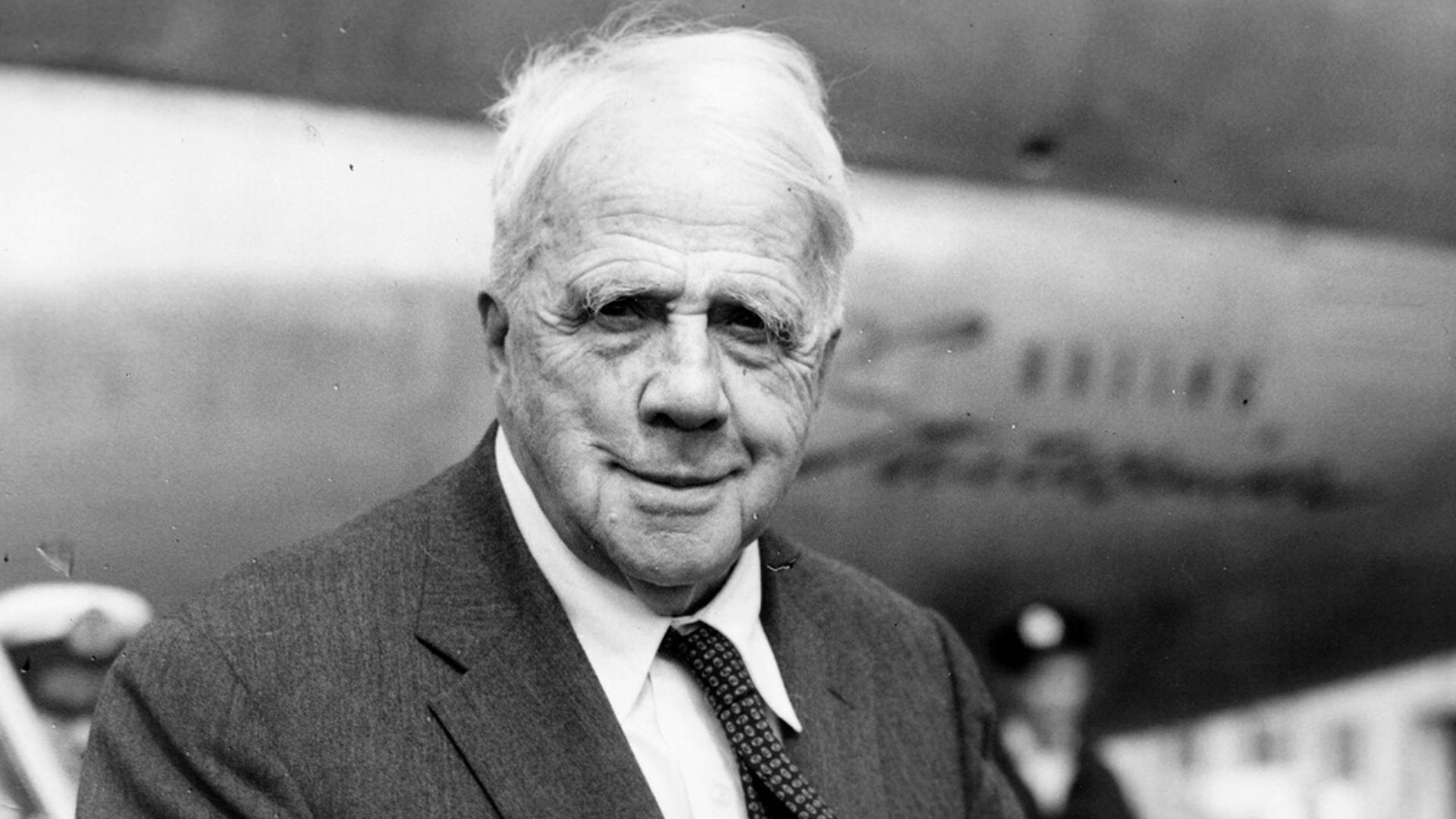
Robert Frost (March 26, 1874 – January 29, 1963 / San Francisco)
Poems by Robert Frost : 16 / 136
Acquainted with the Night
I have been one acquainted with the night.
I have walked out in rain -- and back in rain.
I have outwalked the furthest city light.
I have looked down the saddest city lane.
I have passed by the watchman on his beat
And dropped my eyes, unwilling to explain.
I have stood still and stopped the sound of feet
When far away an interrupted cry
Came over houses from another street,
But not to call me back or say good-bye;
And further still at an unearthly height,
A luminary clock against the sky
Proclaimed the time was neither wrong nor right.
I have been one acquainted with the night.
Robert Frost
Submitted: Friday, January 03, 2003
Read poems about / on: city, rain, sky, night, light, time, house
Poems by Robert Frost : 16 / 136
People who read Robert Frost also read
Top 500 Poems
-
Phenomenal Woman
Maya Angelou
-
The Road Not Taken
Robert Frost
-
If You Forget Me
Pablo Neruda
-
Still I Rise
Maya Angelou
-
Dreams
Langston Hughes
-
Annabel Lee
Edgar Allan Poe
-
If
Rudyard Kipling
-
Stopping by Woods on a Snowy Evening
Robert Frost
-
Invictus
William Ernest Henley
-
I Know Why The Caged Bird Sings
Maya Angelou

This poem is so dear to me, one of the most beautifully vivid portraits anyone has ever painted using words,
I hope those of you who are not so familiar as I am with depression and loneliness can see that too.
Given Frost had issues with depression, insomnia is usually a side-effect of some types. Thus, I think he's speaking both literally, as someone who has been out at ungodly hours wandering the streets and chasing sleep, but he spins it into a metaphor for all of us. That no midnight ramblings we may embark on are right or wrong in any but a personal sense. The night watchman scene, for example. Although we're compelled to explain our decisions in life, none of us ever really are comfortable with it. And I think too, there's the possibility that Frost was making this into an allegory for his emotions. Feeling disconnected from both society (outwalked the furthest city lights) and from happiness (The rain, the general melancholy of the poem, and the usage of night in general) .
Analysis aside? It's a damn good poem. Frost is a perennial favorite of mine. Because most of his work, it doesn't matter how you perceive it. It affects you. It stirs up feelings within you. And that's what poetry should do.
What time does the lunar clock tell? It can be used to tell the time by it's height above the horizon, but I now think this is a red herring. Frost is well aware of astronomy, as some of his other poems show. He would know that the face of the moon is exactly the same as it was a billion years ago. This gives him a perspective on the human suffering of the interrupted cry.
The cry neither calls him back or bids him goodbye. He neither feels compelled to investigate, or repelled to leave humanity behind and go out in the wilderness. Instead he consults the moon, and considers eternity.
...the reader puts the story together however he or she likes (from Daniel D'arezzo's comment)
The way I see this poem hinges on I have outwalked the furthest city light. To me it is a poem about leaving behind the city and the people and pain within it. When far away an interrupted cry People causing pain, and being caused to feel pain. In my eyes, the speaker of the poem is hopeless with this thought in mind: It will always be this way, wherever there are people, there is nothing that can change that fact. So the speaker walks away from it, though not permanently. The reason he/she returns is said very well in another of his poems, 'a servant to his servants' where Frost speaks about how he did not have the courage to live the way the workers did, in tents, because he would quickly return for the safety and comfort of a roof over his head. I suppose much depends on one's own experience of life. [about interpretations of the poem] (from Daniel D'arezzo's comment) I think this is probably true with my own interpretation, because your interpretation makes much more sense. However, I enjoy the poem thinking of the wistful feeling of looking up at the moon and wondering if I walked far enough, would I escape the cycle of pain that people cause each other? And of the emptiness and quiet of the night, with all the people in their houses, separated and ignorant of you walking past. Past and away, far far away.
The clock is the moon (unearthly height)
Frost tells a story by implications, and the reader puts the story together however he or she likes. I suppose much depends on one's own experience of life. But surely this particular poem is also autobiographical, so one's interpretation can also depend on one's knowledge of Frost's life. He had an unhappy marriage, and to me this poem is one of the most fearful descriptions of an unhappy marriage. What drives a man from his home in the middle of the night, even in rain? What drags him back, even in rain? How does he know which street is the saddest city lane? Because it is the street where he lives. Why does the watchman's gaze make him drop his eyes? Why is he unwilling to explain? Because the private grief of an unhappy marriage cannot be explained. No one believes you: you are implicated by being an accessory to the crime. No one sympathizes: if the marriage is so bad, why don't you leave? So he is driven into the night by his unhappiness; but he is drawn back by a sense of duty, maybe by a feeling of love he once had, by a sense of guilt perhaps, by pity, by God knows what. I think A. Jokerman is correct in viewing the luminary clock as indifferent to the speaker's plight. The indifference of the universe is a theme that runs through Frost's poem, as it does through Hardy's. And I think Nadine Gallo is wrong (of course, one is not supposed to find another interpretation wrong) in supposing that the night is the speaker's friend; to be acquainted is precisely not to be intimate. Intimacy is the crux of the argument. An unhappy marriage is one that lacks intimacy; and when two people are forced together in a bond without intimacy, the bond breaks, crumbles, dies. So what is the night with which the speaker is acquainted? Look in the house on the saddest city lane and you will find it there.
To me there is an enjoyment of the peace and solitude of the wee small hours and having the confidence to merely enjoy your own space, whilst appreciating the sights and sounds...
reading between the lines..he is remembering the enjoyment
of late night trysts..fabulous.. :)
This is one of those poems that you appreciate more every time you read it. I remember when I first read it; I didn't get it at ALL. Now... I think I do. :)
The rhyme structure is beautiful, and he really manages to capture the feeling of loneliness. This is one of my favorite poems by him.
One of my favourite Robert Frost poems. One can feel alone even surrounded by life.