
And Did Those Feet In Ancient Time Poem by William Blake
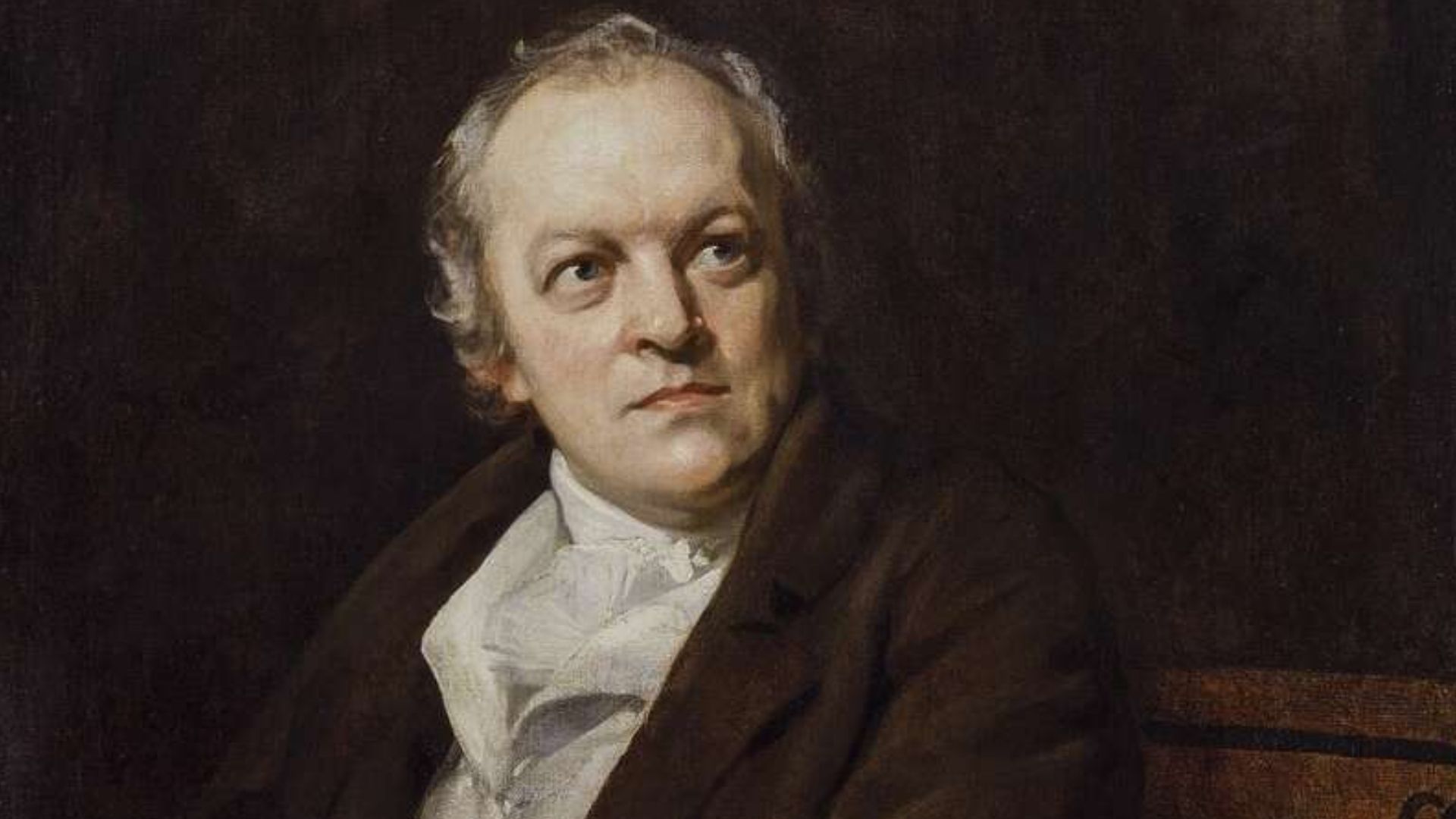

And Did Those Feet In Ancient Time
And did those feet in ancient time
Walk upon England's mountains green?
And was the holy Lamb of God
On England's pleasant pastures seen?
And did the Countenance Divine
Shine forth upon our clouded hills?
And was Jerusalem builded here
Among these dark satanic mills?
Bring me my bow of burning gold!
Bring me my arrows of desire!
Bring me my spear! O clouds, unfold!
Bring me my chariot of fire!
I will not cease from mental fight,
Nor shall my sword sleep in my hand,
Till we have built Jerusalem
In England's green and pleasant land.
It's an account of impatient romantic reformative approach. Mr. Blake is frustrated while witnessing evils produced by so-called industrial revolution. It's, according to Blake, only another way to exploit poor strata of England soil under the cover of churches. Blake as a reformist pining for an ideal world and for this purpose he is ready to fight against the contemporary wiles and vices.
This poem was written about the Industrial Revolution that took place duing the early 19th century. The first verse asks did Christ visit Britain. This may be metaphorical or literal. There is an old English legend that Christ came to Britain as a boy. The poet questions christianity in Britain (2nd verse) and illustrates the point by using the adjective 'satanic' when describing the industrial mills. (In the North of Britain at this time many people; men, women and children, worked in the cotton industry.) This clearly gives the impression that the poet thinks the mills are evil places. In the final two verses he poet summons up his faith and reveals he will not rest until there is justice in society. This is a beautifully written poem and is sometimes used as a national anthem.
I'd agree with Gillian for the most part, but would say that everything in the poem has a metaphorical sense, as well as possibly a litteral one. Blake used physical location to represent spiritual quality or aspect in a large amount of his work. Therefore the English hills are the English people, or people, and the mills represent not only mills, but the mental form of control, system, and renunciation of humanity. The lamb represents Christ, or the active principle necessary to constructing Jerusalem, of the Holy City. The poem ends with Blake's decleration of war, and his will to bring back the Christ, so that the Holy city can be rebuilt in England: Very cool.
You either like a poem or you don't and I like this!
Powerful and profound poem so beautifully crafted and expressed.
O clouds, unfold! Bring me my chariot of fire! ....a prayer…a clarion call followed by the great resolution, "I will not cease from mental fight. This poem is the reflection of a powerful whine of a great soul though retrospective…critically appreciated.
The poet puts great question in the first stanza! He reiterates his deep concern about ‘Jerusalem' which is tainted by evil powers and forces…the figure of speech, ‘satanic mills' creates an impression. (Part 1)
This poem has not been translated into any other language yet.
I would like to translate this poem



Delivering Poems Around The World
Poems are the property of their respective owners. All information has been reproduced here for educational and informational purposes to benefit site visitors, and is provided at no charge...
8/26/2026 2:26:18 AM # rel_20260825T124344Z_022792b



well Gillian its obvious you have no idea what your talking about considering William Blake did not write this in the 19th century so dont try and act so smart. David I agree with you it is about how everyone dances to the same tune and that Jesus's presence should be everywhere no matter how far away it was from where he lived.