
A Poison Tree Poem by William Blake
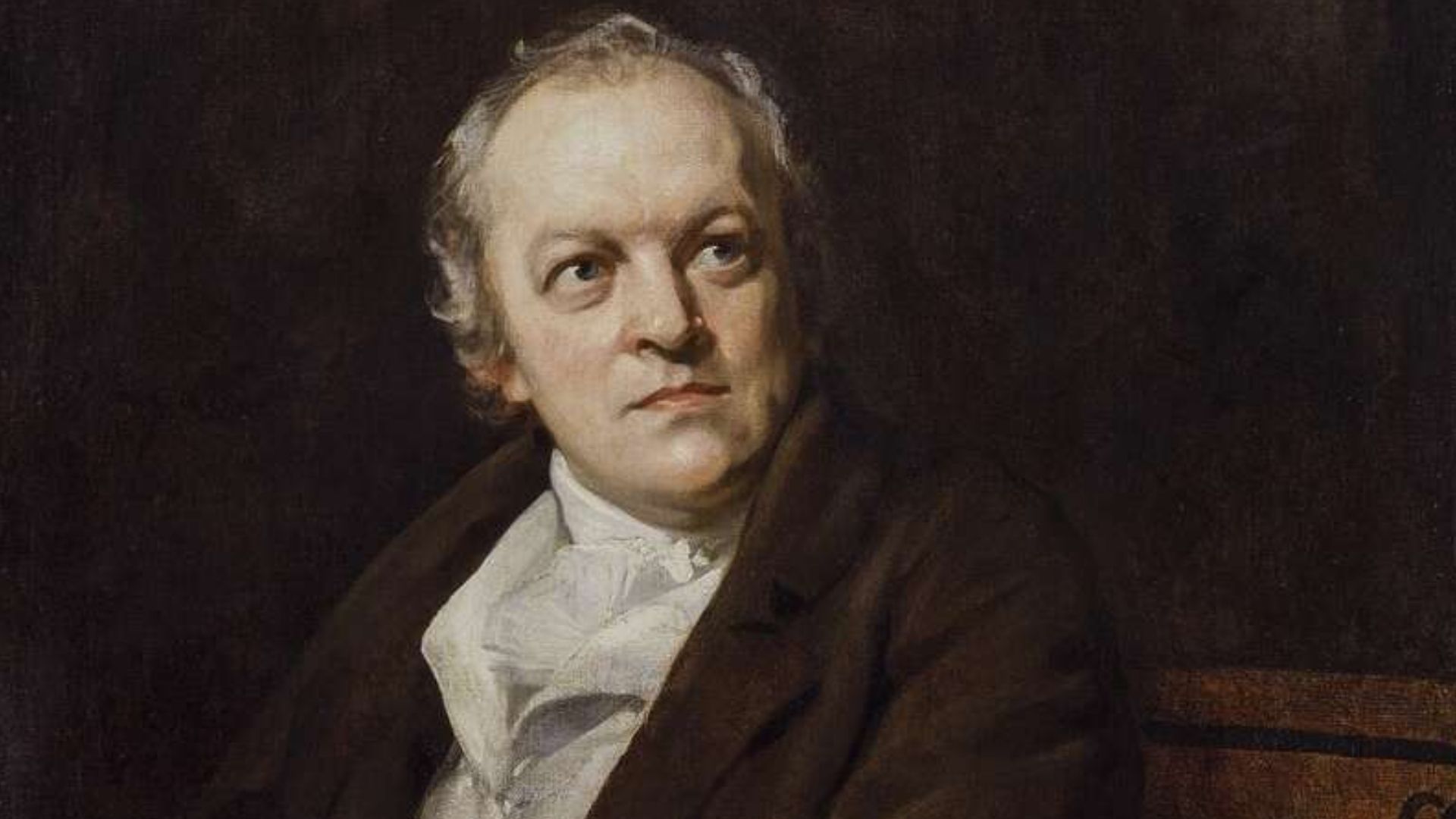

A Poison Tree
I was angry with my friend:
I told my wrath, my wrath did end.
I was angry with my foe:
I told it not, my wrath did grow.
And I watered it in fears,
Night and morning with my tears;
And I sunned it with smiles,
And with soft deceitful wiles.
And it grew both day and night,
Till it bore an apple bright.
And my foe beheld it shine.
And he knew that it was mine,
And into my garden stole
When the night had veiled the pole;
In the morning glad I see
My foe outstretched beneath the tree.
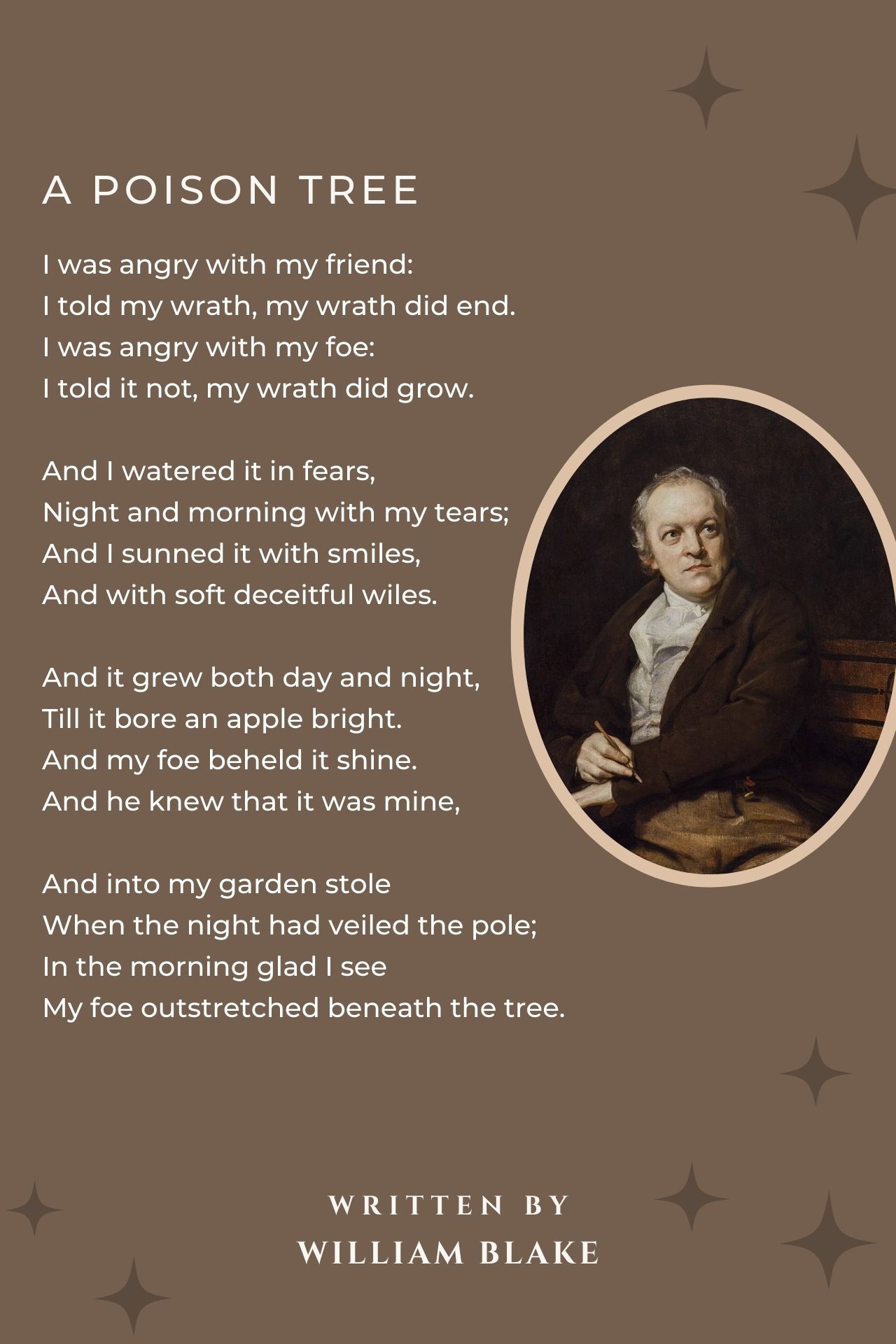
The idea of the poem is not forget and forgive, it is the usual length for such a poem, and it certainly is not sweet.. The idea of the poem is that when you are angry with a foe talk to him about the problem, as you would to a friend. If you keep your anger, fear will make it grow, and, though you might be glad to see your foe dead, his death will deprive you of a possible friend. A summary might be jaw, jaw; not war, war (Churchill?)
This poem is short and sweet. I like it because of that. Regardless of any possible interpretations one might laboriusly dig to get, the idea is very simple; forget and forgive!
Found out about this poem from Devil May Cry. Now I've read all William Blake's and Dante Alighieri's poems and books and all DMC series makes more sense.
Snake is snake though I nourish it with milk and banana! - Tree if I nourish the thorn of tree I will be bitten by it oneday! - poision is poison though I eat with sweetmeat!
The relation ship with the friend and foe different circumstances and end result a beautiful poem
A philosophical poem full of meaningful insights. Classic poem by William Blake
Beautifully crafted poem imbued with wisdom. Timelessß ß




Delivering Poems Around The World
Poems are the property of their respective owners. All information has been reproduced here for educational and informational purposes to benefit site visitors, and is provided at no charge...
10/25/2026 1:59:14 PM # rel_20261022T080914Z_e3039d4



i've done a lot of research, and i have discovered that William Blake hated Christianity. The original title of this poem was Christian Forbearance and it suggests that the narrator is god, the tree is his wrath, the apple religion, the foe Mankind (not just Adam and Eve and including Jesus because he is found outstretched- like the crucifix) . This poem is about how turning the other cheek is really just suppressing your anger and eventually it will just get worse. You need to outright tell people when you are angry with them and you need to legitimately forgive them whether or not they are your friend.