|
|
 |
|
|
User Rating: |
|
9.1
/10
(55
votes)
|
|
|
|
|
|
[ The text of this poem could not be published because of Copyright laws. ]
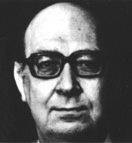
Philip Larkin
|
|
Read poems about / on: fear, travel, house, work, courage, death, light, people, lost, dark, sky, sun
|
|
 |
 |
 |
 |
|
Comments about this poem (Aubade
by
Philip Larkin
) |
|
Click here to write your
comments about this poem (Aubade by
Philip Larkin
)
|
Kim Doyle
(5/24/2009 6:27:00 PM) |
Not to be Anywhere Forever
Philip Larkin said in “Aubade”
but we are always in the hearts
of those who love us, though
we are apart. That is the place
we rest and are remembered.
That which must not be spoken of,
no not the name Macbeth by an actor,
gives the zing to the smallest of things;
the minutiae that makes up life.
Without death there can be no life,
no life without death. Interminably
biting at each others’ tails.
We all fail, in the end. Good Night,
Good Morning, again.
Kim Doyle
|
|
|
Mark Mcconville
(9/15/2008 1:58:00 PM) |
This poem has always brought me to mind of Ernest Becker's The Denial of Death (which won a Pulitzer for non-fiction back in the 70's) , which made a powerful case for death angst as the central motivator and organizer of human personality and what are called 'character defenses.' Character defenses are systematic and parametric distortions of experience, that allow us to maintain our integrity and self esteem as individuals. Larkin's poem stares straight into the face of precisely what Becker said the human psyche cannot, ordinarily, tolerate. The poet is so unflinching, so undefended, I think he's really quite heroic.
|
|
|
Lucy Simpson
(12/31/2007 11:06:00 AM) |
This is not my favorite Larkin poem. I cannot comprehend this obsession with death. I like the beginning and the ending of the poem very much. I like the matter-of-fact nature of it. Waking up in terror of death is something I cannot fully comprehend. I like morbid humor. Death is something to be poked at in my estimation, which is something Larkin does well in many of his poems, but not this one. It seems obsessive and whiny.
Lucy
|
|
|
Mark Demers
(8/9/2007 5:46:00 AM) |
'An only life can take so long to climb
Clear of its wrong beginnings, and may never'
This is the line that I find myself hooked on. Eileen's comment that we need to 'acknowledge, address and move on' assumes the ability to correctly recognize the 'good not done' as well as identify the means for making the adjustments. Larkin's eloquent recognition of how long it takes some folks to overcome a life's rough start causes me to ponder... And the sense that there is only one shot at getting it right adds a poignant weight to the effort required.
|
|
|
Eileen Dight
(7/21/2007 8:47:00 AM) |
'Death is no different whined at than withstood'. How masterfully Larkin encapsulates the human condition. But I disagree with his philosophy.
Larkin describes the dread of death, naming and dismissing the positive: concern for 'the good not done, the love not given' and emphasizing the negative: 'The sure extinction that we travel to....not to be here, not to be anywhere' which he considers 'nothing more terrible'.
I disagree. The remorse he speaks of belongs in the now, not in the forever. If we feel remorse for the 'good not done, the love not given' it is time to acknowledge and address that now, not for eternity. We may still have time, but at any age we can only be sure of today.
Larkin is concerned 'not to be anywhere' forever. After we die we are always in the hearts of those who love us. Larkin dismisses all notion of repose: 'No rational being can fear a thing it will not feel, not seeing that this is what we fear'. To have immortal life would be far worse than being mortal: imagine no relief for the suicidal. There may be a stage when 'no sight, no sound, not touch or taste or smell, nothing to think with' is a welcome anaesthetic.
As for his dismissal of spiritual fath, though he cannot experience it, many do. And if oblivion is all there is, how will that hurt? For me death is only a threat when it takes a life too soon: children unraised, symphonies unwritten.
But his poem is sublime.
Eileen Dight
|
|
|
Martin Lewis
(6/13/2007 1:04:00 PM) |
As I read this poem, the scary reality of laying awake and the world we live in to mute deaths reality becomes vividly clear. That is how we live! Everyday life distracts us for the hours we are busy moving around in it. When 4 am comes the reality of living shows death is inevitable, especially when someone we know is gone and we ponder their life as ours. It is an anithuma we can't escape.
|
|
|
Jenny Jones
(11/12/2006 9:54:00 AM) |
I first heard this poem late last night on BBC Radio 4's programme Poetry Please - and held my breath whilst I listened. It was wonderful to discover that someone has vocalised so effectively the thoughts and feelings I too sometimes wake up with at 4 in the morning. The ending to the poem is essential - it is clumsy, but by being so, takes us from the white hot fear of facing death, to the normal, trivial, rituals of the 'long littleness' of daily living, without which we would find it hard to function.
|
|
|
H. Humbert
(5/12/2006 12:17:00 AM) |
Actually, I disagree about the ending being 'awkward.' To me that's the best part. The sounds of life stirring and of people going about their daily routine, seemingly oblivious (or at least mute) about the oblivion we all face. Life goes on without you.
|
|
|
Ruairi O Heithir
(1/14/2005 10:01:00 AM) |
My favourite poem - I first saw it printed on the front page of The Observer newspaper when Larkin died and it immediately converted me to his poetry. It has its faults - the ending is awkward (I really feel he could have done better with the last three lines) but the rest is superb and best enjoyed when read aloud to oneself. 'Death is no different whined at than withstood' - brilliant!
|
|
Read all
9
comments >>
|
|
|
 |
 |
 |
|
|
 |
|
People who read
Philip Larkin
|
 |
|
 |
 |
 |
 |
|