
The Idea Of Order At Key West Poem by Wallace Stevens
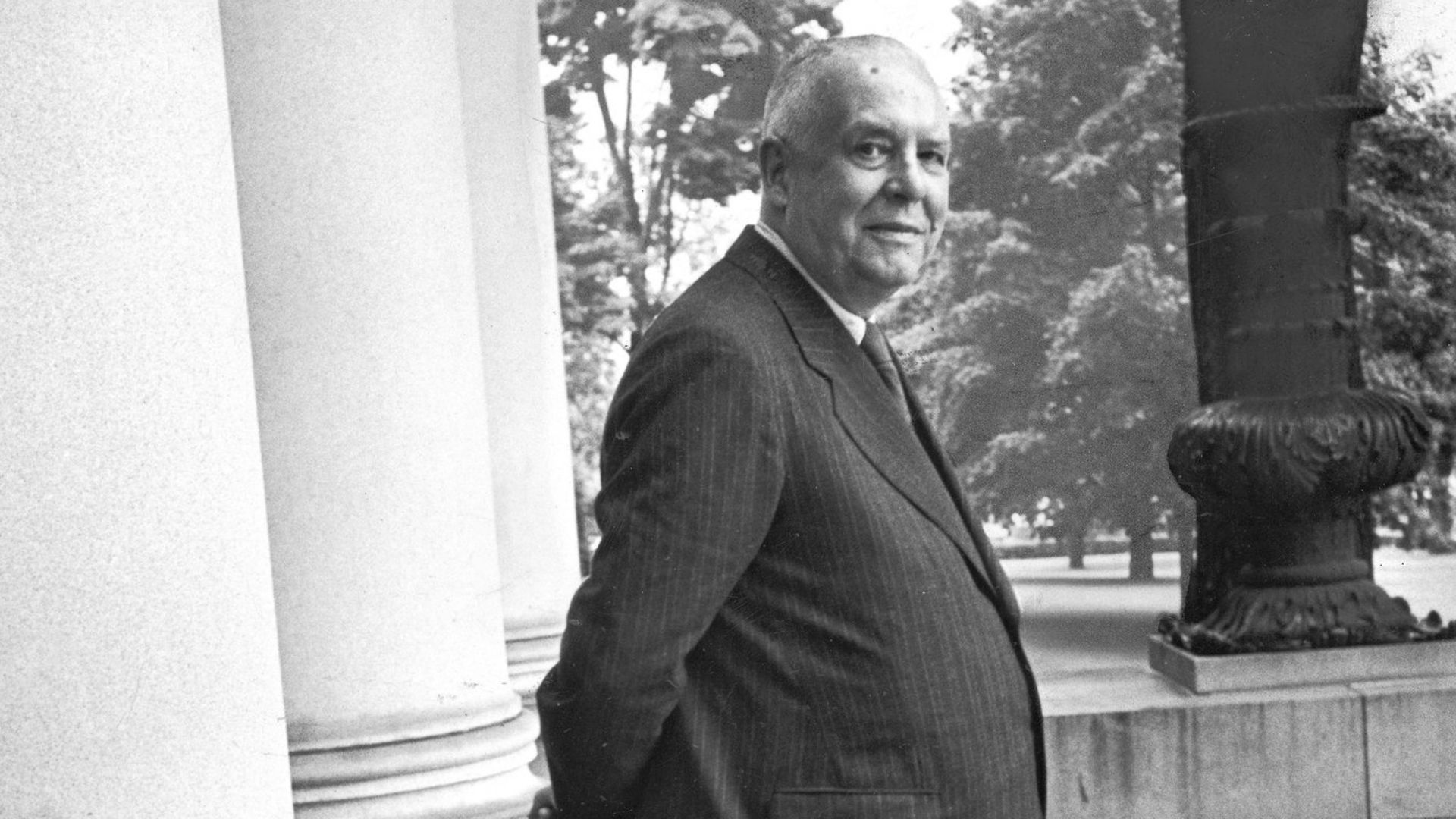

The Idea Of Order At Key West
She sang beyond the genius of the sea.
The water never formed to mind or voice,
Like a body wholly body, fluttering
Its empty sleeves; and yet its mimic motion
Made constant cry, caused constantly a cry,
That was not ours although we understood,
Inhuman, of the veritable ocean.
The sea was not a mask. No more was she.
The song and water were not medleyed sound
Even if what she sang was what she heard,
Since what she sang was uttered word by word.
It may be that in all her phrases stirred
The grinding water and the gasping wind;
But it was she and not the sea we heard.
For she was the maker of the song she sang.
The ever-hooded, tragic-gestured sea
Was merely a place by which she walked to sing.
Whose spirit is this? we said, because we knew
It was the spirit that we sought and knew
That we should ask this often as she sang.
If it was only the dark voice of the sea
That rose, or even colored by many waves;
If it was only the outer voice of sky
And cloud, of the sunken coral water-walled,
However clear, it would have been deep air,
The heaving speech of air, a summer sound
Repeated in a summer without end
And sound alone. But it was more than that,
More even than her voice, and ours, among
The meaningless plungings of water and the wind,
Theatrical distances, bronze shadows heaped
On high horizons, mountainous atmospheres
Of sky and sea.
It was her voice that made
The sky acutest at its vanishing.
She measured to the hour its solitude.
She was the single artificer of the world
In which she sang. And when she sang, the sea,
Whatever self it had, became the self
That was her song, for she was the maker. Then we,
As we beheld her striding there alone,
Knew that there was never a world for her
Except the one she sang and, singing, made.
Ramon Fernandez, tell me, if you know,
Why, when the singing ended and we turned
Toward the town, tell why the glassy lights,
The lights in the fishing boats at anchor there,
As the night descended, tilting in the air,
Mastered the night and portioned out the sea,
Fixing emblazoned zones and fiery poles,
Arranging, deepening, enchanting night.
Oh! Blessed rage for order, pale Ramon,
The maker's rage to order words of sea
Words of the fragrant portals, dimly-starred,
And of ourselves and our origins,
In ghostlier demarcations, keener sounds.
A poem just as poignant to me as it was when first discovered 35 years ago.
The inter-dependence of song and sea, the imagined response to the real still resonates with me after 50 years. Stevens holds up the mirror and still with a firm hand. Great poet.
The first idea is an imagined thing. The pensive giant prone in violet space May be the MacCullough, an expedient, Logos and logic, crystal hypothesis, Incipit and a form to speak the word And every latent double in the word, Beau linguist. But the MacCullough is MacCullough. It does not follow that major man is man. If MacCullough himself lay lounging by the sea, Drowned in its washes, reading in the sound, About the thinker of the first idea, He might take habit, whether from wave or phrase, Or power of the wave, or deepened speech, Or a leaner being, moving in on him, Of greater aptitude and apprehension, As if the waves at last were never broken, As if the language suddenly, with ease, Said things it had laboriously spoken.
The Idea of Order at Key West Andrew Burant Wallace Stevens’ “The Idea of Order at Key West” focuses on the perception of imagination and reality. In this poem, reality pertains to the totality of all things possessing actuality, existence or essence; imagination, on the other hand, captures and interprets reality so an individual is able to create their own meaning of the given world, and escape the facts of existence through their own sense of creativity and ingenuity. At the beginning of the poem the speaker seeks an answer to whether the song exists through an external reality or within his ability to formulate this into something personal. Throughout his walk the speaker never truly determines whether the song is an external reality or within his own imagination, Stevens proposes that the song is neither, since one is not able to exist without the other. Near the end of the poem, the speaker muses upon the woman’s song and determines that she is both of song and sea, thus his enjoyment is derived out of a fusion of his imagination interpreting the voice along with an external awareness of his surrounding reality. Above all, Stevens captures and portrays this theme through his understanding of the human condition which perceives the inhuman as human. Throughout “The Idea of Order at Key West” the narrator seemingly attempts to distinguish whether the song he hears is the sea’s waves singing to the woman’s voice, or if the singer’s tune is his imagination’s perception of the ocean. To answer this question, Stevens suggest that the narrator must investigate and recognize the difference between imagination and reality. Since the sea is an external nature which causes a meaningless “constant cry” (5) and can not be “formed to mind or voice” (2) , the narrator must distinguish the ocean’s image and counterpart through the singer. Likewise, her ability to utter the sound of the waves “word by word” (11) helps to transform the inhuman song of the sea into the entirely human song of the woman. Moreover, as the singer measures and interprets her song; the ocean similarly analyzes and follows the laws of nature. As the speaker begins to perceive that the song is more than the sea merely singing through the woman’s voice, he begins to feel a sense of ineffability which goes beyond the mere language of the tune and experience of his walk. Thus in stanza twenty eight he states: “But it was more than that, more even than her voice, and ours” (28) the narrator begins to accept the mystery behind the song’s blissfulness and acquires the tune as the driving spirit of all the external realities in his presence. This realization of the song’s ineffability makes “the sky acutest at its vanishing” (35) and “measured to the hour at its solitude” (36) . For Stevens, these acts of interpretation are essentially human acts which help people come in touch with themselves and the world around them in order to experience the joys of being one with both themselves and nature. Within the final lines of the poem Wallace Stevens’ links the title by connecting with and relating to our desire for ordered experiences and sympathizes among us since we always try to make the inhuman human. Thus at the ending of this poem, the woman’s song guides the narrator and helps to clear the vision between the order which humans seek of the natural world: “O! Blessed rage for order” (52) . Likewise this cognizance opens “fragrant portals” (54) . The “fragrant portals” are important because they open a new door to an edifying new self-awareness. Moreover, as narrator begins to apprehend the message of the woman’s song, he realizes that the song allowed him to see order in the world. Additionally, the song produces from within him a desire to create his own song, in order to interact and correspond with the imagination of others just like woman has done to his. Stevens’ understanding of the human condition serves a great purpose in “The Idea of Order at Key West”. Stevens portrays the narrator’s experiences through the reflection of his thoughts. When the voice comes along he begins to change his way of thinking because she helps him understand and become conscious of the illusion of his imagination. Through the language of “The Idea of Order at Key West” Wallace Stevens expresses his perception of the world. His thoughts and language become his instruments that craft the poem. Through the readers of the poem, Stevens captures and engages them: “It is the spectator, and not life, that art really mirrors” (Oscar Wilde) as the spectator mirrors this form of art and interprets meaning into the work’s allurement, they becoming cultivated and enlightened. As a poet, Wallace Stevens believed that poetry should be similar to a work of art. And like a work of art, Stevens’ poetry helps his readers discover order in a chaotic world.
magic....again...during and just after....amazing....! !
The 'S', hissing 'S' a susurration of sound, sinister, soulful sinful, satisfied, seeping in slowly surreal sacred and sublime
I love this poem. Its about the imagination versus reality. How the imagination gives one a sense of order against the pressures of reality.
This poem has not been translated into any other language yet.
I would like to translate this poem



Delivering Poems Around The World
Poems are the property of their respective owners. All information has been reproduced here for educational and informational purposes to benefit site visitors, and is provided at no charge...
4/27/2026 5:11:20 AM # 1.0.0



I always feel as though I am on the verge of understanding this poem. It captured me when I first read it. And reread it. It is more like a force to me than a poem. It contains much of what it is to be human, and implied questions about art - is art to define the person making or performing the art and hand that definition to the audience, or is it a way to bring order to the chaos around us, as the singer and the masts brought order to the sea. Here's to hoping I never fully understand this poem. It's a touch of chaos and order.
I read the poem not as theory concerning the relationship of human experience and consciousness to nature but as discovery, recognition, of the inseparability of consciousness and mind from the natural origins and processes that have engendered life and lived experiences in the world, our own and those of of animals preceding us in evolution. We all 'sing the world' in varying registers, and it is always the selfsame actual world that provokes our songs.
just like you said, for me, the same...years go by and this poem continues to invite