A Poem Sacred To The Memory Of Sir Isaac Newton Poem by James Thomson
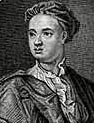

A Poem Sacred To The Memory Of Sir Isaac Newton
Shall the great soul of Newton quit this earth,
To mingle with his stars; and every muse,
Astonish'd into silence, shun the weight
Of honours due to his illustrious name?
But what can man?--Even now the sons of light,
In strains high-warbled to seraphic lyre,
Hail his arrival on the coast of bliss.
Yet am not I deterr'd, though high the theme,
And sung to harps of angels, for with you,
Ethereal flames! ambitious, I aspire
In Nature's general symphony to join.
And what new wonders can ye show your guest!
Who, while on this dim spot, where mortals toil
Clouded in dust, from motion's simple laws,
Could trace the secret hand of Providence,
Wide-working through this universal frame.
Have ye not listen'd while he bound the suns
And planets to their spheres! th' unequal task
Of humankind till then. Oft had they roll'd
O'er erring man the year, and oft disgrac'd
The pride of schools, before their course was known
Full in its causes and effects to him,
All-piercing sage! who sat not down and dream'd
Romantic schemes, defended by the din
Of specious words, and tyranny of names;
But, bidding his amazing mind attend,
And with heroic patience years on years
Deep-searching, saw at last the system dawn,
And shine, of all his race, on him alone.
What were his raptures then! how pure! how strong!
And what the triumphs of old Greece and Rome,
By his diminish'd, but the pride of boys
In some small fray victorious! when instead
Of shatter'd parcels of this earth usurp'd
By violence unmanly, and sore deeds
Of cruelty and blood, Nature herself
Stood all subdu'd by him, and open laid
Her every latent glory to his view.
All intellectual eye, our solar-round
First gazing through, he by the blended power
Of gravitation and projection saw
The whole in silent harmony revolve.
From unassisted vision hid, the moons
To cheer remoter planets numerous pour'd,
By him in all their mingled tracts were seen.
He also fix'd the wandering Queen of Night,
Whether she wanes into a scanty orb,
Or, waxing broad, with her pale shadowy light,
In a soft deluge overflows the sky.
Her every motion clear-discerning, he
Adjusted to the mutual main, and taught
Why now the mighty mass of water swells
Resistless, heaving on the broken rocks,
And the full river turning; till again
The tide revertive, unattracted, leaves
A yellow waste of idle sands behind.
Then breaking hence, he took his ardent flight
Through the blue infinite; and every star,
Which the clear concave of a winter's night
Pours on the eye, or astronomic tube,
Far-stretching, snatches from the dark abyss,
Or such as farther in successive skies
To fancy shine alone, at his approach
Blaz'd into suns, the living centre each
Of an harmonious system: all combin'd,
And rul'd unerring by that single power,
Which draws the stone projected to the ground.
O unprofuse magnificence divine!
O wisdom truly perfect! thus to call
From a few causes such a scheme of things,
Effects so various, beautiful, and great,
An universe complete! and O belov'd
Of Heaven! whose well-purg'd penetrative eye,
The mystic veil transpiercing, inly scann'd
The rising, moving, wide-establish'd frame.
He, first of men, with awful wing pursu'd
The comet through the long elliptic curve,
As round innumerous worlds he wound his way,
Till, to the forehead of our evening sky
Return'd, the blazing wonder glares anew,
And o'er the trembling nations shakes dismay.
The heavens are all his own, from the wild rule
Of whirling vortices and circling spheres
To their first great simplicity restor'd.
The schools astonish'd stood; but found it vain
To keep at odds with demonstration strong,
And, unawaken'd, dream beneath the blaze
Of truth. At once their pleasing visions fled,
With the gay shadows of the morning mix'd,
When Newton rose, our philosophic sun!
Th' aërial flow of sound was known to him,
From whence it first in wavy circles breaks,
Till the touch'd organ takes the message in.
Nor could the darting beam of speed immense
Escape his swift pursuit and measuring eye.
Ev'n Light itself, which every thing displays,
Shone undiscover'd, till his brighter mind
Untwisted all the shining robe of day;
And, from the whitening undistinguish'd blaze,
Collecting every ray into his kind,
To the charm'd eye educ'd the gorgeous train
Of parent colours. First the flaming red
Sprung vivid forth; the tawny orange next;
And next delicious yellow; by whose side
Fell the kind beams of all-refreshing green.
Then the pure blue, that swells autumnal skies
Ethereal played; and then, of sadder hue,
Emerg'd the deepen'd indigo, as when
The heavy-skirted evening droops with frost;
While the last gleamings of refracted light
Died in the fainting violet away.
These, when the clouds distil the rosy shower,
Shine out distinct adown the wat'ry bow;
While o'er our heads the dewy vision bends
Delightful, melting on the fields beneath.
Myriads of mingling dyes from these result,
And myriads still remain--infinite source
Of beauty, ever flushing, ever new.
Did ever poet image aught so fair,
Dreaming in whisp'ring groves by the hoarse brook?
Or prophet, to whose rapture heaven descends?
Ev'n now the setting sun and shifting clouds,
Seen, Greenwich, from thy lovely heights, declare
How just, how beauteous the refractive law.
The noiseless tide of time, all bearing down
To vast eternity's unbounded sea,
Where the green islands of the happy shine,
He stemm'd alone; and, to the source (involv'd
Deep in primeval gloom) ascending, rais'd
His lights at equal distances, to guide
Historian wilder'd on his darksome way.
But who can number up his labours? who
His high discoveries sing? When but a few
Of the deep-studying race can stretch their minds
To what he knew--in fancy's lighter thought
How shall the muse then grasp the mighty theme?
What wonder thence that his devotion swell'd
Responsive to his knowledge? For could he,
Whose piercing mental eye diffusive saw
The finish'd university of things
In all its order, magnitude, and parts,
Forbear incessant to adore that Power
Who fills, sustains, and actuates the whole?
Say, ye who best can tell, ye happy few,
Who saw him in the softest lights of life,
All unwithheld, indulging to his friends
The vast unborrow'd treasures of his mind,
oh, speak the wondrous man! how mild, how calr
How greatly humble, how divinely good,
How firm establish'd on eternal truth;
Fervent in doing well, with every nerve
Still pressing on, forgetful of the past,
And panting for perfection; far above
Those little cares and visionary joys
That so perplex the fond impassion'd heart
Of ever-cheated, ever-trusting man.
This, Conduitt, from thy rural hours we hope;
As through the pleasing shade where nature pours
Her every sweet in studious ease you walk,
The social passions smiling at thy heart
That glows with all the recollected sage.
And you, ye hopeless gloomy-minded tribe,
You who, unconscious of those nobler flights
That reach impatient at immortal life,
Against the prime endearing privilege
Of being dare contend,--say, can a soul
Of such extensive, deep, tremendous powers,
Enlarging still, be but a finer breath
Of spirits dancing through their tubes awhile,
And then for ever lost in vacant air?
But hark! methinks I hear a warning voice,
Solemn as when some awful change is come,
Sound through the world--" 'Tis done!--the measure's full;
And I resign my charge."--Ye mouldering stones
That build the towering pyramid, the proud
Triumphal arch, the monument effac'd
By ruthless ruin, and whate'er supports
The worship'd name of hoar antiquity--
Down to the dust! What grandeur can ye boast
While Newton lifts his column to the skies,
Beyond the waste of time. Let no weak drop
Be shed for him. The virgin in her bloom
Cut off, the joyous youth, and darling child--
These are the tombs that claim the tender tear
And elegiac song. But Newton calls
For other notes of gratulation high,
That now he wanders through those endless worlds
He here so well descried, and wondering talks,
And hymns their Author with his glad compeers.
O Britain's boast! whether with angels thou
Sittest in dread discourse, or fellow-blest,
Who joy to see the honour of their kind;
Or whether, mounted on cherubic wing,
Thy swift career is with the whirling orbs,
Comparing things with things, in rapture lost,
And grateful adoration for that light
So plenteous ray'd into thy mind below
From Light Himself; oh, look with pity down
On humankind, a frail erroneous race!
Exalt the spirit of a downward world!
O'er thy dejected country chief preside,
And be her Genius call'd! her studies raise,
Correct her manners, and inspire her youth;
For, though deprav'd and sunk, she brought thee forth,
And glories in thy name! she points thee out
To all her sons, and bids them eye thy star:
While, in expectance of the second life,
When time shall be no more, thy sacred dust
Sleeps with her kings, and dignifies the scene.
This poem has not been translated into any other language yet.
I would like to translate this poem



Delivering Poems Around The World
Poems are the property of their respective owners. All information has been reproduced here for educational and informational purposes to benefit site visitors, and is provided at no charge...
10/23/2026 4:07:17 PM # rel_20261022T080914Z_e3039d4