
A Satirical Elegy On The Death Of A Late Famous General Poem by Jonathan Swift
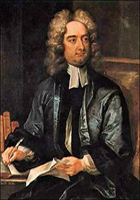

A Satirical Elegy On The Death Of A Late Famous General
"His Grace! impossible! what, dead!
Of old age too, and in his bed!
And could that mighty warrior fall,
And so inglorious, after all?
Well, since he's gone, no matter how,
The last loud trump must wake him now;
And, trust me, as the noise grows stronger,
He'd wish to sleep a little longer.
And could he be indeed so old
As by the newspapers we're told?
Threescore, I think, is pretty high;
'Twas time in conscience he should die!
This world he cumber'd long enough;
He burnt his candle to the snuff;
And that's the reason, some folks think,
He left behind so great a stink.
Behold his funeral appears,
Nor widows' sighs, nor orphans' tears,
Wont at such times each heart to pierce,
Attend the progress of his hearse.
But what of that? his friends may say,
He had those honours in his day.
True to his profit and his pride,
He made them weep before he died
Come hither, all ye empty things!
Ye bubbles rais'd by breath of kings!
Who float upon the tide of state;
Come hither, and behold your fate!
Let pride be taught by this rebuke,
How very mean a thing's a duke;
From all his ill-got honours flung,
Turn'd to that dirt from whence he sprung"
With of the great things about Swift's writing is its absolute lack of pretension and there isn't a trace of 'poetic' writing in this famous satire. This is the true poetry of the spoken word. Only at the conclusion is Swift tempted to fall a little too much into moralism.
This poem has not been translated into any other language yet.
I would like to translate this poem



Delivering Poems Around The World
Poems are the property of their respective owners. All information has been reproduced here for educational and informational purposes to benefit site visitors, and is provided at no charge...
4/27/2024 10:38:23 AM # 1.0.0.1119



What genius! Where to start: the unforgiving sarcasm, the biting wit, the precious little jewels strewn about, like the brilliant triple alliterative line: " Ye bubbles raised by breath of kings." It calls to mind every kiss-up and toady who ever served a king - or president. No wonder Byron saw himself the true heir of Swift and Pope, and felt noting but disdain for his pansy contemporaries.