
Comfort Poem by Elizabeth Barrett Browning
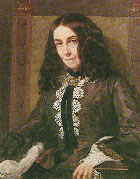

Comfort
SPEAK low to me, my Saviour, low and sweet
From out the hallelujahs, sweet and low
Lest I should fear and fall, and miss Thee so
Who art not missed by any that entreat.
Speak to mo as to Mary at thy feet !
And if no precious gums my hands bestow,
Let my tears drop like amber while I go
In reach of thy divinest voice complete
In humanest affection -- thus, in sooth,
To lose the sense of losing. As a child,
Whose song-bird seeks the wood for evermore
Is sung to in its stead by mother's mouth
Till, sinking on her breast, love-reconciled,
He sleeps the faster that he wept before.
Browning has written an Italian (Petrachan) sonnet which follows the strict form prescribed. She divides 14 lines into an octave (eight lines) and a sestet (six lines) , which rhyme ABBA ABBA / CDE CDE. The octave states the burden of the poem, in this case, a desire for the soothing voice of Christ to comfort the speaker. The sestet solaces the speaker's yearning with a solution like that of a mother's love for her child, which provides comfort to the max. The apostrophe to Christ in the opening lines seeks mercy and solace like that which Jesus bestowed on Mary when she wept at the foot of the cross on Calvary. His words comforted Mary then. The simile 'as a child' likens the speaker to both a songbird in its nest and an infant at its mother's breast Quite an accomplished poem written in the strict limitations of an Italian sonnet. No way does the error in printing make this a bit of a laugh. Learn to ignore the obvious mistakes made by a careless typesetter, and read with a mind open to appreciation! .
Poem is full of compassion and sorrow, mixed with a mother's love for her child, in reference to Mary in the words. Touches on the Davine, with comfort and solace from Jesus. Brownings devotion to faith, is strongly expressed in the words. The Bible on the kitchen table, with family members being read, in that era of time, was the focus point of many, many families. Sharp contrast to todays times.
Its interesting how she maneuvers from her position relating to the desire to hear her savior, from then moving to that of the child, reading Terrance George Craddocks detailed synopsis Browning was definitely looking for peace in a difficult time.
As a child, Whose song-bird seeks the wood for evermore Is sung to in its stead by mother's mouth Till, sinking on her breast, love-reconciled, He sleeps the faster that he wept before. a very fine poem. tony
if no precious gums my hands bestow, Let my tears drop like amber while I go....../// excellent poem penned; it's poem of surrendering to the judgement of Almighty and there poet felt comfort ///
This poem has not been translated into any other language yet.
I would like to translate this poem



Delivering Poems Around The World
Poems are the property of their respective owners. All information has been reproduced here for educational and informational purposes to benefit site visitors, and is provided at no charge...
4/25/2024 9:16:22 PM # 1.0.0.1119



aww cute.... I like it