
"I Said To Love" Poem by Thomas Hardy
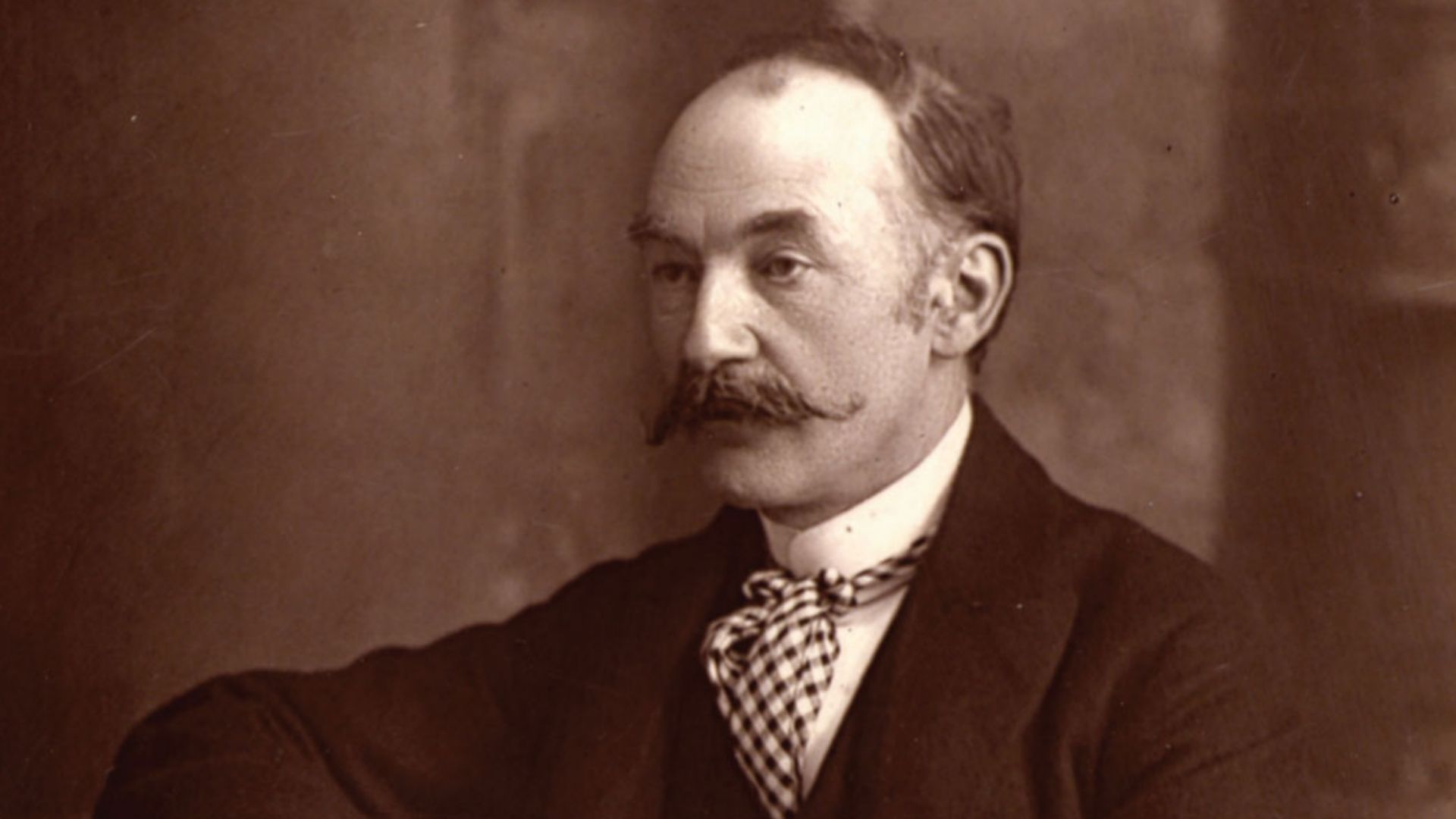

"I Said To Love"
I said to Love,
"It is not now as in old days
When men adored thee and thy ways
All else above;
Named thee the Boy, the Bright, the One
Who spread a heaven beneath the sun,"
I said to Love.
I said to him,
"We now know more of thee than then;
We were but weak in judgment when,
With hearts abrim,
We clamoured thee that thou would'st please
Inflict on us thine agonies,"
I said to him.
I said to Love,
"Thou art not young, thou art not fair,
No faery darts, no cherub air,
Nor swan, nor dove
Are thine; but features pitiless,
And iron daggers of distress,"
I said to Love.
"Depart then, Love! . . .
- Man's race shall end, dost threaten thou?
The age to come the man of now
Know nothing of? -
We fear not such a threat from thee;
We are too old in apathy!
Mankind shall cease.--So let it be,"
I said to Love.
Happy birthday, Thomas! I love your poems and in particular this one: We are too old in apathy! Mankind shall cease.- So let it be, I said to Love.
i agree with Kevin.... this is like about a broken hearted Thomas.....and that he hates LOVE....
I feel with you old pal! ! ! if u hadn't written this poem, i would have! ! !
A Very interesting poem. Poet has definitely grown out of young love. But in his exhaustion the end of love would be the end of Humanity is an idea he is willing to surrender to. May be Test tube babies will save the world for him!
I could make out the core of this poem. Nevertheless, I need to be matured enough to understand, ' Depart then, Love! ... - Man's race shall end, dost threaten thou? '
Amd I said to love not to gain meaninglessly but to gain all as winner
Deep and expertly crafted is this Thomas Hardy's poem. A beautiful work of art...
Part 3: the story of Nala and Damayanti is immortalised by the great poet Unnayi Warrior in his poem/ Aattakkatha, ‘NALACHARITHAM " and in the form of the Kerala ballet dance form KATHAKALI.
Part 2: " Nor swan, "… We know that Hardy was well-acquainted with Indian epics and literature. The reference to "swan", no doubt points to the story of Emperor Nala, who sends a Swan, as his emissary to Princess Damayanti, his love-interest. The story forms part of the epic, Mahabharata
This poem has not been translated into any other language yet.
I would like to translate this poem



Delivering Poems Around The World
Poems are the property of their respective owners. All information has been reproduced here for educational and informational purposes to benefit site visitors, and is provided at no charge...
9/17/2024 9:17:11 AM # 1.0.0.1119



'Apostrophe to Eros' might well sum up Hardy's use of personification and rhythm to stress that irony is not necessary nor is 'a temporary personal setback' the sole motivation for the poem's creation. The speaker is NOT Thomas Hardy, but is the persona through whom he speaks. Why not read and appreciate Hardy's skill in writing such a poem that expresses a universal human condition? The opening stanza alludes to the ancient myth of Cupid, always depicted as a boy with bow and arrow who released arrows of love that 'spread a heaven beneath the sun'! Second stanza cautions Eros that nowadays we earthlings know better than to surrender to your wiles. We were babes in arms then! Look at us today, all full of irony! Third stanza cites the imposter who disguises himself as a gentle boy to be a monster that tears the heart out of its victims! Final stanza orders the false god who threatens destruction to depart forever - the speaker is too old and cynical (and full of irony) to fall for such guff! So we die! So what!