PoemHunter.com   
The Red Wheelbarrow by William Carlos Williams   
Search:     
Home Poets Poems Lyrics Quotations Music Forum Member Area Poetry E-Books
 
William Carlos Williams
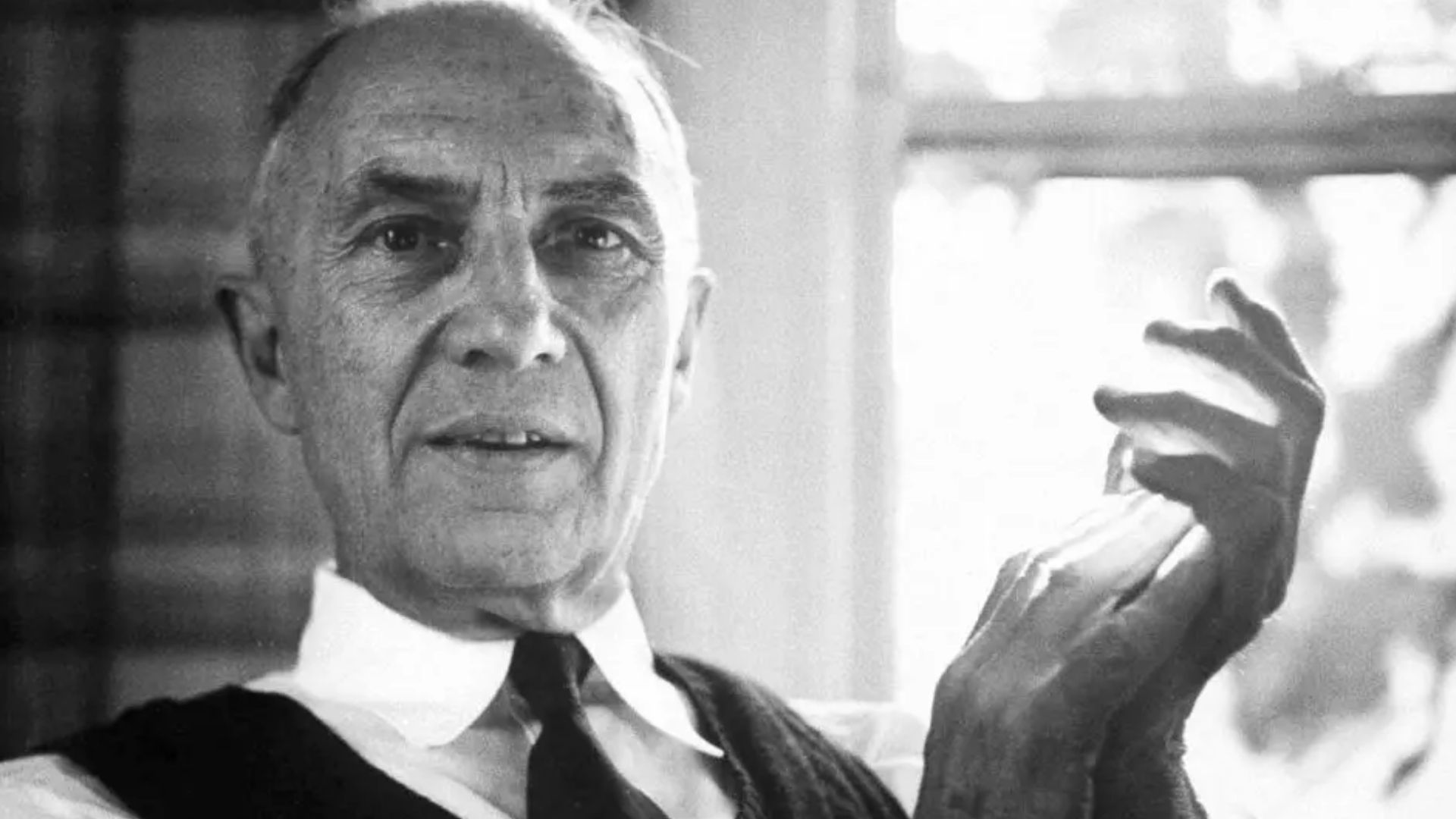
William Carlos Williams (1883 - 1963 / New Jersey / United States)
Biography   Poems   Quotations   Comments   More Info   Stats  
William Carlos Williams was born in Rutherford, New Jersey, in 1883. He began writing poetry while a student at Horace Mann High School, at which time .. more >>
87 poems of William Carlos Williams
File Size:480 k 
File Format: Acrobat Reader
To download the eBook right-Click on the title and select "Save Target As".
 
<< prev. poem Poems by William Carlos Williams : 63 / 85 next poem >>
  
 
Share |

 
The Red Wheelbarrow

User Rating:

8.2 /10
(66 votes)


  so much depends
upon

a red wheel
barrow

glazed with rain
water

beside the white
chickens.

William Carlos Williams


Share |


Read poems about / on: rain, red, water

 
  Comments about this poem (The Red Wheelbarrow by William Carlos Williams )
Click here to write your comments about this poem (The Red Wheelbarrow by William Carlos Williams )
 
  Thomas Rush  (10/18/2009 11:54:00 AM)

I think the poem is a total masterpiece.

I just read the backstory above which, if accurate, would give this poem different interpretation than the one I present below but if I ignore the backstory this is what I think.

The redness of the wheelbarrow somehow makes me think of a child. As if the wheelbarrow were a toy, not a garden tool. Why is it outside, left in the rain? Something happened to cause it to be abandoned. It feels like there was a tragedy of some kind. When the poet says ‘So much depends upon’, what exactly is it that depends upon the wheelbarrow. Could the tragedy have been avoided? Did the incident that the poet recounts, without actually mentioning it, happen to the poet a long time ago or just recently? Was the poet an adult that should have known better and could have avoided the tragedy? Was the poet a child when this unspoken of incident occurred. Was he somehow responsible and could this thing that depends so much upon the wheelbarrow be the long sadness that he’s felt because of his involvement?

What’s so beautiful about this poem is the first four words. Without them this is just the simplest of sentences. By adding those first four words the meanings of the poem just explode into a million different possible meanings.

Other things come to mind when I read this poem. The colors, red and white. Why those colors? To me, if there was a tragedy, then red and white might symbolize blood and bone. And the use of the word ‘rain’ I think is what brings in the hint of the tragedy.

One further point. Perhaps the poem is trying to say that whatever it is that depends on the simple wheelbarrow is like anything else. Perhaps its saying that big important things depend on little details like the wheelbarrow and the chickens? Like big tragedies or big things happen because we ignore and don’t pay attention to the little details. I think its an absolutely wonderful poem. More meaning stuffed inside fewer lines than anything else I’ve seen.
  Kristin Foster  (8/29/2009 5:45:00 PM)

Just how many people do we really depend on and then take them for granted? That is one well used, well needed tool for any farm, and here it sits, all alone, the chickens it's only friend. Yet it is still beautiful, glossy, shiny from the same water that it collects to water the chickens, feed the garden, and clean the barn. And we are all well fed, clean, and given shelter due to the work we put on this tiny little wheelbarrow. We could all do with a little less complaining and a lot more loving the life we are given.
  Nomi Mas  (2/4/2008 12:29:00 AM)

one of my all time favorites. it's just so perfect.
  Peter Stavropoulos  (9/19/2007 9:04:00 PM)

So much depends upon the red wheel barrow yet nothing depends on it. It's just a wheel barrow. So much depends upon the words we use yet how much depends on them. I think this poem looks at itself and at poetry.
  John Fargo  (4/15/2007 10:06:00 PM)

Well I don't want to limit interpretation but the backstory is that Williams was tending to a child with a terminal illness. He saw this wheelbarrow across the contagious hospital's courtyard and thought that if he could just get the child to be able to walk to the wheelbarrow, the child would be fine. The child died without ever getting out of his bed.

Later, he realized how much importance he placed on the wheelbarrow, and how little he placed on him helping the child. 'So much depends upon the wheelbarrow.'

Personally I think (and the backstory helps) that the poem talks about how we don't take responsibility, and the responsibility is displaced on the man-made things. The farm won't be taken care of without the wheelbarrow; the fact that there needs to be a human is almost irrelevant. So much depends on the tools, and not ourselves.

One of the most beautiful poems I've ever read, and by far the best Imagist poem.
  Mark Simpson  (3/9/2007 5:07:00 AM)

That's an interesting view of it for sure. I've always considered this poem as an illustration of the fact that poetry is meant to mean what it means to the person who looks for meaning in it... In other words - the poet himself may have had quite a specific situational context for the red wheelbarrow that none of us are aware of (or maybe not, who knows?) , but that does not take away from the fact that to me it means 'XYZ' and to Caitie Lamon it provides a Koan. I'm not sure but I think this guy also said that a poem is a machine - machines function according to needs as much as design so it's as important what you make of it as what it represented to the poet.
  Caitie Lamon  (3/5/2007 3:36:00 PM)

I think this poem is brilliant, but it took me a while to understand it. The wheelbarrow is man-made, the rain water is God-made (or whatever you believe- the important thing is that it cannot be imitated by humans) , and the chickens are domesticated animals. The chickens are important because they are God-made, but man-tamed. It's Koan, a Buddhist illustration of how the divine and the ordinary can become one, or at least closely related.
  Ted Devirgilis  (8/18/2006 12:16:00 AM)

Yes, I think this is an allegory for creating poetry- a challenge, perhaps, to the pretentious and therefore distant poets of the age. He wrote, 'No ideas but in things.' Poets shoud LOOK at life and describe its beauty-the mind will see so many ideas in it. There's no need for flowery metaphors.

It's hard to say it's one of the greatest poems, but it's certainly one of the most important. Memorize it-it's easy!
  Brett Gustafson  (4/1/2006 4:40:00 PM)

It is easy to look at modern art with a cynical eye and disparage its relavance - much like people have done for Jackson Pollack or Picasso. One thing you should remember, Mr. Gunn, is when 'The Red Wheelbarrow' was written, there was nothing quite like it. It was like an American Haiku. There is a very Zen quality to this poem, which causes the seemingly simple words to bring on more meaning and forces the reader to visualize the scene. Some have argued that this poem is an allegory for poetry, where so much depends on each word and where it is placed. But that, too, is open for debate.

Read all 11 comments >>
 
  People who read William Carlos Williams


  More classic poets:

      The complete list >>

 
  Top 500 Poems

  1. Phenomenal Woman by Maya Angelou
  2. Still I Rise by Maya Angelou
  3. If You Forget Me by Pablo Neruda
  4. Where the Sidewalk Ends by Shel Silverstein
  5. Dreams by Langston Hughes
  6. i carry your heart with me by ee cummings
  7. I Do Not Love You Except Because I Love You by Pablo Neruda
  8. Annabel Lee by Edgar Allan Poe
  9. The Road Not Taken by Robert Frost
  10. I Crave Your Mouth, Your Voice, Your Hair by Pablo Neruda
  11. Television by Roald Dahl
  12. One Inch Tall by Shel Silverstein
  13. Warning by Jenny Joseph
  14. As I Grew Older by Langston Hughes
  15. A Dream Within A Dream by Edgar Allan Poe
  16. Fire and Ice by Robert Frost
  17. If by Rudyard Kipling
  18. On the Ning Nang Nong by Spike Milligan
  19. Dream Deferred by Langston Hughes
  20. "I Wandered Lonely as a Cloud" by William Wordsworth
  21. Alone by Edgar Allan Poe
  22. Stopping by Woods on a Snowy Evening by Robert Frost
  23. The Highwayman by Alfred Noyes
  24. Do Not Go Gentle Into That Good Night by Dylan Thomas
  25. All That is Gold Does Not Glitter by JRR Tolkien
The complete list of Top 500 Poems >>
  Top 500 Poets

  1. Pablo Neruda
  2. Langston Hughes
  3. Maya Angelou
  4. Charles Bukowski
  5. ee cummings
  6. Shel Silverstein
  7. William Shakespeare
  8. Dylan Thomas
  9. Spike Milligan
  10. Billy Collins
  11. Emily Dickinson
  12. Khalil Gibran
  13. Sylvia Plath
  14. Dorothy Parker
  15. Elizabeth Bishop
  16. Ted Hughes
  17. Roald Dahl
  18. Robert Frost
  19. Walt Whitman
  20. Allen Ginsberg
  21. William Blake
  22. Edgar Allan Poe
  23. Mary Oliver
  24. Robert Browning
  25. William Wordsworth
The complete list of Top 500 Poets >>
 
 
  E-MAIL THIS PAGE TO A FRIEND
Found this page interesting? Recommend it to your friend!     Your E-mail:    Friend's Email:      
 

(c) Poems are the property of their respective owners. All information has been reproduced here for educational and informational purposes to benefit site visitors, and is provided at no charge..  About Us | Copyright notice | Privacy statement | Help
11/8/2009 11:26:15 AM. #.3# You Are Here: The Red Wheelbarrow by William Carlos Williams

Home | Poets | Poems | Free Poetry eBooks | Contests | Sites | Submit a Poem | Manage Your Poems | GameGar | Contact Us

Christmas Poems | Love Poems | Pablo Neruda | Death Poems | Sad Poems | Birthday Poems | Wedding Poems | Annabel Lee | Sorry Poems