
A Child Said, What Is The Grass? Poem by Walt Whitman
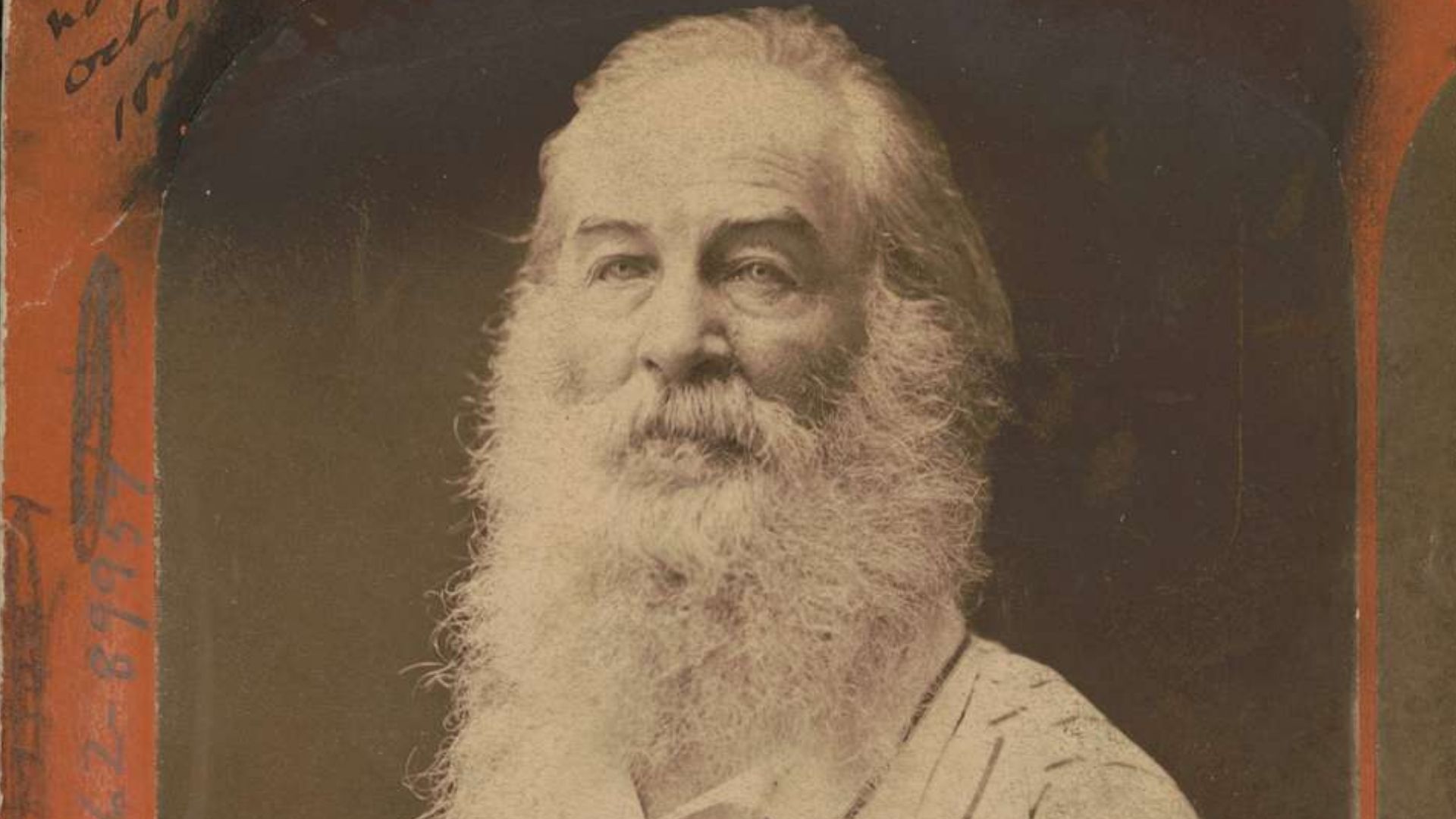

A Child Said, What Is The Grass?
A child said, What is the grass? fetching it to me with full
hands;
How could I answer the child?. . . .I do not know what it
is any more than he.
I guess it must be the flag of my disposition, out of hopeful
green stuff woven.
Or I guess it is the handkerchief of the Lord,
A scented gift and remembrancer designedly dropped,
Bearing the owner's name someway in the corners, that we
may see and remark, and say Whose?
Or I guess the grass is itself a child. . . .the produced babe
of the vegetation.
Or I guess it is a uniform hieroglyphic,
And it means, Sprouting alike in broad zones and narrow
zones,
Growing among black folks as among white,
Kanuck, Tuckahoe, Congressman, Cuff, I give them the
same, I receive them the same.
And now it seems to me the beautiful uncut hair of graves.
Tenderly will I use you curling grass,
It may be you transpire from the breasts of young men,
It may be if I had known them I would have loved them;
It may be you are from old people and from women, and
from offspring taken soon out of their mother's laps,
And here you are the mother's laps.
This grass is very dark to be from the white heads of old
mothers,
Darker than the colorless beards of old men,
Dark to come from under the faint red roofs of mouths.
O I perceive after all so many uttering tongues!
And I perceive they do not come from the roofs of mouths
for nothing.
I wish I could translate the hints about the dead young men
and women,
And the hints about old men and mothers, and the offspring
taken soon out of their laps.
What do you think has become of the young and old men?
What do you think has become of the women and
children?
They are alive and well somewhere;
The smallest sprouts show there is really no death,
And if ever there was it led forward life, and does not wait
at the end to arrest it,
And ceased the moment life appeared.
All goes onward and outward. . . .and nothing collapses,
And to die is different from what any one supposed, and
luckier.
After a long reading, one thing is clear from this specific poem, the child is Whitman himself and deliberately wants to communicate a truth....... They are alive and well somewhere; The smallest sprouts show there is really no death, And if ever there was it led forward life, and does not wait at the end to arrest it, And ceased the moment life appeared. Here the asker and the answerer....both the poet plays within a single conscious. Nice.
I love how it uses grass to explain the circle of life. He explains that those who die (their beards, their hair, the young or the old) nurture and feed the grass to grow and hence life continues around and around never ending and never waisting anything symbolising no ending only a new beginning. All that is lost can be re sewn, giving life to the grass and forming why and what it stands for an might be. Beautiful
Last Comment: Still SOP Marks 5 Stars. The grass as a metaphor of life's cycle. Amazingly captured
Most deserving poem chosen by Poem Hunter and Team as The Classic Poem Of The Day. CONGRATS and Thanks for sharing
NEXT COMMENT: The entire poem is provoked by the simple, innocent question of a child asking "What is the grass? " and the speaker realises that he is as clueless as the child
This poem is a meditation of the meaning of life and death and presents a beautiful image of continual renewal and rebirth.
They are alive and well somewhere; The smallest sprouts show there is really no death, And if ever there was it led forward life, and does not wait at the end to arrest it, And ceased the moment life appeared.-A profound poem about continuity of life even after death.




Delivering Poems Around The World
Poems are the property of their respective owners. All information has been reproduced here for educational and informational purposes to benefit site visitors, and is provided at no charge...
10/25/2026 2:43:35 PM # rel_20261022T080914Z_e3039d4



I was wondering after the grass is plucked why then does it's color remain and it's form not instantly stiff'n. it can even still can be woven.