
A Strange Wild Song Poem by Lewis Carroll
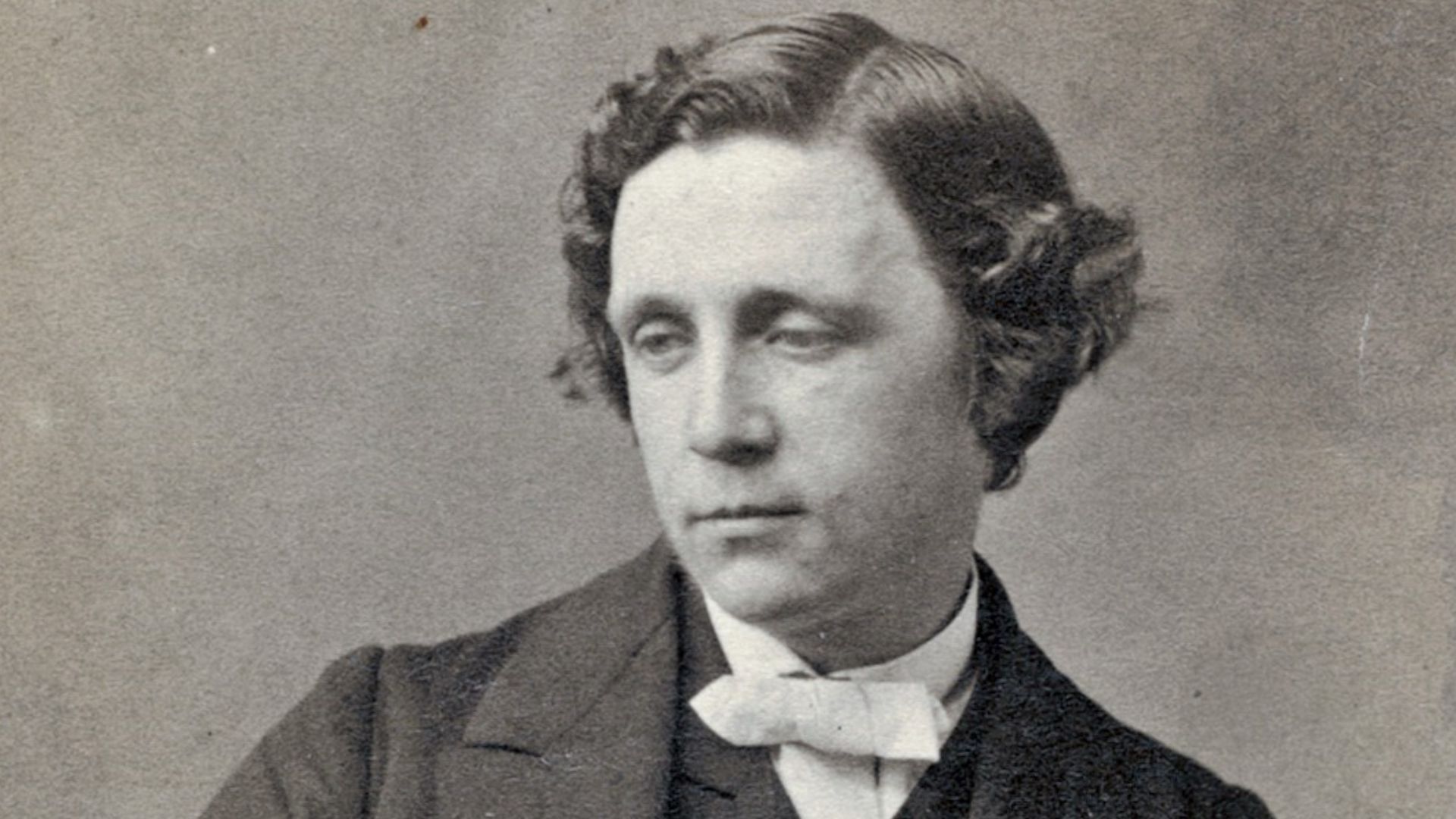

A Strange Wild Song
He thought he saw an Elephant
That practised on a fife:
He looked again, and found it was
A letter from his wife.
'At length I realize,' he said,
'The bitterness of life! '
He thought he saw a Buffalo
Upon the chimney-piece:
He looked again, and found it was
His Sister's Husband's Niece.
'Unless you leave this house,' he said,
'I'll send for the police! '
he thought he saw a Rattlesnake
That questioned him in Greek:
He looked again, and found it was
The Middle of Next Week.
'The one thing I regret,' he said,
'Is that it cannot speak! '
He thought he saw a Banker's Clerk
Descending from the bus:
He looked again, and found it was
A Hippopotamus.
'If this should stay to dine,' he said,
'There won't be much for us! '
He thought he saw a Kangaroo
That worked a Coffee-mill:
He looked again, and found it was
A Vegetable-Pill.
'Were I to swallow this,' he said,
'I should be very ill! '
He thought he saw a Coach-and-Four
That stood beside his bed:
He looked again, and found it was
A Bear without a Head.
'Poor thing,' he said, 'poor silly thing!
It's waiting to be fed! '
He thought he saw an Albatross
That fluttered round the lamp:
He looked again, and found it was
A Penny-Postag e Stamp.
'You'd best be getting home,' he said:
'The nights are very damp! '
He thought he saw a Garden-Door
That opened with a key:
He looked again, and found it was
A Double Rule of Three:
'And all its mystery,' he said,
'Is clear as day to me! '
He thought he saw a Argument
That proved he was the Pope:
He looked again, and found it was
A Bar of Mottled Soap.
'A fact so dread,' he faintly said,
'Extinguishe s all hope! '
There seems to be a couple verses missing: He thought he saw an Albatross That fluttered round the Lamp; He looked again, and found it was A Penny Postage-Stamp 'You'd best be getting home, ' he said: 'The nights are very damp! ' He thought he saw a Garden Door That opened with a key; He looked again, and found it was A Double-Rule-of-Three. 'And all its mystery, ' he said, 'Is clear as day to me! ' Well, at least to him, anyway. Sigh.
Another poem by Lewis Carroll which I taught my students is 'Father William'. It also reads like this one but it is a parody. A caterpillar smoking a hookah asks Alice to recite the poem. The children's book, Alice's adventures in wonderland' has many such funny poems.
This funny poetic piece reminds me of Indian tale telling about blind persons trying to understand elephant by touching each and every portion of elephant body!
Congratulations for the closest family of the late poet.True amazing poem, fantastically written.
True excellent poem full of humor, and such loveliest rhymes and rhythm. TOP marks for the great classic poet Lewis Carroll.
Most deserving poem chosen by Poem Hunyer and Team as The Classic Poem Of The Day. Congratulations!
A wonderful poem with so much fun, finest to read, and that from Lewis Caroll's handpen! Full Stars (5 Stars) for this hilarious poem, I have enjoyed very much!
This poem has not been translated into any other language yet.
I would like to translate this poem



Delivering Poems Around The World
Poems are the property of their respective owners. All information has been reproduced here for educational and informational purposes to benefit site visitors, and is provided at no charge...
4/27/2024 2:37:56 PM # 1.0.0.1119



Smart and impressive. We have witnessed this animalistic transformation of human figure in the work of Chaplin. Nice way to generalize the man-named animal with other animals. Perhaps we have forgotten, Man is the two footed animal who bear the same characteristics of animals howling, growling, biting and basic intincts to provoke where and when get oppertunities. I feel not bore to read this time. Nice.