
Dirge Poem by Ralph Waldo Emerson
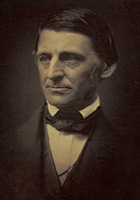

Dirge
Knows he who tills this lonely field
To reap its scanty corn,
What mystic fruit his acres yield
At midnight and at morn?
In the long sunny afternoon,
The plain was full of ghosts,
I wandered up, I wandered down,
Beset by pensive hosts.
The winding Concord gleamed below,
Pouring as wide a flood
As when my brothers long ago,
Came with me to the wood.
But they are gone,— the holy ones,
Who trod with me this lonely vale,
The strong, star-bright companions
Are silent, low, and pale.
My good, my noble, in their prime,
Who made this world the feast it was,
Who learned with me the lore of time,
Who loved this dwelling-place.
They took this valley for their toy,
They played with it in every mood,
A cell for prayer, a hall for joy,
They treated nature as they would.
They colored the horizon round,
Stars flamed and faded as they bade,
All echoes hearkened for their sound,
They made the woodlands glad or mad.
I touch this flower of silken leaf
Which once our childhood knew
Its soft leaves wound me with a grief
Whose balsam never grew.
Hearken to yon pine warbler
Singing aloft in the tree;
Hearest thou, O traveller!
What he singeth to me?
Not unless God made sharp thine ear
With sorrow such as mine,
Out of that delicate lay couldst thou
The heavy dirge divine.
Go, lonely man, it saith,
They loved thee from their birth,
Their hands were pure, and pure their faith,
There are no such hearts on earth.
Ye drew one mother's milk,
One chamber held ye all;
A very tender history
Did in your childhood fall.
Ye cannot unlock your heart,
The key is gone with them;
The silent organ loudest chants
The master's requiem.
the gift of family, of having brothers and sisters to grow up with. i am blessed to have such.
Very long poem.. I do like it though... Thank you for sharing.. krista
A long meaningful poem by Emerson in praise of plough man lonely is praiseworthy!
Oh this is beauty, nostalgic in every respect, emotions outpouring....really touches my heart.....amazing piece...... thanks for sharing.......
The Master's Requiem - such an incredible ageless thought. That one's heart can not be unlocked because the key left with those loved who left before him. A shining example of why Emerson is one of the greatest poets ever. This ending completely rounds the loss of those loved so perfectly. There is no reason why we suffer such great loss, less God's will. How beautifully he phrases this ageless belief.
the poem titled DIRGE and described beautifully ended with the last word- REQUIEM - - Funeral and its ritual very nice
Excellent, brilliant images, and smooth flowing rhyme and rhythm.
I can't imagine being through such pains Of losing a dear one within my yard Lest siblings of mine in prime days Then wander along ugly paths.. Painful indeed, that Emerson is not just talking about how we are going to meet where we are to reunite, but expressing his dim, hollow heart of missing almost all, except a vague promise to meet with his lost ones again.
This poem has not been translated into any other language yet.
I would like to translate this poem



Delivering Poems Around The World
Poems are the property of their respective owners. All information has been reproduced here for educational and informational purposes to benefit site visitors, and is provided at no charge...
9/15/2026 7:19:17 AM # rel_20260910T140628Z_5ffb431



Hi Ralph I find this poem as a serious effort. Your mind seems firm on the idea. Very good poem.Congrats. sury surya