
Echoes Poem by Lewis Carroll
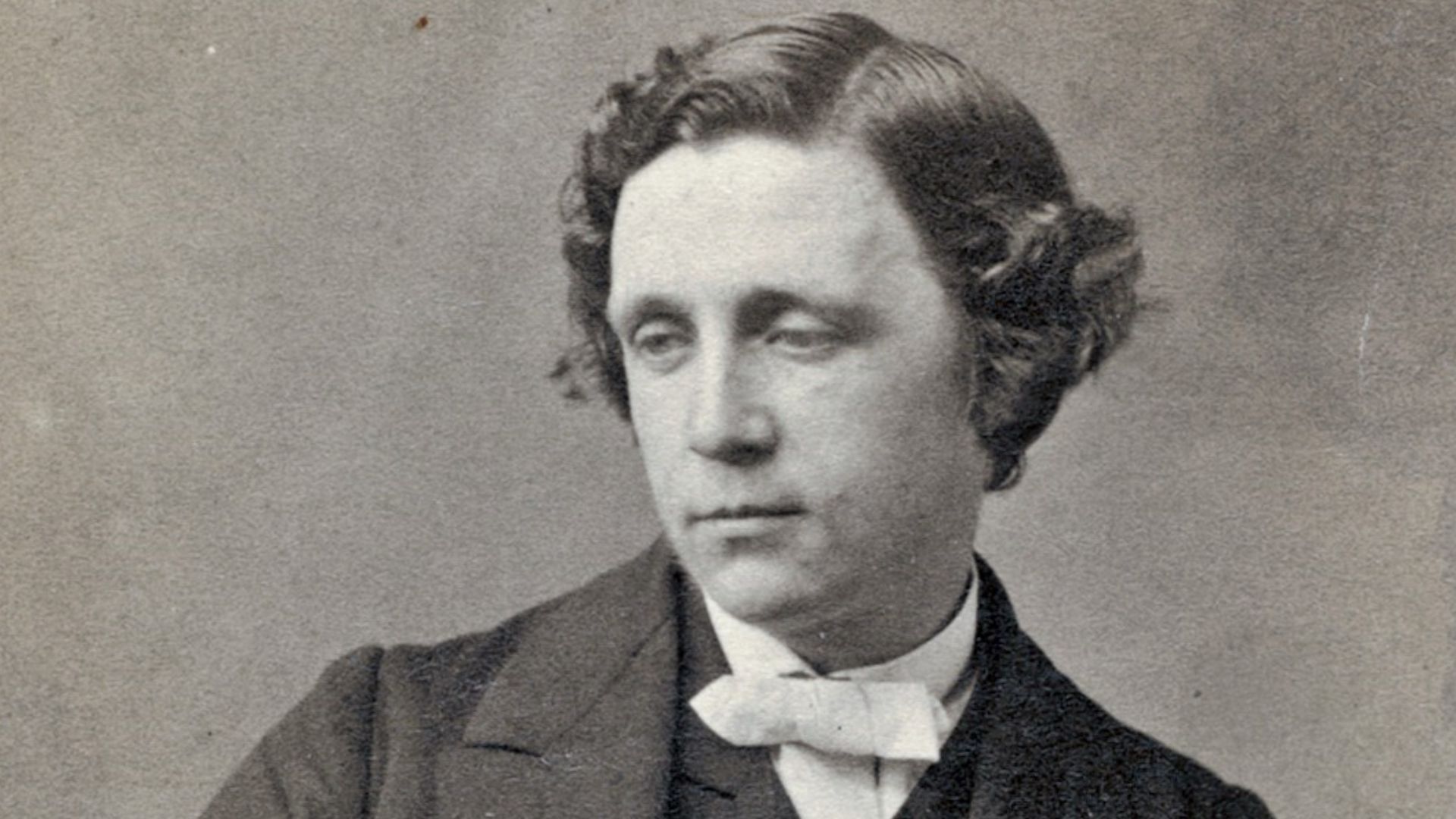

Echoes
Lady Clara Vere de Vere
Was eight years old, she said:
Every ringlet, lightly shaken, ran itself in golden thread.
She took her little porringer:
Of me she shall not win renown:
For the baseness of its nature shall have strength to drag her
down.
"Sisters and brothers, little Maid?
There stands the Inspector at thy door:
Like a dog, he hunts for boys who know not two and two are four."
"Kind words are more than coronets,"
She said, and wondering looked at me:
"It is the dead unhappy night, and I must hurry home to tea."
We're so protective of our children these days...could anyone get away with a poem like this today?
What would you expect from a man who writes under the pseudonym Lewis Carroll, because he was an Anglican deacon, mathematician, logician, photographer and English author? Maybe you need to consider the touch of the Irish in his blood to understand him? Or remember that this is the man who wrote, 'Jabberwocky', a hidden Jacobite satire? And Alice's Adventures in Wonderland and Through the Looking-Glass. Carroll clearly delights in word play, logic, and fantasy, and his genre of literary nonsense is obviously intended to entertain. Like Edgar Alan Poe the concept of the poem read aloud with the interaction of the spoken word is important to Carroll, who clearly intends to entertain with this poem. The title Echoes hints perhaps at childhood memories and the poem contains elements of the rhyme of children’s nursery rhymes. Other echoes imbedded are, the titled Lady Clara Vere de Vere, imitating the commanding manner of her elders in her class position within society, a typical game an eight year old, would play. The description of her, ‘Every ringlet, lightly shaken, ran itself in golden thread’ affirms her social position, reads like fairy tale and reminds of the tale of Rumpelstiltskin. Carroll is spinning a poetic tale instead of straw into gold. The dwarf Rumpelstiltskin who spun gold, revealed his name in a song; of the many translations of this song, the 1886 translation by Lucy Crane is intriguing, because the capitals of her name are echoed in Charles Lutwidge Dodgson’s pseudonym, Lewis Carroll. ‘She took her little porringer: ’ reminds of Little Jack Horner and his thumb, porringer playing on the double meaning of finger and small bowl. The line ‘For the baseness of its nature shall have strength to drag her down’ reinforces this reading and reminds us that Lady Clara is only a little girl, with apparently bad eating habits. ‘There stands the Inspector at thy door: ’ is the moral and warning that children must study lessons. It reminds of Wee Willie Winkie checking upon children at night. Again the echo of the nursery rhyme Rumpelstiltskin because Rumpelstilzchen in the original German means literally ‘little rumble stilt’; the rumpelstilt or rumpelstilz was a type of goblin, that makes noises by rattling posts and rapping on planks, similar to rumpelgeist rattle ghost or polterghost. Like Wee Willie Winkie tapping upon doors at night, Carroll is building suspense in children, expecting the Inspector to tap at the door at any moment. Is ‘more than coronets’ a reference to Jacobite songs in which Willie Winkie referred King William III of England? Carroll employs such a rich usage of puns and instructs the moral importance of kindness definitively, stating ‘Kind words are more than coronets’, meaning kindness is greater than a coronet; which is a small crown, usually worn by a prince or a peer and not a reigning monarch. Does ‘It is the dead unhappy night’ warn of polterghosts at play? Carroll is definitely having fun playing with us his audience in this poem, both adults and children.
I'm sorry...for me the poem is flickering like a tube-light...difficult for me to comprehend the meaning
" Kind words are more than coronets, " She said, and wondering looked at me: " It is the dead unhappy night, and I must hurry home to tea." /// fantastic expression
A Classic confusion, as to what the poem might mean. But this is true: 'Kind words are more than coronets'.
She took her little porringer: Of me she shall not win renown: For the baseness of its nature shall have strength to drag her down. Very good poem. tony
We are Seven -Wordsworth She was eight years old, she said; Her hair was thick with many a curl That clustered round her head. She had a rustic, woodland air, And she was wildly clad: Her eyes were fair, and very fair; Her beauty made me glad. Sisters and brothers, little Maid, And wondering looked at me. I take my little porringer
This poem has not been translated into any other language yet.
I would like to translate this poem



Delivering Poems Around The World
Poems are the property of their respective owners. All information has been reproduced here for educational and informational purposes to benefit site visitors, and is provided at no charge...
4/25/2024 2:10:37 AM # 1.0.0.1119



maybe he's picking words randomly making it to rhyme while rocking his chair. i like the way he said was eight years old now most of us are thinking what could a eight years old could do? how many eight years old out for the night and hurry home for tea? hehehehe