
Richard Cory Poem by Edwin Arlington Robinson
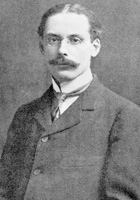

Richard Cory
Whenever Richard Cory went down town,
We people on the pavement looked at him:
He was a gentleman from sole to crown,
Clean favored, and imperially slim.
And he was always quietly arrayed,
And he was always human when he talked;
But still he fluttered pulses when he said,
'Good-morning,' and he glittered when he walked.
And he was rich - yes, richer than a king -
And admirably schooled in every grace:
In fine, we thought that he was everything
To make us wish that we were in his place.
So on we worked, and waited for the light,
And went without the meat, and cursed the bread;
And Richard Cory, one calm summer night,
Went home and put a bullet through his head.
To me, it's simply the most beautiful poem there is. About a year ago, I didn't like poetry at all, I was way more into prose. However, with Robinson's poetry, this changed. His poetry is so readable and in this poem it's especially the last line impact that appeals to me. I remember reading it for the first time and being quite in shock when the poem came to an end. I love it how [the] people on the pavement admire him, I mean, how could they not admire him? The way Robinson describes him is absolutely amazing and I think he's simply the American Dream incarnate, which is also beautifully represented by the light everybody's waiting for. Moreover, it's mainly line 6-7 which I find interesting. The fact that he always sp[o]k[e] human when he talked might indicate that although he's obviously higher in social rank than the other inhabitants of the town, he doesn't mind talking to practically everyone in his town, no matter what social class they find themselves in. The expression that follows in line 7 still touches me when I read it, that is to flutter pulses. I myself am not native English speaker but I found out that this is not a universally acknowledged English expression, yet it is one that affects me deeply. Imagining that your pulse increases when you see someone you're impressed by is real nice, if you ask me. Also, I haven't managed to find this expression in any dictionary so I assume this saying has been invented by Robinson himself. I've recently decided to tattoo But still he fluttered pulses on my wrist (on the very place where you can feel your pulse) , since I admire the character very much and I'm happy to have the same name (Richard) as a admirable person as Richard Cory. When I was a kid, I didn't like my name one bit, but after reading this poem, I must say I'm super proud having a name partner like this
I always felt Richard Cory had a physical problem. People see too much in this poem.
I find myself relating to this poem a lot recently. I agree with the usually disagreed with interpretation that Richard Cory *might* have been gay. I think the overall idea, however, is that money doesn't buy happiness and that people can be exceptionally skillful in hiding how they truly feel. I am in the top 5% of earners in the US, and I consider myself depressed. I'm gay and alone. While I don't see myself committing suicide, that doesn't mean I'm not miserable. No amount of money can fix that.
Not all appearnaces are true, they can deceive! Brilliant poem. Congrats on Classic poem!
A brilliant and vivid depiction that appearances are sometimes deceiving




Delivering Poems Around The World
Poems are the property of their respective owners. All information has been reproduced here for educational and informational purposes to benefit site visitors, and is provided at no charge...
10/25/2026 2:26:16 PM # rel_20261022T080914Z_e3039d4



Perhaps Richard Cory was gay and closeted. After all, gay people are much more likely to commit suicide than straight people.