
David George Joseph Malouf
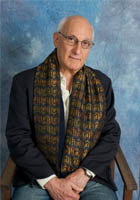

David George Joseph Malouf Poems
A sign first in the sky, then other tokens,
but plainer, on the flesh. June's thirty suns
flared and we were tinder. Flies appeared
and bubbled in pools, their green gaze multiplied
...
To interpret the wood you first must fall
asleep in it, feel
its breathing lift your ribs, turn
owls out of a pocke
...
As for example, the language in which my grandfather
dreams now he is dead, or living,
muttered in his sleep. Clouds
...
Smelling the sweet grass
of distant hills, too steep
to climb, too far to see
in this handful of water
...
for Don Dunstan
Through all those years keeping the present
open to the light of just this moment:
that was the path we found, you might call it
...
G.M., 1896-1964
Tree crickets tap tap tap. They are tunneling
their way out of the dark; when they break through,
their dry husks will be planets. Little sheep-bells
...
I
There is no getting closer
than this. My tongue slips into
the furthest, sweetest corner
of you. I know all
now all your secrets.
When the shell
cracked there was nothing
between us. I taste moonlight
transformed into flesh
and the gas bubbles rising
off sewage. I go down
under the mangrove roots and berries, under the moon's
ashes; it is cool
down there. I always knew that there was more
to the Bay than its glitters,
knew if you existed
I could also
enter it; I'd caught so deeply all
your habits, knowing the ways
we differ I'd come to think we must be one.
I took you
to me. Prepared
a new habitat under the coral
reef of my ribs. You hang there, broken like the sun.
II
Noon that blinding glass did not reveal us
as we were. It cast us variant selves
more real than
reflections, forms
with a life of their own,
stalk eye a periscope
that determined horizons, Doulton claws
that could snap of a thumb.
I liked that. Hence the deep afternoons
with pole and net, the deeper
nights when I went down after the tropic
sun. Hence too the Latin
names, a dangerous clawhold. I wanted the whole of you, raw
poundage
in defiance of breathlessness
or the power of verbal charms,
on my palm, on my tongue.
III
This the Place. I come back
nightly to find it
- still, sleepy, sunlit, presided over
by old-timers, waterbirds whose one
thin leg props up clouds,
the ruck of open water
ahead, and the hours
of deepening blue on blue the land wades into afternoon.
These then the perspectives:
matchwood pier, a brackish estuary
that flows on into
the sun, a rip of light over the dunes.
I enter. It is all
around me, the wash
of air, clear-spirit country. It goes on
all day like this. The tide
hovers and withdraws. Under the sun, under the moon's
cross-currents, shadows
fall into place
and are gathered to the dark. This hunt
is ritual, all the parties to it lost. Even the breaths
we draw between cries
are fixed terms in what is celebrated,
the spaces in a net.
Among mangrove trunks the fire
-flies like small hot love-crazed
planets switch on,
switch off. They too
have caught something. A chunk of solid midnight
thrashes in the star-knots of their mesh.
IV
You scared me with your stillness and I scared
myself. Knowing
that everything, even the footsoles of the dead, where your small
mouths
nudged them, would feed
the airy process of it.
The back of my head
was open to the dream
dark your body moves in. I hunted you
like a favourite colour,
indigo, to learn
how changeable we are, what rainbows
we harbour with us
and how I should die, cast wheezing into
a cauldron of fog.
That was the plan:
to push on through
the spectrum to that perfect
primary death colour, out
into silence and a landscape
of endings, with the brute sky pumping red.
V.
I watch at a distance
of centuries, in the morning
light of another planet
or the earliest gloom
of this one, your backward
submarine retreat,
as hovering across
the seabed — courtly,
elate, iron-plated —
you practice the Dance.
I watch and am shut out.
The terrible privacies!
You move slow motion sideways,
an unsteady astronaut:
step and counter
step, then the clash,
soundless, of tank engagement;
you might be angels
in the only condition
our senses reach them in. I observe
your weightless, clumsy-tender
release. I observe
the rules; cut off
here in the dimension
of pure humanity, my need for air
a limiting factor,
I look through into
your life. Its mysteries
disarm me. Turning
away a second time
to earth, to air, I leave you
to your slow-fangled order,
taking with me
more than I came for
and less. You move back into
my head. No, it does not finish here.
VI
We were horizons
of each other's consciousness. All transactions
at this distance are small
blurred, uninsistent. Drawn
by unlikeness, I grew
like you, or dreamed I did, sharing your cautious
sideways grip on things, not to be broken,
your smokiness of blood, as kin
to dragons we guarded
in the gloom of mangrove trunks
our hoard. I crossed the limits
into alien territory. One of us
will die of this, I told myself; and one of us
did. The other
swam off to lick warm stones and sulk with clouds along a
shoreline,
regretting the deep
shelves and downward spaces,
breathing easy,
but knowing something more
was owed and would take place. I go down
in the dark to that encounter, the sun
at my back. On the sea-bed
your eyes on their sticks
click white in the flattened shadow of my head.
VII
A dreamy phosphorescence
paddles towards me. The moon drowses,
feeds, its belly white, its tough shell
black. We are afloat
together. You are
my counterweight there, I hand above you
in sunlight and a balance
is struck. No, the end
will not be like this.
We belong to different orders, and are trapped
by what we chose. Our kinship
is metaphorical, but no less deadly for all that,
old Dreadnought; as if I wore
black and carried death clenched in my fist. I do
wear black. My hand is open. It is my teeth
that seek you in the dark. And I approach bearing a death.
VIII
It was always like this: you
broken before me,
beautiful in all
the order of your parts, an anatomy lesson,
the simple continent
our bodies broke away from.
Because you are so open, because
the whole of your life
is laid out here, a chamber
to be entered and stripped. You have nothing
to hide. That sort of power
kills us, for whom
moonlight, the concept blue,
is intolerably complex as
our cells are, each an open universe
expanding beyond us, the tug
of immortality.
We shall reach it and still die.
I will be
broken after you, that was the bargain
all this
a compact between us, who love
our privacies. I play
my part. Bent over you I dip my hand
in the bowl, I shake my cuffs, out in the open
and lost. Deep down
I am with you in the dark. The secret flesh of
my tongue enters a claw.
Because you are so open. Because you are.
IX
It is your weight
that hangs upon me. How
to deal with it. Hooded, claws locked
to your body like a star
you drag me under
the light of this occasion
to others. I've dreamed you once
too often. So this
is what it is to drown, this suffocating
torpor, giving up to
the drug of, the drag of
the moon. Here in your kingdom
I feel night harden over
my skull. That we should have come
so far out of the dark
together. I try to drown
well, I hold my breath,
no thrashing. Blue, majestic,
you blaze in my thoughts. Displacing more
than your real weight, making less
than the usual disturbance,
you plunge and take me with you.
I go out
in silence, in full view
of waiters; having learned
this much at least; to die true
to my kind — upright, smiling —
and like, beyond speech.
X
No I am not ashamed
of our likeness, of what is in it that betrays me,
a smell of salt
backwaters, a native
grasp of the gist
of things, our local patch
of not-quite-solid earth from which the vast swing of the sky
is trackable. Night
comes on and I am caught
with a whole life in my hands,
in my mouth raw words,
the taste of so much air, so much water,
flesh. It was never to be weighed,
this dull shore and its landscape, water
poised above water
and all its swarming creatures, against the kingdom of cloud castles
we build with our breath.
But words made you
a fact in my head. You were
myself in another species, brute
blue, a bolt of lightning, maybe God.
Now all has been made plain
between us, the weights are equal, though the sky
tilts, and the sun
with a splash I do no hear breaks into
the dark. We are one at last. Assembled here
out of earth, water, air
to a love feast. You lie open
before me. I am ready.
Begin.
...
Parachute silk comes spooling out of the mouths
of a silkworm factory; rumbustious breath
of the big tree's rebel stillness rocks the house.
Invisible rip-cords jerk, sing, take the strain,
...
The table's there in the kitchen, where I kneel
on a high chair, tongue at air, trawling a slate
with pot-hooks; on the track of words; on the track of this word,
table. Is there instant, wobbly wooden,
...
Animula vagula blandula
hospes comesque corporis,
quae hunc abibis in loca,
pallida, rigida, nudula,
nec, ut soles, dabis iocos?
1.
Dear soul mate, little guest
and companion, what
shift will you make
now, out there
in the cold?
If this is a joke,
it is old, old.
2.
Soul, small wandering one,
my lifelong companion,
where will you go
— numb, pale, undefended —
now the joke we shared is ended?
3.
Little lightfoot
spirit, house
mate, bedfellow, where are you off
to now? Cat got
your tongue? Lost your shirt, caught
your death? Well, the last laugh
is on you. Is on us.
4.
Sweet urchin, fly
-by-night, heart's guest, my
better half and solace,
you've really done it
this time. You've played one trick
too many. Fool, you've laughed us
both out of breath.
5.
If this is one of your jokes,
my jack, my jack-in-the-box,
lay off. Where
have you got to?
It's cold out there.
And what will you do
without me, you sweet idiot? Go naked?
Homeless? Come back to bed.
6.
What's this, old mouse, my secret
sharer? Gone
where? Did you think I'd let
you slip away without me after
a lifetime of happy scrapes? Who
warmed you, clothed you, fed you, paid with laughter
for your tricks, your japes? Is this the one
joke, poor jackanapes, dear bugaboo,
your emperor does not get?
7.
So you're playing fast
and loose, are you? You've cut
the love knot. Well let's see how you get
on out there without me. Who's kidding
who? Without my body, its royal
breath and blood to warm you, my hands, my tongue
to prove to you what's real,
what's not, poor fool, you're nothing.
But O, without you, my sweet nothing,
I'm dust.
...
Hinged grasshopper legs kick
back. So
quick off the mark, so
spritely. They set
...
Sweaty after a bout the young prince towels his body,
sprawls against the wall of a tennis court. His body seems
his own. He is seventeen, loves exercise,
apples, and has just discovered order
...
A light as of axe-handles
swinging through fogbound scrub. Touch
wood. "This is the last
time you will see all this. This is
...
The garden shifts indoors, the house lets fall
its lamp light, opens
windows in the earth
and the small stars of the grass, the night insects,
needlepoint
a jungle more dense
than any tapestry, where Saturn burns, a snow owl's nest,
and melons feed
their crystal with hot sugars of the moon. The Pacific
breaks at our table,
each grain
of salt a splinter of its light at midday, deserts
flare on the lizard's tongue. Familiar rooms
glow, rise through the dark - exotic islands; this house
a strange anatomy
of parts, so many neighbours in a thicket:
hair, eyetooth, thumb.
...
David George Joseph Malouf Biography
David Malouf was born in Brisbane in 1934. His father's family had immigrated to Australia from the Lebanon in the 1880s and his mother's family had arrived from London before the First World War. In 1955, Malouf graduated from the University of Queensland and then taught in the Department of English there until he moved to England in 1959. He remained in England, working as a teacher at Holland Park Comprehensive School and then Birkenhead, during which time his first selection of poems appeared in Australia in the collection Four Poets in 1962. Returning to Australia in 1968, Malouf lectured in English at the University of Sydney until 1977, during which time he published three further collections of poetry Bicycle and other poems (1970), Neighbours in a Thicket: poems (1974), Poems 1975-76 (1976), edited a collection of Australian verse titled Gesture of a Hand (1975) and published his first novel Johnno (1975). In 1978, he published his second novel An Imaginary Life, the dream-like tale of Ovid in exile, which was a critical success and has become a classic of Australian literature. In the same year he moved to Campagnatico in Tuscany, Italy, and dedicated himself to writing full-time, producing three further collections of poetry, three further novels/novellas and a collection of short stories before returning to Sydney in 1985 where he still lives today.)
The Best Poem Of David George Joseph Malouf
From A Plague Year
A sign first in the sky, then other tokens,
but plainer, on the flesh. June's thirty suns
flared and we were tinder. Flies appeared
and bubbled in pools, their green gaze multiplied
the dead. But we, the elected, all that term
kept house, kept shop, kept silence, knowing no harm
would come to us. We paid our taxes, served
on juries, saw men punished or reprieved
from death under the law. God's eye
was on us. Like a red-hot cautery
it pricked and burned. Who keep His just commandments
shall live. No terror can afflict the saints.
But still each week the numbers swell, the needle
glows. In a devil's covenant, through all
the colours of the rainbow, pale flesh bruises
black, then stinks and softens. We stop our noses,
the death-cloud blooms. We find its dark seeds scattered
like sunshine, everywhere.
And so we board
our houses up, burn pitch, read in the Book
and choke. By day no footfall, no wheel's creak
in the cobbled square. At night the town's aswarm
with cries, a fearful traffic. Dung-carts climb
to where, in moonlit fields, whole families meet
at the real it's edge, new nameless suburbs greet
new citizens; they seethe like privy holes.
Some say the plague's a rat, soft-bellied squeals
in the rushes underfoot, a red-eyed fever
that glares. Or blame the Jews. Or claim the air
itself turns poisonous; where warm breath clouds
a glass invisible armies spawn, one word's
enough to quell a city. It is death
we suck on now. The plague in our mouth.
No help! Gender of spiders on the tongue
that preaches, curses, pleads, God's judgment wrung
in black sweat from our limbs. Are we in Bedlam
or is it Hell that rocks us with its flame?
The sickness in this month is grown so general
no man can judge. It comes to this: we kill
our neighbours with the very prayers we sigh
to Heaven. O my Lord, spare me, spare me.
David George Joseph Malouf Comments




Delivering Poems Around The World
Poems are the property of their respective owners. All information has been reproduced here for educational and informational purposes to benefit site visitors, and is provided at no charge...
4/6/2026 9:48:52 PM # 1.0.0



I want summary of Wild Lemons by David Malouf