
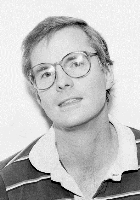

David Kirby Biography
David Kirby (born 1944) is an American poet and the Robert O. Lawton Distinguished Professor of English at Florida State University (FSU). His most recent book is Talking about Movies with Jesus, published in 2011 by LSU Press. His new and selected poetry collection, The House on Boulevard St. (Louisiana State University Press), was nominated for the 2007 National Book Award in poetry.
Kirby has published over 20 books, including collections of poetry, and literary criticism, and his poems frequently appear in The Southern Review. His collected earlier poems, up to the transitional Big-Leg Music, have been published as I Think I Am Going to Call My Wife Paraguay. His earliest books of verse, Sarah Bernhardt's Leg (1983) and Saving the Young Men of Vienna (1987, winner of the Brittingham Prize), showed the distinctive mixture of lyricism and wit that can be found in his later work, which began in Big-Leg Music (1995). In that collection, Kirby began presenting what he termed "memory poems," freewheeling, associative verse with long lines in shaped stanzas that give play to his interests in high and popular culture, are informed by personal and cultural experiences in the author's life, and present, under the guise of apparent ingenuousness, an array of literary and cultural theories wittily and succinctly stated—all making what the poet and critic Peter Klappert has termed "the Kirby poem." Kirby's later titles in this vein include My Twentieth Century, The House of Blue Light, and The Travelling Library. His volume, The Ha-Ha was chosen one of ten "Best Books of 2003" by Boston Globe critic Clea Simon,[1] and was shortlisted for the Griffin Poetry Prize. His work has won numerous awards, including four Pushcart Prizes, the James Dickey Prize, and fellowships from the National Endowment for the Arts, and the Guggenheim Foundation.
Kirby obtained his Ph.D. in 1969 from Johns Hopkins University. He lives with his wife and fellow poet Barbara Hamby in Tallahassee, Florida. Kirby has taught at FSU's international campuses in Florence, Paris, Valencia, and elsewhere.
The two musicians pour forth their souls abroad
in such an ecstasy as to charm the audience
like none I've ever seen before, and when
...
Poetry does make things happen. A friend says, "I wanted
to let you know that my stepfather is chattering like
a schoolboy about a poem of yours on my Facebook page.
This may not seem like much to you, but this guy has been
...
Rilke said he wanted a room "with a few old things
and a window opening onto great trees," which makes
me think of my favorite rooms and their furnishings,
an obvious choice being this brightly-lit bedroom,
newspapers and coffee cups on the floor, bedclothes
scattered everywhere, perfumed with the smell
of sex, maybe, or maybe not. And if not, okay;
they've smelled of sex before and will again.
Well, probably. As Fats Waller said, "One never
knows, do one?" Then there's the kitchen with
a pizza in a blazing oven, perhaps, or a risotto
bubbling while you chop salad and blast Big Jack
Johnson on a pair of tinny speakers. Then it's off
to the dining room and Chopin while you eat
your jambalaya or cassoulet or whatever it was
you cooked, and now the living room, a fire
toppling as you sip eau de vie and toy with a cigar
and listen to Penderecki's Symphony no. 3,
the one he wrote for the war dead, the words sung
by soprano Dawn Upshaw, whose voice enters
the music so gradually that you don't realize
someone is singing until she all but cries out in joy
or terror, you're not sure which. Now you're
in the space between image and idea where Keats
spent his happiest hours, skating back and forth
between some old book in your hand
and your memories of other books, of things you did
when you were a kid or even last week and things
other people told you they did, of your mother
and father, lovers you might have
treated better and ones who might have been nicer to you,
friends you broke with even though
you can't remember a single one,
historical figures—silly ones, like Thomas Taylor
the Platonist, who invented a "perpetual lamp" fueled
by oil, salt, and phosphorus that exploded during
his demonstration of it at the Freemasons'
Tavern in 1785 which, he noted ruefully, raised
a prejudice against the device "which could never
afterwards be removed," and merry ones, like
Don Juan of Austria who, just before the battle
of Lepanto, was seized by "a fit of exuberance
beyond rational thought" and danced a galliard
on the gun-platform of the command vessel
to the music of fifes. And all the while you're thinking
of tomorrow and of the things you have to do
and the ones you want to do, and you wonder
if it'd be better to have a list to make sure you don't
forget anything or if it'd be better just to get up
and start working and in that way do the thing you
weren't expecting to do, the one that doesn't
appear on any list or even in your mind as you
were dozing, waking, dozing again, the idea
that enters you like a cry in the night—one minute
you're at a table in a tavern with your friends, it seems,
and the next, you're in the street, saying, Now what?
...




Delivering Poems Around The World
Poems are the property of their respective owners. All information has been reproduced here for educational and informational purposes to benefit site visitors, and is provided at no charge...
3/15/2026 12:43:24 PM # 1.0.0


