
Jagannath Prasad Das
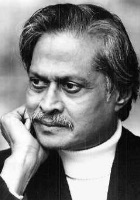

Jagannath Prasad Das Poems
With nostalgia in my heart
and longing in my eyes,
I dream of my city.
...
Before I close my eyes,
come to the core
of my consciousness
as a forbidden dream.
...
Jagannath Prasad Das Biography
Jagannath Prasad Das is an Oriya writer and recipient of the Saraswati Samman and Sahitya Akademi literary awards. His literary works include poetry, fiction, drama and criticism. In 2006 he was awarded the Saraswati Samman for his collection of poems, Parikrama – the third Oriya writer to be so honoured. He has also received the Sahitya Akademi Award for his poetic verses Je Jahar Nirjanata. His writing style is characterized by imagery and is influenced by the style of language spoken by the common people. Das has done research on palm-leaf manuscripts and published a book Palm-Leaf Miniatures. He has also researched pattachitra (the miniature paintings of Orissa) and published books, Puri paintings and Chitra-pothi. Das was born in Puri, Odisha in 1936. Das started writing in the Oriya language during his teenage years and continued writing mostly poetry until 1955, when he enrolled at Ravenshaw College (now Ravenshaw University). After graduation in 1955 he stopped writing and moved to Allahabad for graduate studies, receiving a Master of Arts in political science and a Ph.D. in art history. From 1963 to 1966, Das worked for the state government of Odisha. In 1973, he joined the Government of India's Indian Administrative Service in New Delhi, where he served for 15 years. Das published his first poetry collection, Pratham Purush, in 1971. This book was subsequently translated into Hindi and English. He quit his government job in 1984 in order to continue his passion for writing and research. Das has written about ten poetry collections (eight of which have been translated into Hindi) five plays, seven short story collections, an historical novel and a book of poems for children. His historical novel, Desha Kala Patra, was based on the transformation of Orissa's social life in the 19th century during the British rule in India. This book was selected by the National Book Trust for translation into all Indian languages. Das worked with the Children's Film Society, India, as a member of the board, from 1985 to 1990. He worked with the Orissa Film Development Corporation from 1988 to 1993. In 1987 he edited a book on films, Films for Children. Poetry Je Jahar Nirjanata Pratham Purush Parikrama Poorvapar - 1 Poorvapar - 2 Ahnik Alukuchi Malukuchi (1993))
The Best Poem Of Jagannath Prasad Das
Curfew In The City
With nostalgia in my heart
and longing in my eyes,
I dream of my city.
I cross the river of my innocence
and take the road to my childhood;
I stop at the crossroads of growing up
and make my way
to the city of my happy memories.
Addresses written in familiar hands
show me the way;
fragments of memories
lead me on.
And, there, suddenly before me,
Is the city of my dreams.
But everything seems strange
in this city I knew so well.
Everything is in ruins:
the roads deserted,
the houses desolate and forlorn.
There is no warmth
in the jostling posters;
no invitation in the peeling walls.
I come face to face
with the harsh ironies
lying in wait for me.
Unwanted sights crowd me:
friendly knocks rebuffed
on the neighbour's door;
thirst returning from the dry tap;
childhood crying on its way
to an orphaned future;
modesty hiding her tears in shame;
innocence caught
between flying bullets;
amity falling into pieces
from broken domes.
The day retreats in disgrace,
night comes weeping
in the completeness of its shame.
Bewildered, I look at faith
Stuck on the knife's edge,
dharma blasted in explosions,
conscience drowned in blood,
and justice consumed by arson.
I have a dream before my eyes;
there is a city in my dreams,
and there is
a curfew in the city.
Jagannath Prasad Das Comments




Delivering Poems Around The World
Poems are the property of their respective owners. All information has been reproduced here for educational and informational purposes to benefit site visitors, and is provided at no charge...
3/12/2026 3:57:56 AM # 1.0.0


Want the summer of this poem