
Mário de Andrade
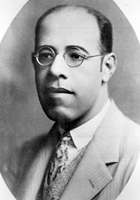

Mário de Andrade Poems
" I counted my years and discovered that I have
less time to live going forward than I have lived until now.
...
Nights heavy with suffocating smells, heat . . .
The Sun made its way across the enormous stretch of our country
And gave each Brazilian a dark complexion.
...
That man who walks all alone
Along those squares, those streets,
Ha in himself an enormous secret.
...
Somewhere near, a rose-tree must be blooming,
I don´t know… I feel in myself a harmony,
Some of the disinterest that fatigue brings.
...
The sun was setting in my eyes
And the flight of the hour surrendered me April,
A familiar taste of goodbye nourished
...
The girl fights to pull the goat,
Totally terrified, sliding on the pavement
...
Mothers have existed,
And this is quite a problem.
For, so they say, one´s mother
...
My life is one to-day, ´tis clear to see,
Of happiness unrelieved: I cannot say
If I enjoy it, since enjoyment may
...
The Mountains of Rolling-Girl
Had not that name before…
...
At least, we are no longer friends.
You walk easily, lightly,
...
The sweetness of poverty like this…
To lose everything your, even the egoism of being,
So poor that you can only belong to the crowd…
...
Dead, the rests sweetly among the flowers in his coffin.
There are such moments when we living
...
Mário de Andrade Biography
Mário Raul de Morais Andrade (October 9, 1893 – February 25, 1945) was a Brazilian poet, novelist, musicologist, art historian and critic, and photographer. One of the founders of Brazilian modernism, he virtually created modern Brazilian poetry with the publication of his Paulicéia Desvairada (Hallucinated City) in 1922. He has had an enormous influence on modern Brazilian literature, and as a scholar and essayist—he was a pioneer of the field of ethnomusicology—his influence has reached far beyond Brazil. Andrade was the central figure in the avant-garde movement of São Paulo for twenty years. Trained as a musician and best known as a poet and novelist, Andrade was personally involved in virtually every discipline that was connected with São Paulo modernism, and became Brazil's national polymath. His photography and essays on a wide variety of subjects, from history to literature and music, were widely published. He was the driving force behind the Week of Modern Art, the 1922 event that reshaped both literature and the visual arts in Brazil, and a member of the avant-garde "Group of Five." The ideas behind the Week were further explored in the preface to his poetry collection Pauliceia Desvairada, and in the poems themselves. After working as a music professor and newspaper columnist he published his great novel, Macunaíma, in 1928. Work on Brazilian folk music, poetry, and other concerns followed unevenly, often interrupted by Andrade's shifting relationship with the Brazilian government. At the end of his life, he became the founding director of São Paulo's Department of Culture, formalizing a role he had long held as the catalyst of the city's—and the nation's—entry into artistic modernity.)
The Best Poem Of Mário de Andrade
The Valuable Time of Maturity
" I counted my years and discovered that I have
less time to live going forward than I have lived until now.
I have more past than future.
I feel like the boy who received a bowl of candies.
The first ones, he ate ungracious,
but when he realized there were only a few left,
he began to taste them deeply.
I do not have time to deal with mediocrity.
I do not want to be in meetings where parade inflamed egos.
I am bothered by the envious, who seek to discredit
the most able, to usurp their places,
coveting their seats, talent, achievements and luck.
I do not have time for endless conversations,
useless to discuss about the lives of others
who are not part of mine.
I do not have time to manage sensitivities of people
who despite their chronological age, are immature.
I cannot stand the result that generates
from those struggling for power.
People do not discuss content, only the labels.
My time has become scarce to discuss labels,
I want the essence, my soul is in a hurry…
Not many candies in the bowl…
I want to live close to human people,
very human, who laugh of their own stumbles,
and away from those turned smug and overconfident
with their triumphs,
away from those filled with self-importance,
Who does not run away from their responsibilities ..
Who defends human dignity.
And who only want to walk on the side of truth
and honesty.
The essential is what makes
life worthwhile.
I want to surround myself with people,
who knows how to touch the hearts of people ….
People to whom the hard knocks of life,
taught them to grow with softness in their soul.
Yes …. I am in a hurry … to live with intensity,
that only maturity can bring.
I intend not to waste any part of the goodies
I have left …
I'm sure they will be more exquisite,
that most of which so far I've eaten.
My goal is to arrive to the end satisfied and in peace
with my loved ones and my conscience.
I hope that your goal is the same,
because either way you will get there too .. "
Mário de Andrade Comments
It is amazing to find such a nice place in the inretnet world.




Delivering Poems Around The World
Poems are the property of their respective owners. All information has been reproduced here for educational and informational purposes to benefit site visitors, and is provided at no charge...
4/9/2026 3:38:02 AM # 1.0.0



Is it really Mario De Andrade's poem? I doubt. Where is the modernism? This is certainly not his style.