
Calligraphy Poem by AISWARYA THARA BHAI ANISH


Calligraphy
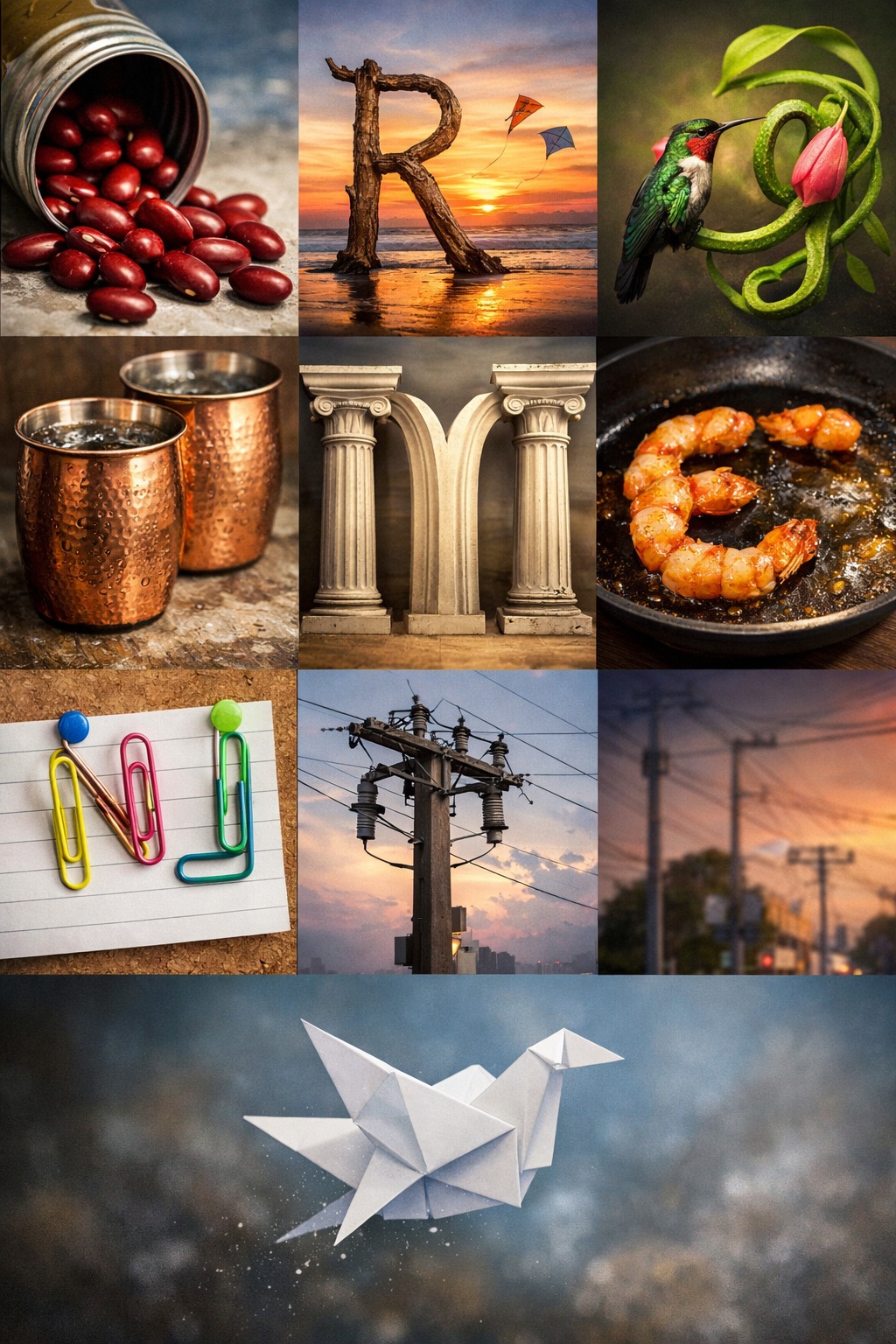
His a's looked like kidney beans
From a new tin can.
His r's like tree branches,
Or flying away kites on a wet beach sunset.
His g's like a humming bird
Curled in a green vine with a tulip tube.
His u's like a wrought copper tumbler
Rounded edges, water fresh.
His m's like Grecian pillars
Arched and sculpted to perfection.
His e's like caramelized shrimps
Browning in the pan, tail tucked.
His n's like paper clips, bright and neat
Tacked to a corner, correct and collecting
His t's like transformers erected
At street corners with a tendency to slope.
But his words like a weak paper bird
A frigid origami that floats in the air.
This poem has not been translated into any other language yet.
I would like to translate this poem



Delivering Poems Around The World
Poems are the property of their respective owners. All information has been reproduced here for educational and informational purposes to benefit site visitors, and is provided at no charge...
4/7/2026 12:49:24 AM # 1.0.0


