Eugénio de Andrade
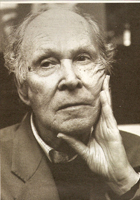

Eugénio de Andrade Poems
Children grow in secret. They hide themselves in the depths and darker reaches of the house to become wild cats, white birches.
...
Wherever the earth is crag and scrub, the goats are there—the black ones, girlishly skipping, leaping their little leaps from rock to rock. I've loved their nerve and frisk since I was small.
...
The gaze lets go from ripeness.
I don't know what to do with a gaze
overflowing from a tree,
what to do with that ardour
...
Far off I see my docile animals.
They are tall and their manes are burning.
They run, searching for a spring,
and sniff the purple among broken rushes.
...
They are lithesome, full of grace.
Ferocious, too,
like a bunch of burning rooftop cats.
...
Not even eyes know what to say
to this rose of joy
open in my hands
or in the tresses of the day.
...
Peaches, pears, oranges,
strawberries, cherries, figs,
apples, melon, honey dew,
oh, music of my senses,
...
Body on a horizon of water,
body open
to the slow intoxication of fingers,
body defended
...
They had faces open to whoever passed.
They had legends and myths
and a chill in the heart.
...
When tenderness
seems tired at last of its offices
and sleep, that most uncertain vessel,
...
All morning I was searching for a syllable.
It's very little, that's for sure: a vowel,
a consonant, practically nothing.
But I feel its absence. Only I know
...
Eugénio de Andrade Biography
Eugénio de Andrade (the pseudonym of José Fontinhas) was arguably Portugal’s best-known poet, translated into well over twenty languages. He adopted this pseudonym after a brief writing carreer under his true name. De Andrade won all of Portugal’s major literary awards: the prestigious Camões Prize, France’s Prix Jean Malrieu (1989), and the 1996 European Prize for Poetry. Marguerite Yourcenar has referred to “the well-tempered clavier” of his poems, and Spanish critic and poet Ángel Crespo has written that “his voice was born to baptize the world.”)
The Best Poem Of Eugénio de Andrade
The Children
Children grow in secret. They hide themselves in the depths and darker reaches of the house to become wild cats, white birches.
One day when you're only half-watching the herd as it straggles back in with the afternoon dust, one child, the prettiest of them all, comes close and rises up on tiptoe to whisper I love you, I'll be waiting for you in the hay.
Shaking some, you go to find your shotgun; you spend what's left of the day firing at rooks and jackdaws, uncountable at this hour, and crows.
TRANSLATED FROM THE PORTUGUESE BY ATSURO RILEY
Eugénio de Andrade Comments




Delivering Poems Around The World
Poems are the property of their respective owners. All information has been reproduced here for educational and informational purposes to benefit site visitors, and is provided at no charge...
3/16/2026 3:10:06 AM # 1.0.0