Khalil Hawi
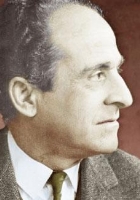

Khalil Hawi Poems
Sufficient unto me are the children of my peers,
For in their love I have proviant and wine.
...
The wandered with Ulysses in the unknown
and with faust he sacrificed his soul
...
Khalil Hawi Biography
Khalil Hawi grew up in Shwayr, Lebanon. He studied philosophy and Arabic at the American University of Beirut, where he received a bachelor of arts in 1951 and a master of arts in 1955. After teaching for a few years, he obtained a scholarship to enroll at Cambridge University, in England, where he was awarded his Ph.D. in 1959. He then became a professor of Arabic literature at the American University in Beirut. Within a few years, he established himself as one of the leading avant-garde poets in the Arab world. His poetry relies heavily on symbols and metaphors and images, and it frequently has political and social overtones. An Arab nationalist at heart, he repeatedly expressed his sense of shame and rage at the loss of Palestine in 1948 and at subsequent Arab defeats at the hands of Israel. He was very critical of Arab regimes for their demonstrated lack of pan-Arab solidarity, and he denounced the hedonism, materialism, and corruption that prevailed in Beirut before the civil war broke out. More generally, he lamented what he saw as the Arab world's political and cultural decay, and he expressed deep pessimism about the possibility of a true Arab cultural and political revival. His deeply felt feelings of frustration and powerlessness at the decline of Arab society and culture and at the Arab world's impotence on the international scene are shared by an entire generation of Arab intellectuals confronted with political authoritarianism and the failure of attempts at Arab unity, as well as persistent and costly inter-Arab rivalries. After 1975, Khalil Hawi experienced the desperation felt by all Lebanese who had to watch their country's slow descent into chaos, internal disintegration, and manipulation by outside powers. He was outraged by Lebanon's inability to stand up to the Israeli army when the latter invaded on 3 June 1982, and he deeply resented the other Arab governments' silence about the Israeli invasion. He committed suicide on 6 June 1982.)
The Best Poem Of Khalil Hawi
The Bridge
Sufficient unto me are the children of my peers,
For in their love I have proviant and wine.
Sufficient unto me is the harvest of the fields,
And the harvest festival,
A festival recurring
Whenever a new lamp is lit in the village.
Not to the dead do I offer my love,
With its perfume and gold, its treasure and wine,
For their offspring is born as an aged bat.
Where is he who will destroy, who will revive and renew?
who will make that child anew,
Wash him in oil and surphur,
In stinkig pus?
Where is he who will destroy, who will revive and renew?
Who will create a young eagle from the offspring of slaves?
The child, showing no trace of its parentage,
Has repudiated both father and mother.
Why is it that our house is split in two?
And that the sea flows between the old and new ?
A cry, the shattering of wombs,
The tearing apart of veils.
How can we remain beneath a single roof?
When there are seas between us, and walls, deserts of cold ash,
And ice?
When are we to break out of the pit and prison?
And when, o lord, are we to be strong and build with our own hands
Our new, free house?
They cross the bridge at dawn, light-footed,
My ribs laid out before them, a solid bridge.
They cross from the caverns and swamps of the old east
into the new,
My ribs laid out before them a solid bridge.
They will pass on while you remain,
An idol left by the soothsayers for the wind to lash and burn,
An idol empty-handed, crucified in solitude,
In snowy nights with ashen horizon,
In fiery ashes with bread of ash,
An idol with frozen tears in sleepless nights,
Greeted by the morning with the daily news,
pored over and consumed.
They will pass on while you remain,
Empty-handed, crucified in solitude.
O owl pecking at my breast, be still.
What does the owl of history want of me?
In my chests there are treasure that never perish.
My joy in the sustenance i gave
Out of the very core of my life
Is the joy of hands that give,
Is a faith and a recollection.
I have wine and a buring coal,
I have the children of my peers,
And in their love I have proviant and wine.
Sufficient unto me is the harvest of the fields,
And the harvest festival.
I shall not fear you, o returning snows,
For when you come,
I shall have wine and a burning coal.
Khalil Hawi Comments




Delivering Poems Around The World
Poems are the property of their respective owners. All information has been reproduced here for educational and informational purposes to benefit site visitors, and is provided at no charge...
4/5/2026 10:40:54 AM # 1.0.0