
Leslie Norris
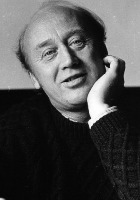

Leslie Norris Poems
Out on the windy hill
Under that sudden star
A blaze of radiant light
Frightened my master.
...
'The Camels, the Kings' Camels, Haie-aie!
Saddles of polished leather, stained red and purple,
Pommels inlaid with ivory and beaten gold,
Bridles of silk embroidery, worked with flowers.
...
Leslie Norris Biography
George Leslie Norris (21 May 1921 – 6 April 2006), was a prize-winning Welsh poet and short story writer. Up to 1974 he earned his living as a college lecturer, teacher and headmaster. From 1974 he combined full-time writing with residencies at academic institutions in Britain and the United States. Today he is considered one of the most important Welsh writers of the post-war period. His collections of stories, including Collected Stories, and poems, including Collected Poems, have won many prizes, among them the Cholmondeley Poetry Prize, the David Higham Memorial Prize, the Katherine Mansfield Memorial Award, the AML Award for poetry (in 1996) and the Welsh Arts Council Senior Fiction Award. George Leslie Norris was born in Merthyr Tydfil, South Wales. His father George was a tall athletic man lacking education, because he had to fight in the First World War. After the war his father was employed as an engineer in a coal mine. Leslie had two younger brothers, Eric and Gordon. Leslie had a cheerful childhood. When he was nineteen years old he joined the Royal Air Force during the Second World War. Leslie initially trained as a pilot, but was injured when he collided with another plane on the ground while practicing landings. After his recovery, he spent the remainder of his time in the Air Force playing football on the Air Force team. When Leslie was a teenager he sent his first poems to Vernon Watkins who found his poems not very profound, but gave him some advice. This had a main influence on his writing style for years. In his free time he wrote poems and earned his money by being an unofficial worker for the local government. Then he worked as a teacher and rose to a headmaster, finally to a college lecturer. Later in 1974, at the urging of his wife Catherine (Kitty) Morgan, he started his career as a professional writer of poems and stories. Leslie and Kitty had one child, who died in infancy. In 1981 and 1982 Leslie Norris was a visiting poet-in-residence at the University of Washington, where he taught and made deep friendships. in 1982, along with his friend, the late Professor Nelson Bentley, Norris helped the successful start of a student's literary magazine (Fine Madness) by inviting his friends and students in Great Britain and the U.S. to submit poems. In 1983 Norris was invited to teach for six months at Brigham Young University in Utah, United States of America. He settled with his wife, Catherine Morgan, and remained there until his death. He was appointed the official Poet-in-Residence at the university. He contributed to the cultural life of Provo (and of the entire Utah Valley) by organizing Eisteddfods, the traditional Welsh cultural festivals. Among his last works were a series of autobiographical poems, some of which have been published separately, but which he hoped would constitute one poem sequence something like this Wordsworth's Prelude.)
The Best Poem Of Leslie Norris
The Shepherd's Dog
Out on the windy hill
Under that sudden star
A blaze of radiant light
Frightened my master.
He got up, left our sheep,
Tramped over the moor.
And I, following,
Came to this open door,
Sidled in, settled down,
Head on my paws,
Glad to be here, away
From the wind's sharpness.
Such warmth is in this shed,
Such comfort from this Child,
That I forget my hard life,
Ignore the harsh world,
And see on my master's face
The same joy I possess,
The knowledge of peace,
True happiness.
Leslie Norris Comments
The rebel child is a very good poem...I can't seem forget it even if I did it many years back in primary...




Delivering Poems Around The World
Poems are the property of their respective owners. All information has been reproduced here for educational and informational purposes to benefit site visitors, and is provided at no charge...
10/21/2026 11:49:22 AM # rel_20260925T122446Z_7d6ee41



Nice poems