Luljeta Lleshanaku
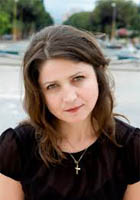

Luljeta Lleshanaku Poems
The woman recalls
That she was once a member
Of a family of giraffes.
Their warm hides
...
Your kisses have long been singeing me like a wound
And your pristine body
Frightens me
...
For as long as we mirror one another
Like this, even distorted
In silver spoons, on glasses and on bubbly bottles
...
The truth is someone else's privilege, when a soul
Approaches, lock your door, let it pass
As the Jews did, forewarned in Egypt,
When it accosts your lips, show no mercy,
...
The front row desks were always empty.
I never understood why.
Second row was all smacking lips
...
In my family
prayers were said secretly,
softly, murmured through sore noses
beneath blankets,
a sigh before and a sigh after
...
In the village nestled between two mountains
the news always arrives one month late,
cleansed in transit, glorified, mentioning only the dead who made
...
Waking is an obligation:
three generations open their eyes every morning
inside me.
The first is an old child - my father;
...
My deskmate in elementary school
had blue nails, blue lips, and a big irreparable hole in his heart.
He was marked by death. He was invisible.
He used to sit on a stone
...
I.
Medio tutissmus ibis, the middle is the safest ground.
The embroidered tablecloth in the middle of the table.
The table in the middle of the carpet.
...
It's not time for a change.
For as long as I can remember
it's never been time for a change.
...
Human existence is like a dead language
of which only an expression, a quotation, or a single word remains.
But a man without sons is a mutation.
...
Shaving after work? What for?
It reminds me of my father
a long time ago
standing before a mirror, cracked as
...
Autumn. Veins of marble
swell in the rain.
The graves of my relatives
four inches of space between them
...
It enters my days arrogantly
like the silence after the clap
of a judge's mallet.
...
Në familjen time
lutjet bëheshin fshehtas
me zë të ulët, me një hundë të skuqur nën jorgan,
gati mërmëritje,
me një psherëtimë në fillim dhe fund
të hollë, e të pastër si një garzë.
Përreth shtëpisë,
kishte vetëm një palë shkallë për t'u ngjitur
ato të drunjtat, të mbështetura gjithë vitin pas murit,
për riparimin e tjegullave në gusht para shirave.
Në vend të engjëjve,
hipnin e zbritnin burra
që vuanin nga shiatiku.
Ata luteshin duke u shikuar sy më sy me Të,
si në një marrëveshje kryezotësh
duke kërkuar nje shtyrje afati.
"Zot, me jep forcë!" e asgjë më shumë,
se ishin pasardhësit e Esaut,
të bekuar, me të vetmen gjë që mbeti prej Jakobit,
- shpatën.
Në shtëpinë time
lutja ishte një dobësi,
që nuk përflitej kurrë,
si të bërit dashuri.
Dhe njësoj si të bërit dashuri
pasohej nga nata e frikshme e trupit.
...
In meiner Familie
wurde versteckt gebetet,
mit leiser Stimme, die rote Nase unter der Decke,
fast Geflüster,
mit einem Seufzer am Anfang und am Ende,
dünn und sauber wie eine Mullbinde.
Rund ums Haus
gab es nur eine Leiter, um aufs Dach zu steigen,
aus Holz, das ganze Jahr gegen die Wand gelehnt,
zur Reparatur der Ziegel im August, vor den Regenfällen.
Anstelle der Engel
stiegen Männer auf und ab,
denen der Ischias weh tat.
Sie beteten, Aug in Aug mit Ihm,
wie bei einem Kreuzwegsabkommen,
in dem sie um Aufschub des Stichtages ansuchten.
sie waren nämlich Nachkommen von Esau,
gesegnet mit dem einzigen, das von Jakob übrig war,
- dem Schwert.
Bei mir daheim
galt das Gebet als eine Schwäche,
die man nicht erwähnte,
ebenso wenig
wie das Miteinanderschlafen
Und genauso
wie das Miteinanderschlafen
profitierte es von des Körpers furchtsamer Nacht
...
Në fshatin midis maleve, lajmi vjen një muaj me vonesë.
Gjate rrugës pafajësohet: ai që vdiq shkoi doemos në parajsë,
e një grusht shteti "është vullneti i zotit".
Përroi mbyt vetminë me vetmi. Imagjinata është rrëshirë
që të mbron nga trupi. Përndryshe, pylli i rëndë i gështenjave dhe burrat e dehur,
gdhihen me shpatulla të ftohta ngjeshur pas murit.
Vajzat preferojnë martesat larg
për të lënë prapa, të paprekur,
bustin e pesëmbëdhjetëvjeçares.
Dhe përtej pesë fshatrave vijnë nuset,
nuset që do të lindin femijë- profetë
midis sanës dhe kashtës në plevicë. Ah, desha të them
vetëm njëri prej tyre do të jetë profet;
të tjerët do të praktikohen për të gjuajtur me gurë
(kjo është gjithashtu pjesë e profecisë).
Në një mesditë vjeshte si kjo,
ata do të dalin nga shkolla si një tufë e trazuar sorrash prej erës se gjakut,
per t'iu vënë pas makines- rrangallë të postës
deri në kthesë, kur ajo të zhbëhet në pluhur.
E pastaj do të shkojnë të vjedhin dardhët e egra në "oborrin e kurvës"
Askush nuk i ndalon. "Grua me dy burra… hak e ka!"
Midis dardhëve të egra në çantë- një roman,
me porosinë për t'u mbajtur mirë. Një "Ana Kareninë"
që do të lexohet me padurim duke filluar nga faqja e fundit,
e pastër dhe e fisnikëruar si një lajm i vonuar.
...
Im Dorf in den Bergen kommen die Nachrichten einen Monat später an.
Der Weg macht sie unschädlich: der Verstorbene landet direkt im Paradies,
und ein Staatsstreich wird zum „Willen Gottes".
Der Bach ertränkt Einsamkeit in Einsamkeit. Die Phantasie ist das Harz
das dich vor deinem Körper schützt. Der schwere Kastanienwald und die betrunkenen Männer lehnen sonst bei Sonnenaufgang
neben kalten Schaufeln an der Wand.
Die Mädchen heiraten gern in die Ferne
die Büste der Fünfzehnjährigen bleibt
unberührt zurück.
Aus fünf Dörfern kommen die Bräute,
Bräute, die Prophetenkinder gebären werden
zwischen Heu und Stroh in der Scheune. Ah, ich wollte sagen
nur einer unter ihnen wird Prophet werden;
die anderen werden das Steinewerfen üben
(das ist auch Teil der Prophezeiung).
An einem Herbstmittag wie diesem,
werden sie aus der Schule kommen wie ein verwirrter Krähenschwarm
dem Blutgeruch hinterher,
verfolgen das kaputte Postauto
bis zur Kurve, wo es sich in Staub auflöst.
Und dann gehen sie Birnenstehlen aus dem „Garten der Hure",
niemand hält sie auf. „Eine Frau mit zwei Männern ... Abfindung genug!"
Zwischen wilden Birnen einen Roman in der Tasche,
bitte gut behandeln. Eine Anna Karenina
die voll Ungeduld gelesen werden wird, von der letzten Seite an,
sauber und treu ergeben wie verzögerte Nachrichten.
...
Luljeta Lleshanaku Biography
Luljeta Lleshanaku (b. 1968, Elbasan, Albania) is an Albanian poet who is the recipient of the 2009 Vilenice Kristal prize for world poetry (past recipients have included Milan Kundera, Adam Zagajewski, Peter Handke, and Zbigniew Herbert.) She was educated in literature at the University of Tirana and was editor-in-chief of the weekly magazine Zëri i rinisë (The Voice of Youth). She then worked for the literary newspaper Drita. In 1996, she received the best book of the year award from the Eurorilindja Publishing House. In 1999, she took part in the International Writers Program at the University of Iowa. She is the author of four poetry collections, one volume of which has been translated into English: Fresco, available from New Directions. The writer, critic and editor Peter Constantine, in his introduction to Fresco, sums up her style in this way: Luljeta Lleshanaku is a pioneer of Albanian poetry. She speaks with a completely original voice, her imagery and language always unexpected and innovative. Her poetry has little connection to poetic styles past or present in America, Europe, or the rest of the world. And, interestingly enough, it is not connected to anything in Albanian poetry either. We have in Lleshanaku a completely original poet." In the same introduction, Constantine further elaborates about Lleshanaku's style: ...one of the elements that distinguishes Luljeta Lleshanaku's poetry is the absence of direct social and political commentary. Her poetry's remarkable variety of themes, which avoids [sic] simplistic reactions to a terrible past and an unstable present and future, is perhaps one of the elements that makes her poems contemporary classics of world literature. The imagery and rhythms captured in the masterful translations gathered under these covers make her poems as compelling in English as they are in Albanian. She speaks individually to her readers, the mark of a true poet able to transcend time and culture. In his afterword to Fresco, translator Henry Israeli added: She is quiet but tough, and her raw brand of honesty and biting humor can offend as quickly as her innocence and sincerity can draw one back in. She can be as direct, critical, and perversely funny as she is in her poems, where, for instance, she states that "our breath disappearing in my lungs / is like lilies dropped into a cesspool." "In her verse, joy lives side by side with melancholy in a kind of symbiotic contradiction. Her lines can be exalting, playful, often bursting with a sense of wonder that is unmistakably youthful, and almost naïve. Her poems are highly imagistic, the connections between images precociously and precariously intuitive. They are, for the most part, short, contained studies, still lifes [sic] rendered abstractly, yet they soar within the boundless imagination of a speaker who delights in the sensual, the tactile, who "light as an Indian feather ... can easily reach the moon" and witnesses "asteroids dying like drones / in ecstasy for their love, their queen.")
The Best Poem Of Luljeta Lleshanaku
The Woman And The Giraffes
The woman recalls
That she was once a member
Of a family of giraffes.
Their warm hides
Baked the air like bricks.
The strength of the giraffe lies in its neck,
That long and muscular column.
Its suffering also lies in its neck,
Bent over low, tropical trees.
One day the landscape was blotted out,
Gone were the heads, the slender knees, the spotted backs.
All that remained were the necks, the oblique necks of the giraffes
Confounded amidst blank paper
Like the boarding stairs at airports
Dragged off over the wet runway
When the planes have left.
Luljeta Lleshanaku Comments




Delivering Poems Around The World
Poems are the property of their respective owners. All information has been reproduced here for educational and informational purposes to benefit site visitors, and is provided at no charge...
4/7/2026 2:12:14 AM # 1.0.0