Khaled Assad And Palmyra: A Love Story Poem by Mohammad Yousef
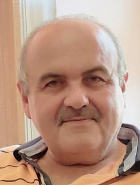

Khaled Assad And Palmyra: A Love Story
Khaled Assad and Palmyra: A Love Story
In the heart of the Syrian desert,
where the sun kisses the stones of ancient ruins,
Khaled stood, his silhouette a sentinel,
guarding the whispers of history,
where love and loss entwined like the vines
that once caressed the columns of Palmyra.
With each grain of sand that slipped through his fingers,
he felt the pulse of a city,
once vibrant,
now a ghost,
echoing stories of lovers who danced
beneath the stars,
their laughter mingling with the wind.
He was a custodian of dreams,
tender and fierce,
his heart a repository of memories,
each brick and broken pillar,
a testament to a love that transcended time,
chiseled into the very fabric of stone.
Palmyra, a name that rolled off his tongue
like a sweet melody,
a siren calling him home,
her ruins draped in the golden light of dawn,
the sun's embrace a lover's touch,
illuminating the beauty that had endured,
even in the shadows of despair.
Khaled walked through the archways,
the triumphal columns standing tall,
as if to bear witness to his devotion,
a silent vow to protect her spirit,
to breathe life into the echoes of the past.
He traced the lines of her history
with reverence, as though
they were the delicate fingers of a beloved,
each inscription a heartbeat,
each carving a sigh.
In the twilight, he would sit,
gazing at the horizon,
where the last light kissed the stones,
and in that stillness, he imagined
the laughter of ancient lovers,
their promises woven into the fabric of time.
He dreamed of a world where Palmyra thrived,
where her beauty could dance freely
without fear,
where love was not a casualty of war,
but a radiant force,
binding souls in a tapestry of hope.
But the winds of change howled,
and shadows crept across the land,
the drums of conflict beating louder,
the earth trembling beneath the weight of despair.
Yet, Khaled stood firm,
a guardian against the storm,
his heart a fortress of resilience,
his love a beacon,
shining through the darkest nights.
He recalled the stories of his ancestors,
their courage echoing through the ruins,
and he vowed to become their voice,
to etch their tales into the sands of time,
to let the world know
that love, like Palmyra,
could not be erased,
that it would rise again,
like the phoenix from the ashes,
a testament to the indomitable spirit
of a people and their passion.
In his heart, Khaled held Palmyra,
not just as stone and dust,
but as a living entity,
a flame flickering in the darkness,
a promise that beauty endures,
that love, even in its most fragile form,
can withstand the fiercest storms.
And so, he dedicated his life,
to each fallen column,
each cracked mosaic,
to breathe poetry into the silence,
to sing the love songs of the ancients,
and in doing so,
to write his own love story—
Khaled Assad and Palmyra,
bound by a love that defied oblivion,
a love that would echo
through the ages,
a promise made in the heart of the desert,
where history and hope intertwine,
and the spirit of love remains unbroken.
This poem has not been translated into any other language yet.
I would like to translate this poem



Delivering Poems Around The World
Poems are the property of their respective owners. All information has been reproduced here for educational and informational purposes to benefit site visitors, and is provided at no charge...
3/3/2026 3:54:02 AM # 1.0.0