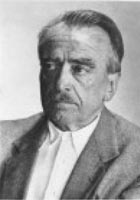

Richard Minne Biography
Richard Minne (Belgium, 1891 - 1965) counts among Flanders’ most respected poets, but also among its loneliest. The latter should be taken both literally and figuratively: Minne stood alone with his poetry and spent the better part of his life alone. Minne came to maturity at a time in which neo-Classicists and Modernists were engaged in a struggle for domination in the world of poetry: the years following the Great War.
It cannot be claimed that Minne renewed poetry in terms of its external forms – sonnets and rhyme are abundantly present in his work –, but rather in terms of its interior form and tone. As an early forerunner of the Australian poet Les Murray, he employed everyday and on occasion agricultural motifs – as with Murray he lived on a farm for a period of time. Together with unconventional words and dialect, he cast the said motifs in a spoken language reminiscent of the so-called parlando style. He relativised and demystified both the outside world and his work.
The world is a many mouthed flute, and each single player
Blows his own tune, and their concert makes sad refrain,
In which I cannot find a note of my own flute's prayer.
...
It is an old hotel. There one rests among the beasts.
And in the guest book, all decked out with Elzevirs,
is still preserved the fame of many a foreigner
...
Oh they talk about me.
But what's there they can say?
Shall l dab on some scent
And twist my hair into ringlets, pray?
...
Act more stupid than you are,
but watch for snares that trip you;
both time and space ignore
but bustle just like hens do.
...
The new republic is strong.
Men write it on blank walls.
Schoolboys stare at it long
and sing an Anacreontic song.
...




Delivering Poems Around The World
Poems are the property of their respective owners. All information has been reproduced here for educational and informational purposes to benefit site visitors, and is provided at no charge...
3/10/2026 4:40:10 AM # 1.0.0