
Robert James Campbell Stead
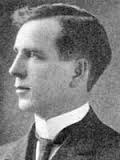

Robert James Campbell Stead Poems
SERGEANT BLUE of the Mounted Police was a so-so kind of a guy ;
He swore a bit, and he lied a bit, and he boozed a bit on the sly;
But he held the post at Snake Creek Bend for country and home and God,
...
Well, no, I 'm not superstitious, — at least, I don't call it that, —
But when some one spins a creepy yarn I don't deny it flat,
For a man who spends a lifetime with the throttle in his hand
...
They were running out the try-lines, they were staking out the grade;
Through the hills they had to measure, through the sloughs they had to wade;
They were piercing unknown regions, they were crossing nameless streams,
...
Who owns the land ?
The Duke replied,
' I own the land. My fathers died
In winning it from foreign hands,
...
We have heard the night wind howling as we lay alone in bed ;
We have heard the grey goose honking as he journeyed overhead;
We have smelt the smoke-wraith flying in the hot October wind,
...
Feelin' kind of all run down ?
Mighty bad:
Sick and tired o' life in town ?
Don 't be sad :
...
Yes, I'm holdin' down the homestead here an' roughin' it a bit,
It seems the only kind o' life that I was built to fit,
For it's thirty years last summer since I staked my first preserve,
An' I reckon on the whole I've prospered more than I deserve;
...
In the dingy dust of his deerskin tent sat the chief of a dying race,
And the lake that lapt at his wigwam door threw back a frowning face,
And a sightless squaw at the centre-pole crooned low in a hybrid speech,
When a man of God swept round the point and landed on the beach.
...
Little Tim Trotter was born in the West,
Where the prairie lies sunny and brown;
Never was, surely, so welcome a guest
In the stateliest halls of the town;
...
When Lord Landseeker came out West to have a look around,
And spend a little money if the right thing could be found,
He hadn't breathed the prairie air more than a day or two
Until he was the centre of a philanthropic crew
...
The City? Oh yes, the City
Is a good enough place for a while
It fawns on the clever and witty,
And welcomes the rich with a smile;
...
Knew you the men of the Old Guard ? Men of the camp and trail;
Guard of the van when Time began in the land of grass and gale,
Of a sky-wide land they seized command where the mightiest prevail.
...
The village lights grew dim behind, the snow lay vast and white,
And silent as an icy shroud spread out upon the night;
A wan moon struggled with the clouds, and through the misty haze
...
He is brand-new out from England, and he thinks he knows it all —
(There's a bloomin' bit o' goggle in his eye):
The 'colonial' that crosses him is going to get a fall —
...
Where the farthest foothills flatten to a circle-sweeping plain,
And the cattle lands surrender to the onward march of grain,
Where the prairies stretch unbroken to the comers of the sky,
...
Far away from the din of the city,
I dwell on the prairie alone,
With no one to praise or to pity,
...
(As related/or the benefit of the New Arrival.)
Yes, stranger, I hev trailed the West
Since I was a kid on a bob-tailed nag,
...
I had lain untrod for a million years from the line to the Arctic sea;
I had dreamed strange dreams of the vast unknown,
Of the lisping wind and the dancing zone
...
Robert James Campbell Stead Biography
Robert James Campbell Stead (1880-1959), like many of his generation were multi-faceted characters. He begun his working life by starting a newspaper in his hometown of Cartwright, Manitoba, and was a published poet early in life but it is as a writer of novels he gained most fame. In later life he moved to Alberta where he became variously a journalist, a Car Salesman, a Civil Servant and publicist for the CPR, Robert J. C. Stead was born on 4th September 1880 in Middleville, Lanark County, Ontario. The family moved when he was young and they were homesteading in Cartwright, Manitoba by 1882 . This was to be the basis of the locations Plainsville and Alder Creek in much of his later fiction. Stead published his first book, “The Empire Builders and Other Poems” in 1908 This drew heavily on the styles of his two favourite writers at that time; Robert Service and Rudyard Kipling and was seen as an excessively patriotic book lauding Canada and Canadians. With the advent of the first World War his writing became even more fervant but his later novels showed a progressive shift from the gung-ho romantic to the more tolerant “prairie realism” for which he was to became famous. For a time Stead worked for the Canadian Pacific Railway in Calgary in the immigration department. His writing natural began to reflect the clean, healthy vigour of life in the open spaces. Spaces opened up by courtesy of the CPR of course! In 1919 he started work as a publicist for the government at the Department of Immigration and Colonization, moving to the Department of Mines and Resources in 1936 until his retirement in 1946.)
The Best Poem Of Robert James Campbell Stead
The Squad Of One
SERGEANT BLUE of the Mounted Police was a so-so kind of a guy ;
He swore a bit, and he lied a bit, and he boozed a bit on the sly;
But he held the post at Snake Creek Bend for country and home and God,
And he cursed the first and forgot the rest — which wasn't the least bit odd.
Now the life of the North-West Mounted Police breeds an all-round kind of man;
A man who can jug a down-South thug when he rushes the red-eye can;
A man who can pray with a dying bum or break up a range stampede—
Such are the men of the Mounted Police and such are the men they breed.
The snow lay deep at the Snake Creek post and deep to east and west,
And the Sergeant had made his ten-league beat and settled down to rest
In his two-by-four that they called a 'post,' where the flag flew overhead,
And he took a look at his monthly mail, and this is the note he read:
'To Sergeant Blue of the Mounted Police at the post of Snake Creek Bend,
From U.S. Marshal of County Blank, greetings to you, my friend,
They's a team of toughs give us the slip, though they shot up a couple of blokes,
And we reckon they's hid in Snake Creek Gulch and posin' as farmer folks.
' They 's as full of sin as a barrel of booze and as quick as a cat with a gun,
So if you happen to hit their trail be first to start the fun;
And send out your strongest squad of men and round them up if you can,
For dead or alive we want them here. Yours truly, Jack M'Mann.'
And Sergeant Blue sat back and smiled, ' Ho, here is a chance of game!
Folks 'round here have been so good that life is getting tame,
I know the lie of Snake Creek Gulch—where I used to set my traps —
I'll blow out there to-morrow and I'll bring them in — perhaps.'
Next morning Sergeant Blue, arrayed in farmer smock and jeans,
In a jumper sleigh he had made himself set out for the evergreens
That grow on the bank of Snake Creek Gulch by a homestead shack he knew,
And a smoke curled up from the chimney-pipe to welcome Sergeant Blue.
' Aha, and that looks good to me,' said the Sergeant to the smoke,
' For the lad that owns this homestead shack is East in his wedding-yoke;
There are strangers here, and I'll bet a farm against a horn of booze
That they are the bums that are predestined to dangle in a noose.'
So he drove his horse to the shanty door and hollered a loud ' Good-day,'
And a couple of men with fighting-irons came out beside the sleigh,
And the Sergeant said, ' I 'm a stranger here, and I've driven a weary mile;
If you don't object I'll just sit down by the stove in the shack awhile.'
So the Sergeant sat and smoked and talked of the home he had left down East,
And the cold, and the snow, and the price of land, and the life of man and beast,
But all of a sudden he broke it off with,' Neighbours, take a nip ?
There's a horn of the best you'll find out there in my jumper, in the grip.'
So one of the two went out for it, and as soon as he closed the door
The other one staggered back as he gazed up the nose of a forty-four,
But the Sergeant wasted no words with him, ' Now, fellow, you 're on the rocks,
And a noise as loud as a mouse from you and they'll take you out in a box.'
So he fastened the bracelets to his wrists and his legs with some binder-thread,
And he took his knife and he took his gun and he rolled him on to the bed;
And then as number two came in he said, ' If you want to live,
Put up your dukes and behave yourself or I'll make you into a sieve.'
And when he had coupled them each to each, and laid them out on the bed,
"It's cold, and I guess we 'd better eat before we go," he said.
So he fried some pork and he warmed some beans, and he set out the best he saw,
And they ate thereof, and he paid for it, according to British law.
That night in the post sat Sergeant Blue with paper and pen in hand,
And this is the word he wrote and signed and mailed to a foreign land :
'To U.S. Marshal of County Blank, greetings I give to you,
My squad has just brought in your men, and the squad was Sergeant Blue.'
There are things unguessed, there are tales untold, in the life of the great lone land,
But here is a fact that the prairie-bred alone may understand,
That a thousand miles in the fastnesses the fear of the law obtains,
And the pioneers of justice were the 'Riders of the Plains.'
Robert James Campbell Stead Comments




Delivering Poems Around The World
Poems are the property of their respective owners. All information has been reproduced here for educational and informational purposes to benefit site visitors, and is provided at no charge...
4/5/2026 4:07:35 AM # 1.0.0


