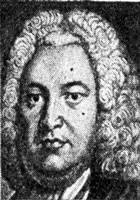

Thomas Tickell Biography
Thomas Tickell, son of Rev. Richard Tickell, was born in 1686 in Cumberland, England. He was educated at Queen's College, Oxford where he earned a Master of Arts degree. In 1710 he was made a Fellow. He held this Fellowship until 1726, when he left to get married in Dublin. He and his wife Clotilda had four children and resided in Dublin for the remainder of their lives.
A good friend of Addison's, Tickell also produced numerous poems during his career and regularly contributed verse to the Spectator. He also worked as a translator. Notably, his translation of the first book of Iliad appeared simultaneously with the Pope's in 1715.
Tickell was very much interested in public affairs and his poems include The Prospect of Peace. Written at a time of negotiation between Britain and France, it's message was one of enjoying the pleasures of peace rather than the pride of conquest. He later went on to serve as Secretary to the Lords Justices of Ireland, an honour which he held until 1740.
Tickell died on 23rd April 1740.
If, dumb too long, the drooping Muse hath stay'd,
And left her debt to Addison unpaid;
Blame not her silence, Warwick, but bemoan,
And judge, oh judge, my bosom by your own.
...
Of Leinster, fam'd for maidens fair,
Bright Lucy was the grace;
Nor e'er did Liffy's limpid stream
Reflect so fair a face,
...
Oh! form'd by Nature, and refin'd by Art,
With charms to win, and sense to fix the heart!
By thousands sought, Clotilda, canst thou free
Thy croud of captives and descend to me?
...
Too long hath love engross'd Britannia's stage,
And sunk to softness all our tragic rage:
By that alone did empires fall or rise,
And fate depended on a fair-one's eyes:
...




Delivering Poems Around The World
Poems are the property of their respective owners. All information has been reproduced here for educational and informational purposes to benefit site visitors, and is provided at no charge...
4/7/2026 10:18:48 PM # 1.0.0