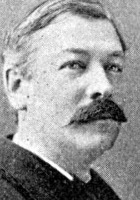

Henry Abbey Biography
Henry Abbey was an American poet who is best remembered for the poem, What do we plant when we plant a tree? He is also known for The Bedouin's Rebuke.
Style
In much of his work, Abbey displays traditional characteristics of the nineteenth century American poetic approach. He uses inversions and has fluid feel; his style takes notable influence from that of English poet James Henry Leigh Hunt. The Bedouin's Rebuke can be compared to Hunt's Abou Ben Adhem, which employs similar metric flow. Abbey was fond of simple subject matter, such as remorse or happiness; his poetry often forms an anecdote or short story which builds in intensity, reaches a climactic struggle between two opposing entities, and then ends in an implied moral. His poetry is reminiscent of the Romantic Era, with particular influence from Shelley and Coleridge. He remains relatively well known with the poetry-reading public, as well as a respected figure in literary circles.
We journey up the storied Nile;
The timeless water seems to smile;
The slow and swarthy boatman sings;
The dahabëah spreads her wings;
...
How mild and fair the day, dear love! and in these garden ways
The lingering dahlias to the sun their hopeless faces raise.
The buckwheat and the barley, once so bonny and so blithe,
Fall before the rhythmic labor of the cradler's gleaming scythe.
...
When all the sky was wild and dark,
When every heart was wrung with fear,
He rose serene, and took his place,
The great occasion's mighty peer.
...
Drecker, a drawbridge keeper, opened wide
The dangerous gate to let the vessel through;
His little son was standing by his side,
Above Passaic River deep and blue,
...




Delivering Poems Around The World
Poems are the property of their respective owners. All information has been reproduced here for educational and informational purposes to benefit site visitors, and is provided at no charge...
4/11/2026 7:10:16 AM # 1.0.0