
Juan Gelman
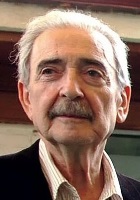

Juan Gelman Poems
no stan muridus lus páxarus
di nuestrus bezus/
stan muridus lus bezus/
lus páxarus volan nil verdi sulvidar/
pondrí mi spantu londji/
dibaxu dil pasada/
qui arde
cayadu com'il sol/
...
nicht gestorben sind die Vögel
unserer Küsse /
gestorben sind die Küsse /
die Vögel fliegen ins grüne Vergessen /
ich werde meinen Schrecken in die Ferne legen /
unter die Vergangenheit /
die glüht
schweigsam wie die Sonne /
...
לא מתו ציפורֵי
נשיקותינו/
הנשיקות הן שמתו/
הציפורים מתעופפות בשִכחה הירוקה/
אניח הרחק את פחדי/
מתחת לעבר/
הבוער
בשתיקה כמו השמש/
...
The wind that comes into the kitchen tears at the poster with the face of an actress from the silent movies, Mary Pickford maybe. She is beautiful. Her gentle eyes shine delicately. With her mouth, they shape the most tender smile, a silent half-smile.
...
El viento que entra en la cocina sacude el cartelón con el
rostro de alguna actriz del cine mudo, Mary Pickford tal vez.
Es bella, sus ojos brillan suavemente y con la boca construyen
una semisonrisa tiernísima, callada.
También nosotros, aquí, somos actores mudos. Tenemos
brillos suaves, ternuras sucias de sangre seca como niños,
mucho silencio alrededor.
La platea prefiere el film sonoro. ¿Quién hizo esta
película? De este lado de la pantalla, el nuestro, se oyen
muertos soltando vida de a poquito como un crujir de
sueños, los torturados gritan, crepita gente en la prisión, bajo
el estruendo de las botas militares la injusticia es un rugido
infernal. Del otro lado, parece que ven pasar fantasmas
pálidos y ningún piano los anuncia.
Te amo, Mary Pickford, sé que ahora me amas. Entra el
viento y sacude nuestros amores de papel.
...
Il vento che entra in cucina fa fremere il poster con il
volto di una qualche attrice del muto, forse Mary Pickford.
È bella, brillan soavemente i suoi occhi e con la bocca formano
un mezzo sorriso tenerissimo, tranquillo.
Anche noi siamo attori del muto. Abbiamo
splendori soavi, tenerezze sporche di sangue aggrumato come bimbi,
molto silenzio intorno.
La platea preferisce il film sonoro. Chi ha girato questa
pellicola? Da questa parte dello schermo, la nostra, si sente
come i morti perdendo la vita poco a poco, come un frusciar di
sogni, i torturati gridano, strepita la gente nel carcere, sotto
il fracasso degli stivali dei soldati l'ingiustizia è un ruggito infernale.
Dall'altro lato sembra che vedano passare fantasmi
pallidi e non c'è pianoforte che li annunci.
Io ti amo, Mary Pickford, so che ora mi ami. Entra il
vento e scuote i nostri amori di carta.
...
un niño hunde la mano en su fiebre y saca astros que tira al aire / y
ninguno ve /
yo tampoco los veo /
yo sólo veo un niño con fiebre que tiene los ojos cerrados y ve
animalitos que pasan por el cielo / pacen en su temblor /
yo no veo esos animalitos /
yo veo al niño que ve animalitos /
y me pregunto por qué esto pasa hoy /
¿pasaría otra cosa ayer? / ¿se sacaría el niño mucha pena
del alma ayer? / yo sólo sé que el niño tiene fiebre /
tiene el alma cerrada y la hunde
en las cenizas que dejará porque ardió /
pero ¿es así? / ¿hunde su alma en las cenizas de sí? / un árbol
mira detrás de la ventana al sol /
hay sol /
detrás de la ventana hay un árbol en la calle /
ahora por la calle pasa un niño con una mano en el bolsillo del
pantalón /
está contento y saca la mano del bolsillo /
abre la mano y suelta fiebres que ninguno ve /
yo tampoco las veo /
yo sólo veo su palma abierta a la luz /
y él / ¿qué ve? /
¿ve bueyes que tiran del sol? /
yo no sé nada /
no sé qué ve el niño de la mano en el pantalón /
ni el niño que tiene fiebre y ve los huesos del atlántico
y los huesos de todos los mares revueltos en su corazón /
yo no veo nada / no sé nada /
ni sé en qué día nací /
conozco la fecha pero no el día en que nací /
...
ein Kind versenkt die Hand in sein Fieber und holt Sterne heraus,
die es in die Luft wirft / und niemand sieht /
ich sehe sie auch nicht /
ich sehe nur ein Kind mit Fieber, das die Augen geschlossen hat und
Tierchen sieht, die am Himmel vorüberziehen / in seinem Zittern weiden /
ich sehe diese Tierchen nicht /
ich sehe das Kind, das Tierchen sieht /
und frage mich, warum dies heute geschieht /
geschähe gestern etwas anderes? / verarbeitete das Kind gestern
eine große Seelenqual? / ich weiß nur, daß das Kind Fieber hat /
es hat die Seele geschlossen und versenkt sie
in Aschen, die es zurücklassen wird, weil es glühte /
ist es jedoch so? / versenkt es seine Seele in die Aschen von sich? / ein Baum
schaut hinter dem Fenster zur Sonne /
die Sonne scheint /
hinter dem Fenster steht ein Baum auf der Straße /
jetzt geht ein Kind mit einer Hand in der Hosentasche auf der Straße /
es ist froh und nimmt die Hand aus der Tasche /
öffnet die Hand und läßt lauter Fieber frei, das niemand sieht /
ich sehe es auch nicht /
ich sehe nur die zum Licht hin offene Hand /
und das Kind / was sieht es? /
sieht es Ochsen, die an der Sonne ziehen? /
ich weiß nichts /
ich weiß nicht, was das Kind mit der Hand in der Hose sieht /
auch nicht das Kind, das Fieber hat und die Knochen des Atlantiks sieht
und die Knochen aller aufgewühlten Meere in seinem Herzen /
ich sehe nichts / ich weiß nichts /
ich weiß nicht einmal, an welchem Tag ich geboren wurde /
ich kenne das Datum, aber nicht den Tag, an dem ich geboren wurde /
oder ist dieser Tag jener, an dem ich zum x-ten Mal sterbe? /
ist es dieser Tag, an dem alle Verstorbenen
mit mir wieder sterben? / oder ich mit ihnen? /
in diesem offenen und sanftesten Licht? /
und was macht das Kind mit diesem Licht in seiner Hand? /
während alle arbeiten, um außerhalb dieses Lichts Geld zu machen? /
eingesperrt außerhalb dieses Lichts, das man nicht ohne ein inneres Licht sehen kann? /
ohne eine Liebe mit Kummer im Innern? /
jetzt ziehen die Briefe vorüber, die du mir geschrieben hast /
Sohn / du / der du so sehr aus diesem Licht kommst /
deine Briefe haben Fieber, von dem ich nichts weiß /
und nie etwas wissen werde /
sie sind wie Vögelchen, die mit deiner Gelassenheit fliegen /
Sterne, die du in die Luft geworfen hast und keiner sieht /
ich sehe sie nicht, auch nicht mein unsicherer Schmerz /
du dachtest an ein reineres Leben als dieses /
ein Leben, das man waschen /
in die Sonne deiner Güte hängen konnte /
ein Leben voller Gesichter / wie Reisen /
wo sind diese Gesichter? / diese Reisen? /
das Leben ist nackt wie ein uferloses Meer /
und ich kann das Leben nicht zurückdrehen /
es bis zu deiner Wiege tragen /
es auch nicht vorwärts bringen /
ich bin weniger wirklich als der Tisch, an dem ich esse /
ich esse, um wirklich zu sein, wie der Baum hinter dem Fenster /
jetzt stellte sich ihm ein Kind zur Seite /
es nimmt die Hand aus der Hosentasche /
es öffnet die Hand zum Licht
und denkt, daß der Tod der Tod ist
und nicht mehr als das /
...
está negra la madera de tu casa
y el verde de tus plantas brilla como lustrado a mano/
te debe haber llovido mucha ausencia/
debe haberte apagado los fuegos que encendías
para leer tus pechos/
para saber quién anda por ahí/
en el verano de tu rigidez empujada/
¿qué sería la muerte sin la lluvia/
su ciencia de humo y claridad?/
temblabas como un cafetín/
pasaban tangos de gardel y toros ya suavísimos/
tus piernas ardían al lado de los ángeles
y volaban cenizas del secreto cremado/
¿cómo es posible el horror de saber?/
¡dale/viento!/
¡raspa la música que hace diamantes
en cada esquina de la sonreidora!/
¡la música que separa los nacimientos de los espantapájaros!
¡los espantapájaros verdaderos!/
¡que me conocen y no son yo!/
vos/que sabés hacer cuchillos
con un instante del amor/
cantá/sentada en los panes que horneo y nunca comeré/
¡cantá/para que corra la mañana
y se subleven los canarios
que lloran ocultamente!/
...
schwarz ist das Holz deines Hauses
und das Grün deiner Pflanzen glänzt wie handpoliert /
es wird dir wohl viel Abwesenheit geregnet haben /
es wird dir wohl die Feuer gelöscht haben,
die du entfachtest
um deine Brüste zu lesen /
um zu wissen, was sich da aufhält /
im Sommer deiner gedrängten Strenge /
was wäre der Tod ohne Regen? /
seine Wissenschaft aus Rauch und Helligkeit? /
du zitterst wie ein Kaffeehaus /
man hörte Tangos von Gardel und schon sehr sanfte Stiere /
deine Beine glühten neben den Engeln
und Funken flogen vom eingeäscherten Geheimnis /
wie ist das Grauen des Wissens möglich? /
mach schon / Wind! /
kratze die Musik, welche Diamanten hervorbringt
an jeder Ecke der Lächelnden! /
die Musik, welche die Geburten der Vogelscheuche trennt /
die wahren Vogelscheuchen! /
die mich kennen und nicht ich sind! /
du / weißt, wie man Messer macht
aus einem Augenblick der Liebe /
singe / während du auf den Broten sitzt, die ich backe
und nie essen werde /
singe / damit der Morgen verläuft
und die Kanarienvögel aufbegehren
die insgeheim weinen /
...
Cohabito con un oscuro animal.
Lo que hago de día, de noche me lo come.
Lo que hago de noche, de día me lo come.
Lo único que no me come es la memoria. Se encarniza en
palpar hasta el más chico de mis errores y mis miedos.
No lo dejo dormir.
Soy su oscuro animal.
...
Ich wohne mit einem dunklen Tier.
Was ich tagsüber mache, frißt es mir nachts weg.
Was ich nachts mache, frißt es mir tagsüber weg.
Das Einzige, das es nicht frißt, ist das Gedächtnis. Verbissen spürt es sogar den allerkleinsten meiner Fehler und meiner Ängste auf.
Ich lasse es nicht schlafen.
Ich bin sein dunkles Tier.
...
Está quieta la tarde en el café. Pasa
la niña que pide y
se llama Mari. Su tristeza
pisa la ciudad y rostros
que dieron su vida por la vida y
la niña repite. El sueño
es un libro enrollado, echa humo
como si fuera un horno grande. Su mano dice
que el mundo es cóncavo.
...
Ruhig ist der Nachmittag im Café. Das kleine
Mädchen, das bettelt, kommt vorbei und
heißt Marie. Ihre Traurigkeit
betritt die Stadt und Gesichter,
die ihr Leben für das Leben gaben und
das kleine Mädchen widerspiegelt. Der Traum
ist eine Buchrolle, die schwelt,
als wäre er ein großer Ofen. Ihre Hand sagt,
daß die Welt hohl ist.
...
Entre Hölderlin y la locura de Hölderlin
hay diferencias.
La poesía no es un destino.
Nadie sabe quién es la poesía para ella.
En el recinto del cielo hay jaulas
sin astros ni dolor. ¿La
niñita que dio vuelta la esquina
llorando es absurda? ¿Como
el sonido de mi hambre hoy? ¿La insania
camina por la calle? ¿Se queda
en cualquier casa?
¿La tuya?
...
Zwischen Hölderlin und dem Wahn Hölderlins
gibt es Unterschiede.
Die Poesie ist keine Bestimmung.
Niemand weiß, wer die Poesie für sich ist.
Im Himmelsgehege gibt es Käfige
ohne Sterne noch Leid. Ist das
kleine Mädchen, das weinend um die Ecke
kam, abwegig? Wie
das Geräusch meines Hungers heute? Geht
der Unsinn auf der Straße? Bleibt er
in irgendeinem Haus?
In deinem?
...
בין הלדרלין ובין שיגעונו של הלדרלין
יש הבדלים.
השירה אינה גורל.
אין איש יודע מהי השירה בשבילו.
בתחום השמים יש כלובים
בלי כוכבים ובלי כאב. הילדונת
שפנתה בבכי בפינת הרחוב
היא אבסורדית? כמו
צליל רעבוני היום? הטירוף
צועד ברחוב? נשאר
באיזה בית?
בשלך?
...
¿Cómo sabe Andrea que la poesía no tiene
cuerpo, no tiene corazón y
en su hálito de niña pasa o puede pasar
y habla de lo que siempre no habla?
En la boca cuaja el mundo y a la luz
de pasados que Andrea ignora para nunca
su memoria es una casa nueva donde
otros rostros vivirán,
otros amaneceres, otros llantos.
Mejor así.
Todo lo que se hunde ahora, este tiempo que se
disuelve,
serán para ella páginas amarillentas olvidables.
Un día sabrá que existieron como ella misma,
entre lo imaginario y lo real.
¡Ah, vida, qué mañana
cuando termines de escribir!
...
Wie weiß Andrea, dass die Poesie keinen Körper,
kein Herz hat und
durch ihr kindliches Wesen geschieht oder geschehen kann
und sagt, was sie immer ungesagt läßt?
Im Mund gerinnt die Welt und im Licht
der Vergangenheiten, die Andrea auf nimmer verkennt,
ihr Gedächtnis ist ein neues Haus, in dem
andere Gesichter leben werden,
andere Sonnenaufgänge, andere Klagen.
Besser so.
Alles, was jetzt versinkt, diese Zeit, die verrinnt,
werden für sie vergilbte, vergeßbare Blätter sein.
Eines Tages wird sie wissen, daß es sie gab wie sie selbst
zwischen dem Eingebildeten und dem Wirklichen.
Ach, Leben, welch ein Morgen,
wenn du aufhörst zu schreiben!
...
A Alberto Díaz
A ver cómo es.
Estaba quieta la inquietud por una vez,
la desazón en sazón y
¡cómo se parecía el mundo a Gerarda
envuelta en sensaciones de encaje!
Las palabras chocan contra la tarde y no
la descomponen y
la furia no me deja solo conmigo.
Hay mucha sombra militar que no me deja
solo en la esquina
donde Gerarda y yo decíamos 'te soy' para decir
'me soy', en vos, que te fuiste a vivir con los muertos.
¿Eso se hace?
La primavera vive sin pensar,
pero yo no soy la primavera,
cuento huesos y sangre del sueño que vendrá.
También nosotros soñamos sobre sangre que vendrá.
En el revés del mundo crece el cosmos
y Gerarda está allí,
donde nuestro dolor será nada.
...
Juan Gelman Biography
Juan Gelman was an Argentine poet. He published more than twenty books of poetry between 1956 and his death in early 2014. In 2007, Gelman was awarded the Cervantes Prize, the most important in Spanish literature. His works celebrate life but are also tempered with social and political commentary and reflect his own painful experiences with the politics of his country. Juan Gelman was born in Buenos Aires, in the Villa Crespo neighborhood, in 1930. He was the third son of Ukrainian immigrants. His father, José Gelman, was a social revolutionary who participated in the 1905 revolution in Russia; he immigrated to Argentina, went back shortly after the Bolshevik revolution, and then returned to Argentina for good, disillusioned. Juan Gelman learned to read when he was three years old, and spent much of his childhood reading and playing soccer. He developed an interest in poetry at a very young age, influenced by his brother Boris, who read to him several poems in Russian, a language that Juan did not know. The experience of reading Dostoevsky's The Insulted and Humiliated (1861) at age eight made a profound impression on him. As a young man he was a member of several notable literary groups and later became an important journalist. He also worked as a translator at the United Nations. He was always an ardent political activist. In 1975 he became involved with the Montoneros, though he later distanced himself from the group. After the 1976 Argentine coup, he was forced into exile from Argentina. In 1976, his son Marcelo and his pregnant daughter-in-law, Maria Claudia, aged 20 and 19, were kidnapped from their home. They became two of the 30,000 desaparecidos, the people who **vanished** without a trace during the reign of the military junta. In 1990 Gelman was led to identify his son's remains (he had been executed and buried in a barrel filled with sand and cement), and years later, in 2000, he was able to trace his granddaughter, born in a backdoor hospital before Maria Claudia's murder and given to a pro-government family in Uruguay. The remains of Maria Claudia have not yet been recovered. During his long exile, Gelman lived in Europe until 1988, then in United States and later in Mexico, with his wife, Argentinian psychologist Mara La Madrid. In 1997, Juan Gelman received the Argentine National Poetry Prize, in recognition of his life's work, and in 2007 the Cervantes Prize, the most important prize for Spanish-language writers. He also had a long and brilliant career as journalist, writing for the Argentinian newspaper Pagina/12 until his death. Gelman included Uruguayan police officer Hugo Campos Hermida in a legal suit lodged in Spain for the "disappearance" of his daughter-in-law in Uruguay. At the beginning of the 21st century, Uruguayan President Jorge Batlle Ibáñez ordered an investigation and Gelman's granddaughter was found. Macarena, who had lived as an adopted child, took the surnames of her parents and started a career as a human rights activist.)
The Best Poem Of Juan Gelman
Dibaxu XXIX
no stan muridus lus páxarus
di nuestrus bezus/
stan muridus lus bezus/
lus páxarus volan nil verdi sulvidar/
pondrí mi spantu londji/
dibaxu dil pasada/
qui arde
cayadu com'il sol/
Juan Gelman Comments




Delivering Poems Around The World
Poems are the property of their respective owners. All information has been reproduced here for educational and informational purposes to benefit site visitors, and is provided at no charge...
8/28/2026 4:51:40 AM # rel_20260827T145718Z_a0f1bd3


