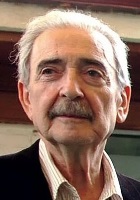

Juan Gelman Biography
Juan Gelman was an Argentine poet. He published more than twenty books of poetry between 1956 and his death in early 2014. In 2007, Gelman was awarded the Cervantes Prize, the most important in Spanish literature. His works celebrate life but are also tempered with social and political commentary and reflect his own painful experiences with the politics of his country.
Juan Gelman was born in Buenos Aires, in the Villa Crespo neighborhood, in 1930. He was the third son of Ukrainian immigrants. His father, José Gelman, was a social revolutionary who participated in the 1905 revolution in Russia; he immigrated to Argentina, went back shortly after the Bolshevik revolution, and then returned to Argentina for good, disillusioned.
Juan Gelman learned to read when he was three years old, and spent much of his childhood reading and playing soccer. He developed an interest in poetry at a very young age, influenced by his brother Boris, who read to him several poems in Russian, a language that Juan did not know. The experience of reading Dostoevsky's The Insulted and Humiliated (1861) at age eight made a profound impression on him.
As a young man he was a member of several notable literary groups and later became an important journalist. He also worked as a translator at the United Nations. He was always an ardent political activist. In 1975 he became involved with the Montoneros, though he later distanced himself from the group. After the 1976 Argentine coup, he was forced into exile from Argentina. In 1976, his son Marcelo and his pregnant daughter-in-law, Maria Claudia, aged 20 and 19, were kidnapped from their home. They became two of the 30,000 desaparecidos, the people who **vanished** without a trace during the reign of the military junta. In 1990 Gelman was led to identify his son's remains (he had been executed and buried in a barrel filled with sand and cement), and years later, in 2000, he was able to trace his granddaughter, born in a backdoor hospital before Maria Claudia's murder and given to a pro-government family in Uruguay. The remains of Maria Claudia have not yet been recovered.
During his long exile, Gelman lived in Europe until 1988, then in United States and later in Mexico, with his wife, Argentinian psychologist Mara La Madrid.
In 1997, Juan Gelman received the Argentine National Poetry Prize, in recognition of his life's work, and in 2007 the Cervantes Prize, the most important prize for Spanish-language writers. He also had a long and brilliant career as journalist, writing for the Argentinian newspaper Pagina/12 until his death.
Gelman included Uruguayan police officer Hugo Campos Hermida in a legal suit lodged in Spain for the "disappearance" of his daughter-in-law in Uruguay.
At the beginning of the 21st century, Uruguayan President Jorge Batlle Ibáñez ordered an investigation and Gelman's granddaughter was found. Macarena, who had lived as an adopted child, took the surnames of her parents and started a career as a human rights activist.
no stan muridus lus páxarus
di nuestrus bezus/
stan muridus lus bezus/
lus páxarus volan nil verdi sulvidar/
pondrí mi spantu londji/
dibaxu dil pasada/
qui arde
cayadu com'il sol/
...
nicht gestorben sind die Vögel
unserer Küsse /
gestorben sind die Küsse /
die Vögel fliegen ins grüne Vergessen /
ich werde meinen Schrecken in die Ferne legen /
unter die Vergangenheit /
die glüht
schweigsam wie die Sonne /
...
לא מתו ציפורֵי
נשיקותינו/
הנשיקות הן שמתו/
הציפורים מתעופפות בשִכחה הירוקה/
אניח הרחק את פחדי/
מתחת לעבר/
הבוער
בשתיקה כמו השמש/
...
The wind that comes into the kitchen tears at the poster with the face of an actress from the silent movies, Mary Pickford maybe. She is beautiful. Her gentle eyes shine delicately. With her mouth, they shape the most tender smile, a silent half-smile.
...
El viento que entra en la cocina sacude el cartelón con el
rostro de alguna actriz del cine mudo, Mary Pickford tal vez.
Es bella, sus ojos brillan suavemente y con la boca construyen
una semisonrisa tiernísima, callada.
También nosotros, aquí, somos actores mudos. Tenemos
brillos suaves, ternuras sucias de sangre seca como niños,
mucho silencio alrededor.
La platea prefiere el film sonoro. ¿Quién hizo esta
película? De este lado de la pantalla, el nuestro, se oyen
muertos soltando vida de a poquito como un crujir de
sueños, los torturados gritan, crepita gente en la prisión, bajo
el estruendo de las botas militares la injusticia es un rugido
infernal. Del otro lado, parece que ven pasar fantasmas
pálidos y ningún piano los anuncia.
Te amo, Mary Pickford, sé que ahora me amas. Entra el
viento y sacude nuestros amores de papel.
...




Delivering Poems Around The World
Poems are the property of their respective owners. All information has been reproduced here for educational and informational purposes to benefit site visitors, and is provided at no charge...
3/15/2026 6:42:43 AM # 1.0.0