Mahatma Gandhi (The Chronicle Of A Walking Soul) Poem by Rajendra Prasad Meena Jaipur India


Mahatma Gandhi (The Chronicle Of A Walking Soul)
Scene: I
On 2 October 1869,
beside the Arabian Sea,
Porbandar opened its morning window,
and Gujarat received a child
who would later become
a colossal figure in India's history.
Mohandas Karamchand Gandhi—
son of Karamchand Gandhi
and Putlibai—
grew beneath the quiet influence
of faith, discipline, and simplicity.
His childhood carried no prophecy,
no trumpet announced his arrival;
yet within an ordinary boy
a remarkable conscience
was gradually awakening.
He married Kasturba,
and life continued its ordinary rhythm
until the horizon of his destiny
opened across the ocean.
Scene: II
THE OCEAN OF LEARNING
In 1888,
Gandhi sailed to England
to study law.
London appeared before him
as an unfamiliar labyrinth—
new customs, new manners,
new intellectual horizons.
He studied at the Inner Temple,
and in 1891 became a barrister.
He returned to India
with legal knowledge in his mind,
but history had prepared for him
a far greater courtroom—
the courtroom of injustice.
Scene: III
THE RAILWAY THAT CHANGED A LIFE
In 1893,
Gandhi travelled to South Africa.
There, prejudice confronted him
with a brutal simplicity.
A first-class ticket
could not overcome
the barrier of racial discrimination.
At Pittsburgh,
he was removed from the train.
The railway disappeared into darkness,
but the incident remained illuminated
inside his conscience.
That lonely platform
became a crucible—
a place where humiliation
was transformed into determination.
He began to understand
that injustice could be confronted
without reproducing its violence.
From this intellectual and moral struggle
emerged Satyagraha—
the insistence upon truth—
and Ahimsa—
the disciplined refusal of violence.
Scene: IV
THE RETURN — 1915
In 1915,
Gandhi returned to India.
He did not immediately
stand upon a political pedestal.
He travelled.
He observed.
He listened.
India became his classroom.
Its villages became his textbooks.
Its farmers became his teachers.
Its poverty became
a question demanding an answer.
Scene : V
CHAMPARAN — 1917
Then came Champaran.
The indigo plantations
looked blue beneath the sunlight,
yet behind their color
lay the distress of cultivators.
Raj Kumar Shukla persistently urged Gandhi
to visit the region.
Gandhi arrived.
He listened to the peasants,
investigated their grievances,
and confronted an exploitative system
through peaceful resistance.
The indigo fields
were no longer merely fields—
they became witnesses
to the awakening of rural India.
Champaran Satyagraha
became a significant milestone
in Gandhi's Indian political journey.
Scene: VI
KHEDA — 1918
Then the road led to Kheda.
The harvest had suffered.
The peasants faced hardship,
yet revenue demands remained.
Gandhi supported their campaign
for relief.
The fields were dry,
but the collective spirit
was gathering strength.
Here, Satyagraha
became a language
through which farmers
could assert their dignity.
Scene: VII
AHMEDABAD
Then came Ahmedabad.
Mill workers demanded
a fair settlement.
Gandhi intervened.
He employed fasting
as a form of moral persuasion.
The struggle demonstrated
another dimension of his method:
discipline before aggression,
persuasion before coercion.
Scene: VIII
1919 — A NATION AWAKENS
Then came the Rowlatt Act.
Gandhi opposed it
and called for nonviolent resistance.
But soon India witnessed
the tragedy of Jallianwala Bagh.
The garden became a symbol
of colonial brutality.
Its silence travelled
from Punjab to every corner
of the subcontinent.
India's political consciousness
grew increasingly resolute.
Scene: IX
NON-COOPERATION
Gandhi now called upon Indians
to withdraw cooperation
from colonial institutions.
The Charkha began to turn.
Whirr… whirr… whirr…
Cotton became thread.
Thread became cloth.
And cloth became a metaphor
for Swadeshi and self-reliance.
The spinning wheel
was no longer merely an instrument—
it became an emblem
of economic independence.
Scene: X
CHAURI CHAURA — 1922
Then came Chauri Chaura.
Violence erupted.
Gandhi, committed to nonviolence,
withdrew the Non-Cooperation Movement.
The decision revealed
a fundamental principle
of his political philosophy:
the means must not contradict
the moral purpose of the end.
Freedom mattered—
but so did the manner
in which freedom was pursued.
Scene: XI
THE SALT MARCH — 1930
Then Gandhi turned toward
something extraordinarily ordinary—
salt.
A grain of salt
could fit upon a fingertip.
Yet colonial legislation
had made that tiny crystal
a symbol of imperial authority.
On 12 March 1930,
Gandhi left Sabarmati Ashram.
His walking stick tapped the road.
One foot.
Then another.
Behind him gathered followers.
The road became a moving procession.
Villages watched the march pass.
The dust rose beneath thousands of feet.
The horizon slowly moved closer.
And finally—
Dandi.
The Arabian Sea stretched
beneath an enormous sky.
Gandhi bent toward the shore
and picked up salt.
A tiny crystal
became a gigantic political symbol.
The Salt March demonstrated
the power of civil disobedience—
a deliberate, nonviolent challenge
to an unjust law.
Scene: XII
THE ROAD THROUGH PRISONS
Arrest followed arrest.
Prison walls surrounded leaders,
but ideas crossed walls
without passports.
Gandhi negotiated,
fasted,
protested,
and participated in political dialogue.
He travelled to London
for the Round Table Conference.
Yet wherever he went,
India travelled with him—
in the faces of farmers,
in the sound of the Charkha,
in the dust of village roads.
Scene: XIII
1942 — QUIT INDIA
Then came 1942.
The Second World War
had engulfed the world.
India demanded freedom.
On 8 August 1942,
the Quit India resolution was adopted.
Gandhi gave the nation
a formidable call:
"Do or Die."
The following day,
he was arrested.
Prison attempted to silence
the leader—
but the idea of independence
had already entered millions of minds.
Scene: IV
THE FINAL YEARS
The road toward freedom
was accompanied by another danger—
communal violence.
Gandhi walked through places
where fear had replaced trust.
Noakhali became one such destination.
He moved from village to village,
appealing for reconciliation.
While politics discussed borders,
Gandhi spoke about people.
While others imagined freedom
as a political achievement,
he insisted that freedom
must also preserve humanity.
Scene: XV
15 AUGUST 1947
Then the long-awaited morning arrived.
India became independent.
The national flag rose.
The colonial chapter closed.
But Gandhi spent that historic day
in Calcutta,
working and praying for communal peace.
For him,
independence was incomplete
if neighbors could not live
without fear of one another.
Ending Scene: XVI
30 JANUARY 1948
Then came the final evening.
Delhi.
A prayer meeting.
A familiar path.
A simple white garment.
A walking stick.
And footsteps moving quietly
toward prayer.
On 30 January 1948,
Gandhi was assassinated.
His physical journey ended.
But the vocabulary of his life
remained:
Truth.
Ahimsa.
Satyagraha.
Swaraj.
Swadeshi.
Civil Disobedience.
Non-Cooperation.
Human Dignity.
Reconciliation.
Self-Discipline.
These were not merely words
in a history textbook.
They were the milestones
of a life.
A child from Porbandar
became a barrister in England.
A railway platform in South Africa
became a turning point.
Champaran gave farmers a voice.
Kheda strengthened collective resistance.
Ahmedabad brought workers and justice
into the same conversation.
Chauri Chaura tested his commitment
to nonviolence.
Dandi transformed salt
into a symbol.
Quit India intensified
the demand for freedom.
And 15 August 1947
brought independence.
Then, on 30 January 1948,
the footsteps stopped—
but the ideas continued walking.
Perhaps that is why
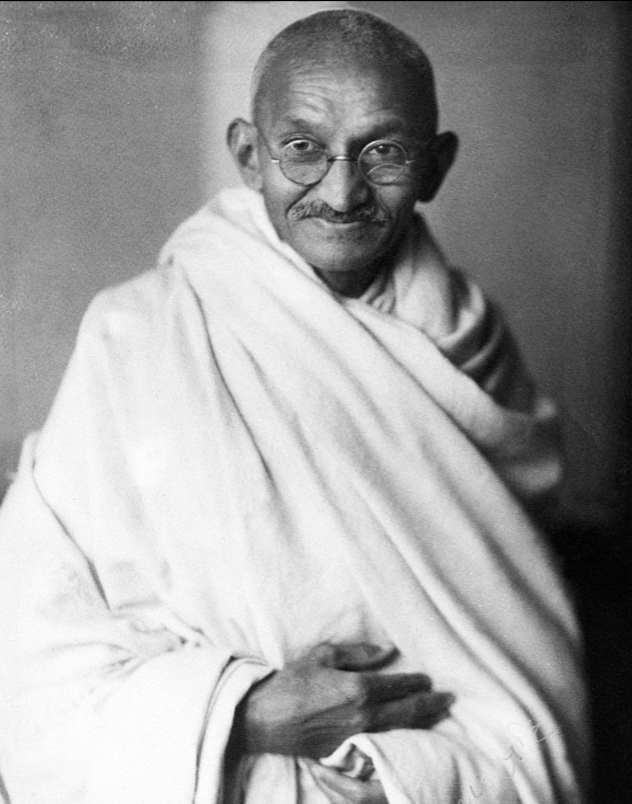
the most enduring image of Gandhi
is not a throne,
not a palace,
not a weapon—
but a simple man,
dressed in white,
holding a wooden staff,
walking upon the earth,
turning a spinning wheel,
lifting a grain of salt,
and carrying one uncompromising conviction:
When truth becomes your companion,
courage becomes your pathway,
and nonviolence becomes your strength,
even ordinary footsteps
can enter extraordinary history.
This poem has not been translated into any other language yet.
I would like to translate this poem



Delivering Poems Around The World
Poems are the property of their respective owners. All information has been reproduced here for educational and informational purposes to benefit site visitors, and is provided at no charge...
10/2/2026 4:26:36 PM # rel_20260925T122446Z_7d6ee41