
James Beattie

James Beattie Poems
When in the crimson cloud of Even,
The lingering light decays,
And Hesper on the front of Heaven
His glittering gem displays!
...
Tir'd with the busy crouds, that all the day
Impatient throng where Folly's altars flame,
My languid powers dissolve with quick decay,
Till genial Sleep repair the sinking frame.
...
Laws, as we read in ancient sages,
Have been like cobwebs in all ages.
Cobwebs for little flies are spread,
And laws for little folks are made;
...
1
Blow, blow, thou vernal gale!
Thy balm will not avail
...
Yes, yes, I grant the sons of earth
Are doom'd to trouble from their birth.
We all of sorrow have our share;
But say, is yours without compare?
...
'Tis night, and the landscape is lovely no more;
I mourn, but, ye woodlands, I mourn not for you;
For morn is approaching, your charms to restore,
...
'O ye wild groves, oh, where is now your bloom!'
(The muse interprets thus his tender thought)
Your flowers, your verdure, and your balmy gloom,
...
Farewell, my best-beloved; whose heavenly mind
Genius with virtue, strength with softness join'd;
Devotion, undebased by pride or art,
...
O how canst thou renounce the boundless store
Of charms which Nature to her votary yields!
The warbling woodland, the resounding shore,
...
Still, shall unthinking man substantial deem
The forms that fleet through life's deceitful dream?
On clouds, where Fancy's beam amusive plays,
...
1
Escaped the gloom of mortal life, a soul
Here leaves its mouldering tenement of clay,
...
At the close of day, when the hamlet is still,
And mortals the sweets of forgetfulness prove,
When nought but the torrent is heard on the hill,
...
I.
Of chance or change O let not man complain,
Else shall he never never cease to wail:
For, from the imperial dome, to where the swain
...
1
Tired with the busy crowds, that all the day
Impatient throng where Folly's altars flame,
...
I. 1.
Peace, heaven-descended maid! whose powerful voice
From ancient darkness call'd the morn;
And hush'd of jarring elements the noise
...
THE FIRST BOOK (excerpts)
Ah! who can tell how hard it is to climb
The steep where Fame's proud temple shines afar!
...
1
Far in the depth of Ida's inmost grove,
A scene for love and solitude design'd;
...
I. 1.
O Thou, who glad'st the pensive soul,
More than Aurora's smile the swain forlorn,
...
The pygmy-people, and the feather'd train,
Mingling in mortal combat on the plain,
...
I was a friend, On this sad stone a pious look bestow,
Nor uninstructed read this tale of woe;
And while the sigh of sorrow heaves thy breast,
...
James Beattie Biography
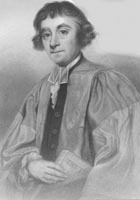
Professor James Beattie FRSE was a Scottish poet, moralist and philosopher. He was born the son of a shopkeeper and small farmer at Laurencekirk in the Mearns, and educated at Aberdeen University. In 1760, he was appointed Professor of moral philosophy there as a result of the interest of his intimate friend, Robert Arbuthnot of Haddo. In the following year he published a volume of poems, The Judgment of Paris (1765), which attracted attention. The two works, however, which brought him most fame were: His Essay on the Nature and Immutability of Truth (1770), intended as an answer to David Hume, which had great immediate success, and led to an introduction to the King, a pension of £200, and the degree of LL.D. from Oxford; and his poem of The Minstrel, of which the first book was published in 1771 and the second in 1774, and which constitutes his true title to remembrance, winning him the praise of Samuel Johnson. It contains much beautiful descriptive writing. Beattie was prominent in arguing against the institution of slavery, notably in his Essay on the Nature and Immutability of Truth and Elements of Moral Science. Beattie underwent much domestic sorrow in the death of his wife and two promising sons, which broke down his own health and spirits. A biographical sketch, An Account of the Life of James Beattie, LL.D., was published in 1804 by Alexander Bower.
The Best Poem Of James Beattie
Retirement
When in the crimson cloud of Even,
The lingering light decays,
And Hesper on the front of Heaven
His glittering gem displays!
Deep in the silent vale, unseen,
Beside a lulling stream,
A pensive Youth of placid mien,
Indulged this tender theme.
Ye cliffs, in hoary grandeur piled
High o'er the glimmering dale;
Ye woods, along whose windings wild
Murmurs the solemn gale;
Where Melancholy strays forlorn,
And Wo retires to weep,
What time the wan moon's yellow horn
Gleams on the western deep:
To you, ye wastes, whose artless charms
Ne'er drew Ambition's eye,
'Scaped a tumultuous world's alarms,
To your retreats I fly.
Deep in your most sequester'd bower
Let me at last recline,
Where Solitude, mild, modest Power,
Leans on her ivy'd shrine.
How shall I woo thee, matchless Fair!
Thy heavenly smile how win!
Thy smile, that smoothes the brow of Care,
And stills the storm within.
O wilt thou to thy favourite grove
Thine ardent votary bring,
And bless his hours, and bid them move
Serene, on silent wing.
Oft let remembrance soothe his mind
With dreams of former days,
When in the lap of Peace reclined
He framed his infant lays;
When Fancy roved at large, nor Care
Nor cold Distrust alarm'd,
Nor Envy with malignant glare
His simple youth had harm'd.
'Twas then, O Solitude, to thee
His early vows were paid,
From heart sincere, and warm, and free,
Devoted to the shade.
Ah why did Fate his steps decoy
In stormy paths to roam,
Remote from all congenial joy! -
O take the wanderer home.
Thy shades, thy silence, now be mine,
Thy charms my only theme;
My haunt the hollow cliff, whose pine
Waves o'er the gloomy stream,
Whence the sacred owl on pinions gray
Breaks from the lone vale sails away
To more profound repose.
O while to thee the woodland pours
Its wildly-warbling song,
And balmy from the banks of flowers
The zephyr breathes along;
Let no rude sounds invade from far,
No vagrant foot be nigh,
No ray from Grandeur's gilded car,
Flash on the startled eye.
But if some pilgrim through the glade
Thy hallow'd bowers explore,
O guard from harm his hoary head,
And listen to his lore:
For he of joys divine shall tell
That wean from earthly wo,
And triumph o'er the mighty spell
That chains this heart below.
For me no more the path invites
Ambition loves to tread;
No more I climb those toilsome heights
By guileful Hope misled;
Leaps my fond fluttering heart no more
To mirth's enlivening strain;
For present pleasure soon is o'er,
And all the past is vain.
James Beattie Comments




Delivering Poems Around The World
Poems are the property of their respective owners. All information has been reproduced here for educational and informational purposes to benefit site visitors, and is provided at no charge...
10/26/2026 4:01:07 PM # rel_20261026T125300Z_a7741e1


