
Tony Hoagland
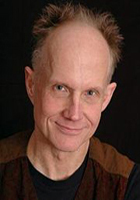

Tony Hoagland Poems
If you are lucky in this life,
you will get to help your enemy
the way I got to help my mother
when she was weakened past the point of saying no.
...
Maxine, back from a weekend with her boyfriend,
smiles like a big cat and says
that she's a conjugated verb.
She's been doing the direct object
...
Sometimes I wish I were still out
on the back porch, drinking jet fuel
with the boys, getting louder and louder
as the empty cans drop out of our paws
...
The season turned like the page of a glossy fashion magazine.
In the park the daffodils came up
and in the parking lot, the new car models were on parade.
...
Cold wind comes out of the white hills
and rubs itself against the walls of the condominium
with an esophogeal vowel sound,
and a loneliness creeps
into the conversation by the hot tub.
We don't deserve pleasure
just as we don't deserve pain,
but it's pure sorcery the way the feathers of warm mist
keep rising from the surface of the water
to wrap themselves around a sculpted
clavicle or wrist.
It's not just that we are on
the eighth story of the world
looking out through glass and steel
with a clarity of vision
in which imported coffee and
a knowledge of French painting
are combined,
but that we are atop a pyramid
of all the facts that make this possible:
the furnace that heats the water,
the truck that hauled the fuel,
the artery of highway
blasted through the mountains,
the heart attack of the previous owner,
the history of Western medicine
that failed to save him,
the successful development of tourism,
the snow white lotions that counteract the chemistry
of chlorine upon skin—our skin.
Down inside history's body,
the slaves are still singing in the dark;
the roads continue to be built;
the wind blows and the building grips itself
in anticipation of the next strong gust.
So an enormous act of forgetting is required
simply to kiss someone
or to open your mouth
for the fork of high-calorie paté
someone is raising to your lips,
which, considering the price,
it would be a sin
not to enjoy.
...
November like a train wreck -
as if a locomotive made of cold
had hurtled out of Canada
and crashed into a million trees,
...
There are people who do not see a broken playground swing
as a symbol of ruined childhood
and there are people who don't interpret the behavior
of a fly in a motel room as a mocking representation of their thought process.
...
Then one of the students with blue hair and a tongue stud
Says that America is for him a maximum-security prison
...
My marriage ended in an airport long ago.
I was not wise enough to cry while looking for my car,
walking through the underground garage;
jets were roaring overhead, and if I had been wise
I would have looked up at those heavy-bellied cylinders
and seen the wheelchairs and the frightened dogs inside;
the kidneys bedded in dry ice and Styrofoam containers.
I would have known that in synagogues and churches all over town
couples were gathering like flocks of geese
getting ready to take off, while here the jets were putting down
their gear, getting ready for the jolt, the giant tires
shrieking and scraping off two
long streaks of rubber molecules,
that might have been my wife and I, screaming in our fear.
It is a matter of amusement to me now,
me staggering around that underground garage,
trying to remember the color of my vehicle,
unable to recall that I had come by cab—
eventually gathering myself and going back inside,
quite matter-of-fact,
to get the luggage
I would be carrying for the rest of my life.
...
Windy today and I feel less than brilliant,
driving over the hills from work.
There are the dark parts on the road
...
There was the day we swam in a river, a lake, and an ocean.
And the day I quit the job my father got me.
And the day I stood outside a door,
and listened to my girlfriend making love
to someone obviously not me, inside,
and I felt strange because I didn't care.
There was the morning I was born,
and the year I was a loser,
and the night I was the winner of the prize
for which the audience applauded.
Then there was someone else I met,
whose face and voice I can't forget,
and the memory of her
is like a jail I'm trapped inside,
or maybe she is something I just use
to hold my real life at a distance.
Happiness, Joe says, is a wild red flower
plucked from a river of lava
and held aloft on a tightrope
strung between two scrawny trees
above a canyon
in a manic-depressive windstorm.
Don't drop it, Don't drop it, Don't drop it—,
And when you do, you will keep looking for it
everywhere, for years,
while right behind you,
the footprints you are leaving
will look like notes
of a crazy song.
...
Somewhere, someone is asking a question,
and I stand squinting at the classroom
with one hand cupped behind my ear,
trying to figure out where that voice is coming from.
I might be already an old man,
attempting to recall the night
his hearing got misplaced,
front-row-center at a battle of the bands,
where a lot of leather-clad, second-rate musicians,
amped up to dinosaur proportions,
test drove their equipment through our ears.
Each time the drummer threw a tantrum,
the guitarist whirled and sprayed us with machine-gun riffs,
as if they wished that they could knock us
quite literally dead.
We called that fun in 1970,
when we weren't sure our lives were worth surviving.
I'm here to tell you that they were,
and many of us did, despite ourselves,
though the road from there to here
is paved with dead brain cells,
parents shocked to silence,
and squad cars painting the whole neighborhood
the quaking tint and texture of red jelly.
Friends, we should have postmarks on our foreheads
to show where we have been;
we should have pointed ears, or polka-dotted skin
to show what we were thinking
when we hot-rodded over God's front lawn,
and Death kept blinking.
But here I stand, an average-looking man
staring at a room
where someone blond in braids
with a beautiful belief in answers
is still asking questions.
Through the silence in my dead ear,
I can almost hear the future whisper
to the past: it says that this is not a test
and everybody passes.
...
Play the one about the family of the ducks
where the ducks go down to the river
and one of them thinks the water will be cold
but then they jump in anyway
and like it and splash around.
No, I must play the one
about the nervous man from Palestine in row 14
with a brown bag in his lap
in which a gun is hidden in a sandwich.
Play the one about the handsome man and woman
standing on the steps of her apartment
and how the darkness and her perfume and the beating of their hearts
conjoin to make them feel
like leaping from the edge of chance—
No, I should play the one about
the hard rectangle of the credit card
hidden in the man's back pocket
and how the woman spent an hour
plucking out her brows, and how her perfume
was made from the destruction of a hundred flowers.
Then play the one about the flower industry
in which the migrant workers curse their own infected hands
from tossing sheaves of roses and carnations
into the back of the refrigerated trucks.
No, I must play the one about the single yellow daffodil
standing on my kitchen table
whose cut stem draws the water upwards
so the plant is flushed with the conviction
that the water has been sent
to find and raise it up
from somewhere so deep inside the earth
not even flowers can remember.
...
Ruth visits her mother's grave in the California hills.
She knows her mother isn't there but the rectangle of grass
marks off the place where the memories are kept,
like a library book named Dorothy.
Some of the chapters might be: Dorothy:
Better Bird-Watcher Than Cook;
Dorothy, Wife and Atheist;
Passionate Recycler Dorothy, Here Lies But Not.
In the summer hills, where the tall tough grass
reminds you of persistence
and the endless wind
reminds you of indifference,
Ruth brings batches of white roses,
extravagant gesture not entirely wasteful
because as soon as she is gone she knows
the deer come out of the woods to eat them.
What was made for the eye
goes into the mouth,
thinks Ruth to herself as she drives away,
and in bed when she tries to remember her mother,
she drifts instead to the roses,
and when she thinks about the roses she
sees instead the deer chewing them—
pale petals of the roses in the dark
warm bellies of the sleeping deer—
that's what going to sleep is like.
...
At this height, Kansas
is just a concept,
a checkerboard design of wheat and corn
no larger than the foldout section
of my neighbor's travel magazine.
At this stage of the journey
I would estimate the distance
between myself and my own feelings
is roughly the same as the mileage
from Seattle to New York,
so I can lean back into the upholstered interval
between Muzak and lunch,
a little bored, a little old and strange.
I remember, as a dreamy
backyard kind of kid,
tilting up my head to watch
those planes engrave the sky
in lines so steady and so straight
they implied the enormous concentration
of good men,
but now my eyes flicker
from the in-flight movie
to the stewardess's pantyline,
then back into my book,
where men throw harpoons at something
much bigger and probably
better than themselves,
wanting to kill it,
wanting to see great clouds of blood erupt
to prove that they exist.
Imagine being born and growing up,
rushing through the world for sixty years
at unimaginable speeds.
Imagine a century like a room so large,
a corridor so long
you could travel for a lifetime
and never find the door,
until you had forgotten
that such a thing as doors exist.
Better to be on board the Pequod,
with a mad one-legged captain
living for revenge.
Better to feel the salt wind
spitting in your face,
to hold your sharpened weapon high,
to see the glisten
of the beast beneath the waves.
What a relief it would be
to hear someone in the crew
cry out like a gull,
Oh Captain, Captain!
Where are we going now?
...
Prolonged exposure to death
Has made my friend quieter.
Now his nose is less like a hatchet
And more like a snuffler.
Flames don't erupt from his mouth anymore
And life doesn't crack his thermometer.
Instead of overthrowing the government
He reads fly-fishing catalogues
And takes photographs of water.
An aphorist would say
The horns of the steer have grown straighter.
He has an older heart
that beats younger.
His Attila the Hun imitation
Is not as good as it used to be.
Everything else is better.
...
And when I heard about the divorce of my friends,
I couldn't help but be proud of them,
that man and that woman setting off in different directions,
like pilgrims in a proverb
—him to buy his very own toaster oven,
her seeking a prescription for sleeping pills.
Let us keep in mind the hidden forces
which had struggled underground for years
to push their way to the surface—and that finally did,
cracking the crust, moving the plates of earth apart,
releasing the pent-up energy required
for them to rent their own apartments,
for her to join the softball league for single mothers
for him to read George the Giraffe over his speakerphone
at bedtime to the six-year-old.
The bible says, Be fruitful and multiply
but is it not also fruitful to subtract and to divide?
Because if marriage is a kind of womb,
divorce is the being born again;
alimony is the placenta one of them will eat;
loneliness is the name of the wet-nurse;
regret is the elementary school;
endurance is the graduation.
So do not say that they are splattered like dropped lasagna
or dead in the head-on collision of clichés
or nailed on the cross of their competing narratives.
What is taken apart is not utterly demolished.
It is like a great mysterious egg in Kansas
that has cracked and hatched two big bewildered birds.
It is two spaceships coming out of retirement,
flying away from their dead world,
the burning booster rocket of divorce
falling off behind them,
the bystanders pointing at the sky and saying, Look.
...
The season turned like the page of a glossy fashion magazine.
In the park the daffodils came up
and in the parking lot, the new car models were on parade.
Sometimes I think that nothing really changes—
The young girls show the latest crop of tummies,
and the new president proves that he's a dummy.
But remember the tennis match we watched that year?
Right before our eyes
some tough little European blonde
pitted against that big black girl from Alabama,
cornrowed hair and Zulu bangles on her arms,
some outrageous name like Vondella Aphrodite—
We were just walking past the lounge
and got sucked in by the screen above the bar,
and pretty soon
we started to care about who won,
putting ourselves into each whacked return
as the volleys went back and forth and back
like some contest between
the old world and the new,
and you loved her complicated hair
and her to-hell-with-everybody stare,
and I,
I couldn't help wanting
the white girl to come out on top,
because she was one of my kind, my tribe,
with her pale eyes and thin lips
and because the black girl was so big
and so black,
so unintimidated,
hitting the ball like she was driving the Emancipation Proclamation
down Abraham Lincoln's throat,
like she wasn't asking anyone's permission.
There are moments when history
passes you so close
you can smell its breath,
you can reach your hand out
and touch it on its flank,
and I don't watch all that much Masterpiece Theatre,
but I could feel the end of an era there
in front of those bleachers full of people
in their Sunday tennis-watching clothes
as that black girl wore down her opponent
then kicked her ass good
then thumped her once more for good measure
and stood up on the red clay court
holding her racket over her head like a guitar.
And the little pink judge
had to climb up on a box
to put the ribbon on her neck,
still managing to smile into the camera flash,
even though everything was changing
and in fact, everything had already changed—
Poof, remember? It was the twentieth century almost gone,
we were there,
and when we went to put it back where it belonged,
it was past us
and we were changed.
...
If you are lucky in this life,
you will get to help your enemy
the way I got to help my mother
when she was weakened past the point of saying no.
Into the big enamel tub
half-filled with water
which I had made just right,
I lowered the childish skeleton
she had become.
Her eyelids fluttered as I soaped and rinsed
her belly and her chest,
the sorry ruin of her flanks
and the frayed gray cloud
between her legs.
Some nights, sitting by her bed
book open in my lap
while I listened to the air
move thickly in and out of her dark lungs,
my mind filled up with praise
as lush as music,
amazed at the symmetry and luck
that would offer me the chance to pay
my heavy debt of punishment and love
with love and punishment.
And once I held her dripping wet
in the uncomfortable air
between the wheelchair and the tub,
until she begged me like a child
to stop,
an act of cruelty which we both understood
was the ancient irresistible rejoicing
of power over weakness.
If you are lucky in this life,
you will get to raise the spoon
of pristine, frosty ice cream
to the trusting creature mouth
of your old enemy
because the tastebuds at least are not broken
because there is a bond between you
and sweet is sweet in any language.
...
The worm thrashes when it enters the tequila.
The grape cries out in the wine vat crusher.
But when Dean Young talks about wine, his voice is strangely calm.
...
Tony Hoagland Biography
He was born in Fort Bragg, North Carolina. His father was an Army doctor, and Hoagland grew up on various military bases throughout the South. He was educated at Williams College, the University of Iowa (B.A.), and the University of Arizona (M.F.A.). According to the novelist Don Lee, Hoagland "attended and dropped out of several colleges, picked apples and cherries in the Northwest, lived in communes, [and] followed the Grateful Dead . . ." He currently teaches in the University of Houston creative writing program. He is also on the faculty of the Warren Wilson low-residency MFA program. In an interview with Miriam Sagan about his poetic influences, Hoagland said, "if I were going to place myself on some aesthetic graph, my dot would be equidistant between Sharon Olds and Frank O’Hara, between the confessional (where I started) and the social (where I have aimed myself). In a 2002 citation regarding Hoagland's Academy Award in Literature, The American Academy of Arts and Letters said that "Hoagland's imagination ranges thrillingly across manners, morals, sexual doings, and kinds of speech lyrical and candid, intimate as well as wild.")
The Best Poem Of Tony Hoagland
Lucky
If you are lucky in this life,
you will get to help your enemy
the way I got to help my mother
when she was weakened past the point of saying no.
Into the big enamel tub
half-filled with water
which I had made just right,
I lowered the childish skeleton
she had become.
Her eyelids fluttered as I soaped and rinsed
her belly and her chest,
the sorry ruin of her flanks
and the frayed gray cloud
between her legs.
Some nights, sitting by her bed
book open in my lap
while I listened to the air
move thickly in and out of her dark lungs,
my mind filled up with praise
as lush as music,
amazed at the symmetry and luck
that would offer me the chance to pay
my heavy debt of punishment and love
with love and punishment.
And once I held her dripping wet
in the uncomfortable air
between the wheelchair and the tub,
until she begged me like a child
to stop,
an act of cruelty which we both understood
was the ancient irresistible rejoicing
of power over weakness.
If you are lucky in this life,
you will get to raise the spoon
of pristine, frosty ice cream
to the trusting creature mouth
of your old enemy
because the tastebuds at least are not broken
because there is a bond between you
and sweet is sweet in any language.
Tony Hoagland Comments
I discovered Tony Hoagland on the pages of The New Yorker and have fallen in love with his poetry. He's bracing—and wonderful!
You say " This poet did not post any poems within the last 14 days" . He died more than a year ago. You should update.
Deceptively simple poems. Lovely stuff. For those who think this isn't poetry, they need to be very still and let every thing come in.
His words capture some things I can never articulate. They ring so true, I can feel them beating in the eye of my heart. It is a comfort to read Tony's poems and feel the breath of them speak.
I have seldom read a body of poetry that has such power to reach into daily life and produce an epic. I will miss him.
Sorry, but this poetry is not poetry! It's just a bunch of thoughts spilled onto paper.




Delivering Poems Around The World
Poems are the property of their respective owners. All information has been reproduced here for educational and informational purposes to benefit site visitors, and is provided at no charge...
10/10/2026 6:18:37 PM # rel_20260925T122446Z_7d6ee41



This guy is really DOPE