
Francesco Petrarch
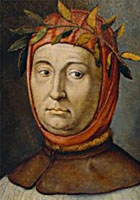

Francesco Petrarch Poems
I go weeping for my time past,
that I spent in loving something mortal,
without lifting myself in flight, for I had wings
...
Diana was never more pleasing to her lover,
when, by a stroke of fate, he saw her naked,
shown in the deep pool of icy water,
than I was by the mountain shepherdess,
...
I have not seen you, lady,
leave off your veil in sun or shadow,
since you knew that great desire in myself
...
Being one day at my window all alone,
So manie strange things happened me to see,
As much as it grieveth me to thinke thereon.
At my right hand a hynde appear'd to mee,
...
I find no peace, and yet I make no war:
and fear, and hope: and burn, and I am ice:
and fly above the sky, and fall to earth,
...
O my own Italy! though words are vain
The mortal wounds to close,
Unnumber'd, that thy beauteous bosom stain,
...
Many times now, with my true thought,
I've dared to assail my enemy, quiet and humble
in her actions, her beauty seeming kind,
...
If no love is, O God, what fele I so?
And if love is, what thing and which is he?
If love be good, from whennes cometh my woo?
If it be wikke, a wonder thynketh me,
...
What infinite providence and art
He showed in his wonderful mastery,
who created this and the other hemisphere,
...
When I utter sighs, in calling out to you,
with the name that Love wrote on my heart,
the sound of its first sweet accents begin
...
My passion's folly is so led astray
by following what turns and flees,
...
Greed and sleep and slothful beds
have banished every virtue from the world,
so that, overcome by habit,
...
At the foot of the hill where beauty's garment
first clothed that lady with earthly members,
who has often sent wakefulness to him,
...
When the heavenly body that tells the hours
has returned to the constellation of Taurus,
power from the burning horns descends
...
Glorious pillar in whom rests
our hope and the great Latin name,
...
If my life of bitter torment and of tears
could be derided more, and made more troubled,
that I might see, by virtue of your later years,
...
When from hour to hour among the other ladies
Love appears in her beautiful face,
by as much as their beauty is less than hers
...
My weary eyes, there, while I turn you
towards the lovely face of her who slays you,
I pray you guard yourself
...
I turn back at every step I take
with weary body that has borne great pain,
and take comfort then from your aspect
...
Grizzled and white the old man leaves
the sweet place, where he has provided for his life,
and leaves the little family, filled with dismay
...
Francesco Petrarch Biography
Francesco Petrarca (Italian pronunciation: [franˈtʃesko peˈtrarka]; July 20, 1304 – July 19, 1374), commonly anglicized as Petrarch (/ˈpiːtrɑːrk, ˈpɛtrɑːrk/), was an Italian scholar and poet in Renaissance Italy, and one of the earliest humanists. Petrarch's rediscovery of Cicero's letters is often credited for initiating the 14th-century Renaissance. Petrarch is often called the "Father of Humanism". In the 16th century, Pietro Bembo created the model for the modern Italian language based on Petrarch's works, as well as those of Giovanni Boccaccio, and, to a lesser extent, Dante Alighieri. Petrarch would be later endorsed as a model for Italian style by the Accademia della Crusca. Petrarch's sonnets were admired and imitated throughout Europe during the Renaissance and became a model for lyrical poetry. He is also known for being the first to develop the concept of the "Dark Ages." This standing back from his time was possible because he straddled two worlds - the classical and his own modern day.)
The Best Poem Of Francesco Petrarch
I go weeping for my time past,
‘I'vo piagendo i miei passati tempi'
I go weeping for my time past,
that I spent in loving something mortal,
without lifting myself in flight, for I had wings
that might have freed me for spaces not so low.
You who see my shameful and impious sins,
King of Heaven, invisible, immortal,
help this frail and straying soul,
and mend its defects through your grace:
So that, if I have lived in war and tempest,
I may die in peaceful harbour: and if my stay
was vain, let my vanishing, at least, be virtuous.
Deign that your hand might rest on that little life
that is left to me, and on my death:
You truly know I have no other hope.
Translated by: A. S. Kline
Francesco Petrarch Comments
and the original text of Petrarch's sonnet CCCX: Zephiro torna, e ’l bel tempo rimena, e i fiori et l’erbe, sua dolce famiglia, et garrir Progne et pianger Philomena, et primavera candida et vermiglia. Ridono i prati, e ’l ciel si rasserena; Giove s’allegra di mirar sua figlia; l’aria et l’acqua et la terra è d’amor piena; ogni animal d’amar si riconsiglia. Ma per me, lasso, tornano i piú gravi sospiri, che del cor profondo tragge quella ch’al ciel se ne portò le chiavi; et cantar augelletti, et fiorir piagge, e ’n belle donne honeste atti soavi sono un deserto, et fere aspre et selvagge.




Delivering Poems Around The World
Poems are the property of their respective owners. All information has been reproduced here for educational and informational purposes to benefit site visitors, and is provided at no charge...
4/6/2026 10:49:19 AM # 1.0.0



hey guys check this guy out